 how-to
Avoiding Plumber Scams During Emergencies: 7 Red Flags
Table of Contents
- Why Emergencies Are a Magnet for Plumber Scams
- Emergency Plumbing Estimate Red Flags to Watch For
- How to Verify a Plumbing Contractor License and Insurance
- Questions to Ask Emergency Plumbers Before They Start
- Frequently Asked Questions
Last Updated: September 5, 2026
A burst tank or a dead water heater at midnight puts you in a vulnerable spot, and that urgency is exactly what dishonest operators count on. Avoiding plumber scams during emergencies starts with understanding that panic is the scammer's best tool. At QuickHotWater.com, we connect homeowners with licensed and insured plumbers through competitive bidding. A few simple checks can protect you from inflated pricing and unnecessary work, even when you're stressed and short on time.
Why Emergencies Are a Magnet for Plumber Scams
Emergencies create the perfect conditions for high-pressure sales tactics. When water is flooding your floor, you're less likely to question a fee or demand proof of insurance. Scammers rely on this false urgency to push unnecessary work and overcharging.
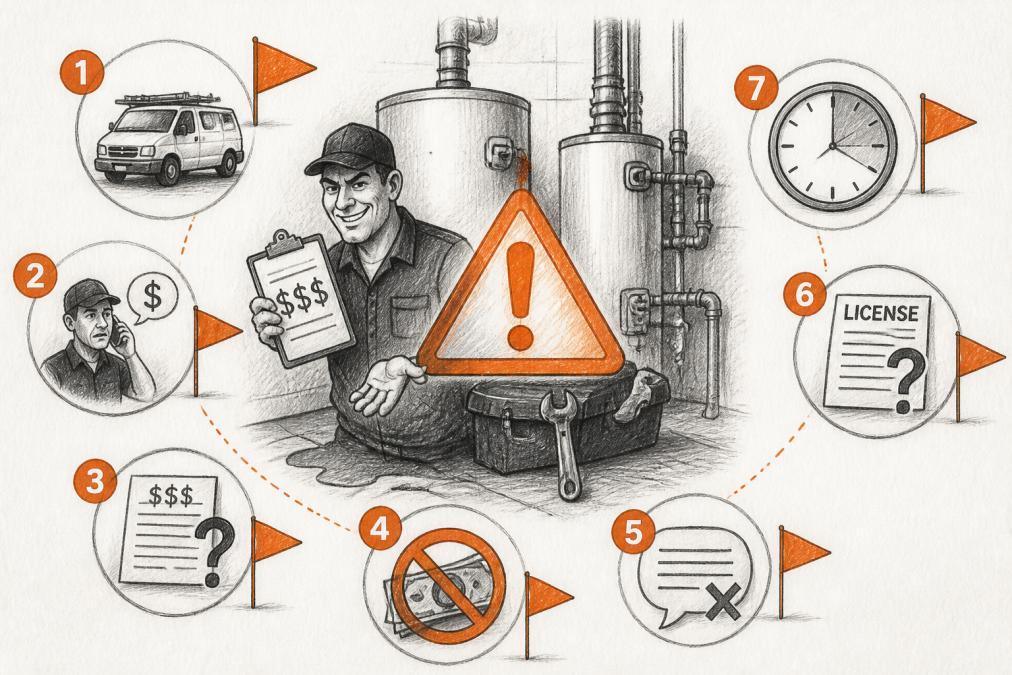
A common tactic is the "just happened to notice" add-on. The plumber fixes your leak, then claims your water heater is about to fail and demands an inflated price for immediate replacement. In an emergency, you may agree to unauthorized work simply to end the stress.
Emergency Plumbing Estimate Red Flags to Watch For
Several warning signs should trigger immediate caution. A demand for cash payment or a wire transfer tops the list, as does a refusal to provide a written estimate. High-pressure sales tactics, such as demanding a decision "right now or we can't help," are another classic red flag. Be wary of contractors who lack proper identification or cannot provide references.
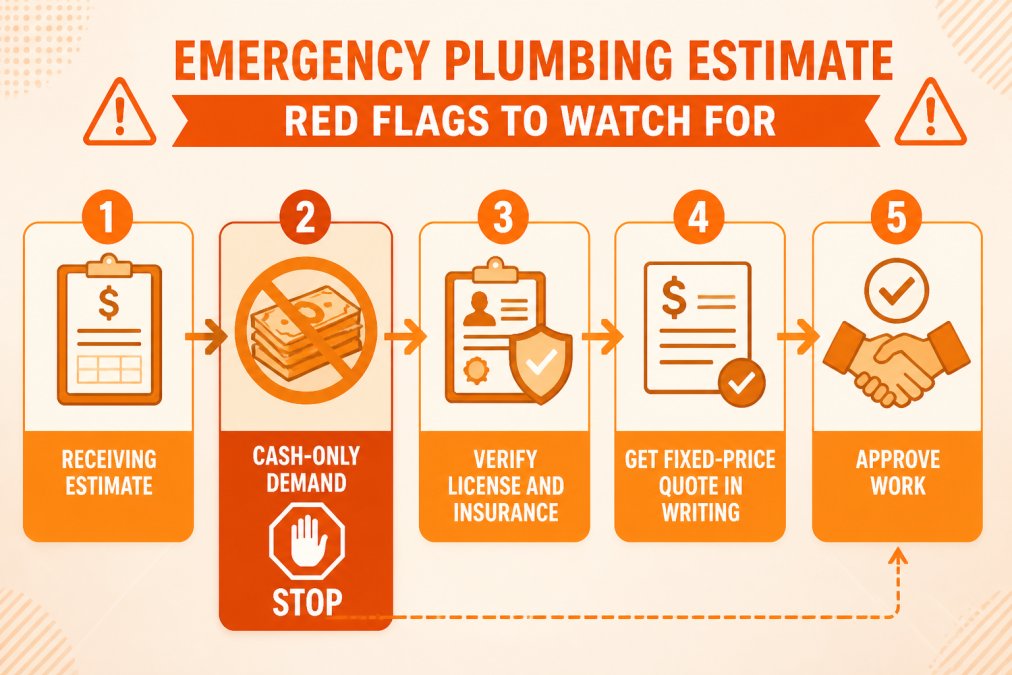
A legitimate emergency plumbing estimate includes a clear breakdown of the service call fee, hourly rates, and the total cost of parts and labor. If a plumber cannot explain these items or becomes defensive when you ask questions, that is a signal to end the interaction.
How to Verify a Plumbing Contractor License and Insurance
Verification is straightforward and takes only a few minutes. Ask for their contractor license number and confirm it with your state's licensing board. Request proof of insurance directly from their provider, not a photocopy they carry. A background check on the company name and a search for complaints with your state attorney general's office adds another layer of protection.
| What to Verify | How to Check It | Why It Matters |
|---|---|---|
| Contractor license | State licensing board database | Confirms legal right to operate |
| Proof of insurance | Call the insurance provider | Covers damage and liability |
| Company reputation | Attorney general complaint search | Reveals patterns of disputes |
| Physical address | Confirm it's a real business location | Filters out fly-by-night operators |
Legitimate plumbers expect these questions. A professional who hesitates or makes excuses about their documentation is showing you a red flag. As documented by guidance on hiring contractors from the Federal Trade Commission, checking licenses and references before work begins is a core step in scam prevention.
Questions to Ask Emergency Plumbers Before They Start
Asking the right questions protects your homeowner rights and establishes clear expectations. Ask directly: "Can you provide a written estimate before any work begins?" and "Are you licensed and insured for this type of work in my state?" These questions should be answered clearly and without hesitation.
- "Will you provide a fixed-price quote in writing before starting?"
- "Can I see your contractor license and proof of insurance?"
- "Do you have references from recent local jobs I can contact?"
- "Will a permit be pulled for this work, and who is responsible for it?"
- "What is the total cost, including all parts, labor, and fees?"
A professional will welcome these questions. A scammer will try to rush you past them. Documented interactions, including the written estimate and receipts, are your best protection if a dispute arises later. If you are not comfortable with the answers, you have the right to end the conversation and seek a second opinion from a vetted professional, or get an instant water heater replacement quote to compare against what you were told on the spot.
Frequently Asked Questions
How can I verify if a plumber is licensed and insured?
Ask for their contractor license number and insurance certificate directly. Verify the license with your state's licensing board website or by phone. Confirm their insurance is active and covers liability and worker's compensation. A legitimate emergency plumber will provide these documents without hesitation. If they avoid the question or make excuses, consider it a red flag and end the call.
What are the most common emergency plumbing scams?
Common tactics include demanding large cash payments upfront, quoting a low price over the phone and then inflating it after starting work, and claiming to find nonexistent problems to justify unnecessary repairs. Be wary of unmarked vehicles, high-pressure sales tactics, and refusal to provide a written estimate. Protecting yourself means getting everything in writing and confirming the plumber's identity and credentials before any work begins.
When a water heater fails, the last thing you need is a guessing game about who to trust. QuickHotWater.com replaces the stress of emergency hiring with a transparent marketplace where local, licensed, and insured plumbers bid competitively for your job. You get an instant estimate in 30 seconds, clear upfront pricing, and permit handling included, all without sales visits or spam calls. Get a quote and let vetted professionals handle the rest.
This article was written using GrandRanker