 How-to
7 Common Causes of Water Heater Sediment Buildup
Quick Summary
Sediment buildup is the layer of mineral deposits and debris that settles at the bottom of a water heater tank over time. It forms mainly from hard water, high temperature settings, older tanks, incoming pipe debris and corrosion. It can make your heater work harder and reduce the hot water you get.
- Hard water leaves calcium and magnesium behind in the tank.
- Hotter water speeds up mineral deposits at the bottom.
- Popping, rumbling or crackling noises can signal water boiling under sediment.
- Drain a few gallons from the drain valve and rinse until the water runs clear.
- If flushing does not help, a licensed plumber can check the unit.
Table of Contents
- What Sediment Buildup Is and Why It Matters
- The Main Causes of Sediment in a Water Heater
- Signs of Sediment in Water Heater Tanks and How to Flush Sediment From Water Heater Units
- Frequently Asked Questions
7 Common Causes of Water Heater Sediment Buildup
Last Updated: October 30, 2026
What Sediment Buildup Is and Why It Matters
Sediment buildup is the layer of mineral deposits and debris that settles at the bottom of a water heater tank over time. QuickHotWater.com helps homeowners understand this problem before it turns into a costly issue. Sediment buildup matters because it can make your heater work harder and reduce the hot water you get.
Here is the core problem. Water heats up at the bottom of the tank, and sediment sits right there. The layer acts like a barrier between the burner and the water, so the heater uses more energy to do the same job.
The Main Causes of Sediment in a Water Heater
Most buildup comes from a few common sources:
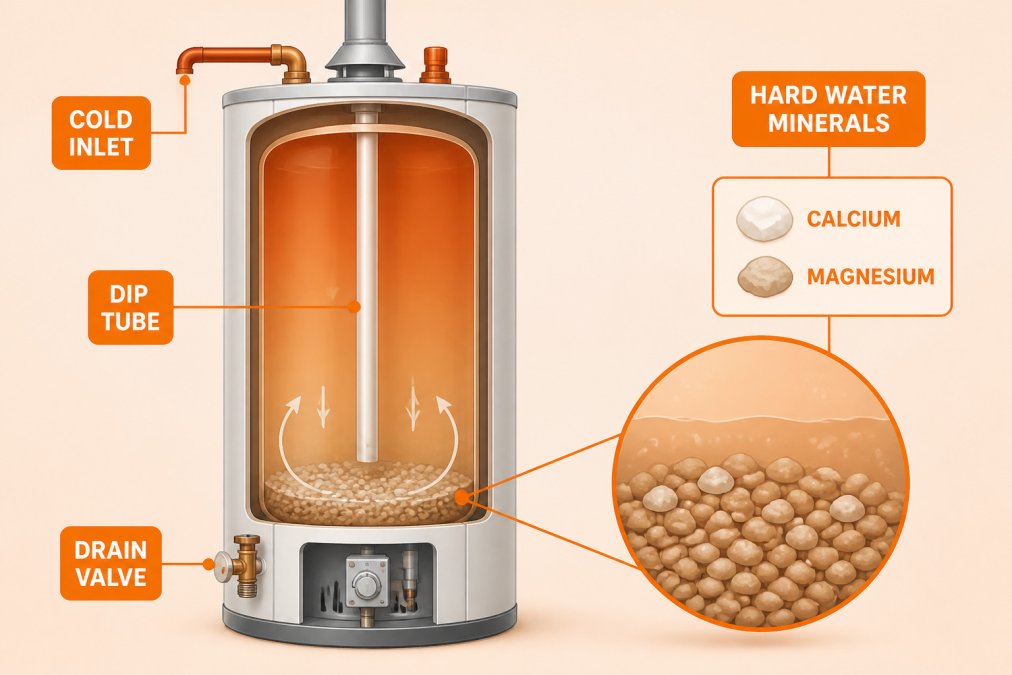
- Hard water: High mineral content in your supply water leaves calcium and magnesium behind.
- High temperature settings: Hotter water speeds up mineral deposits.
- Older tanks: Years of use give sediment more time to collect.
- Incoming pipe debris: Small particles from the water line can settle in the tank.
- Corrosion: Rust and tank wear add material to the bottom layer.
Knowing the source helps you decide what to do next. If you find that sediment has built up to the point where flushing no longer helps, or your tank is old enough that replacement makes more sense, you can request an Instant water heater replacement quote. Keep in mind that this is an instant estimate, and the plumber confirms the final price on-site.
The article points to a few common sources of sediment, summarised below.
| Cause | What it does | Note |
|---|---|---|
| Hard water | Leaves calcium and magnesium behind | High mineral content in supply water |
| High temperature settings | Speeds up mineral deposits | Hotter water builds sediment faster |
| Older tanks | Lets sediment collect over time | Years of use give more time to settle |
| Incoming pipe debris | Settles small particles in the tank | Particles come from the water line |
| Corrosion | Adds material to the bottom layer | Rust and tank wear contribute |
Signs of Sediment in Water Heater Tanks and How to Flush Sediment From Water Heater Units
Watch for popping, rumbling, or crackling noises. These can mean water is boiling under a layer of sediment. You may also notice less hot water or uneven temperatures.
To flush a tank, follow the manufacturer's instructions for your model. Shut off power or gas, drain a few gallons from the drain valve, and rinse until the water runs clear. If flushing does not help, a licensed plumber can check the unit.
Frequently Asked Questions
Why does my water heater have so much sediment?
Most sediment comes from hard water. As water is heated, dissolved calcium and magnesium come out of solution and settle as scale at the bottom of the tank. A tank that is heated to high temperatures or runs on a high-mineral supply tends to accumulate more. Sediment can also come from corroded parts inside the tank or debris carried in through the incoming pipe, so the amount you see varies with your water supply and the age of the unit.
What causes sediment to build up in a water heater?
Dissolved minerals in hard water are the main cause. Heating the water causes calcium and magnesium to precipitate out and collect on the tank floor. Higher water temperature settings speed this up, and older tanks have had more years to collect deposits. Debris from the municipal supply or corrosion of internal components can add to the buildup, which is why a flush can only reduce sediment, not eliminate the source.
What are the first signs of a water heater going bad?
Early warning signs include popping, rumbling, or crackling noises during heating, uneven water temperatures, and less available hot water than before. Heating may take longer and energy bills can rise. Any of these can point to sediment, so check the tank bottom and consider a flush. If you notice water pooling around the base of the tank, treat that as an urgent sign and have a licensed plumber inspect the unit promptly.