 how-to
How to Tell If Your Water Heater Needs Replacement
Table of Contents
- Signs Your Water Heater Needs Replacement
- How to Check Water Heater Age
- Average Water Heater Lifespan and When to Replace
- Understanding Water Heater Replacement Cost Estimate
Last Updated: August 16, 2026
Signs Your Water Heater Needs Replacement
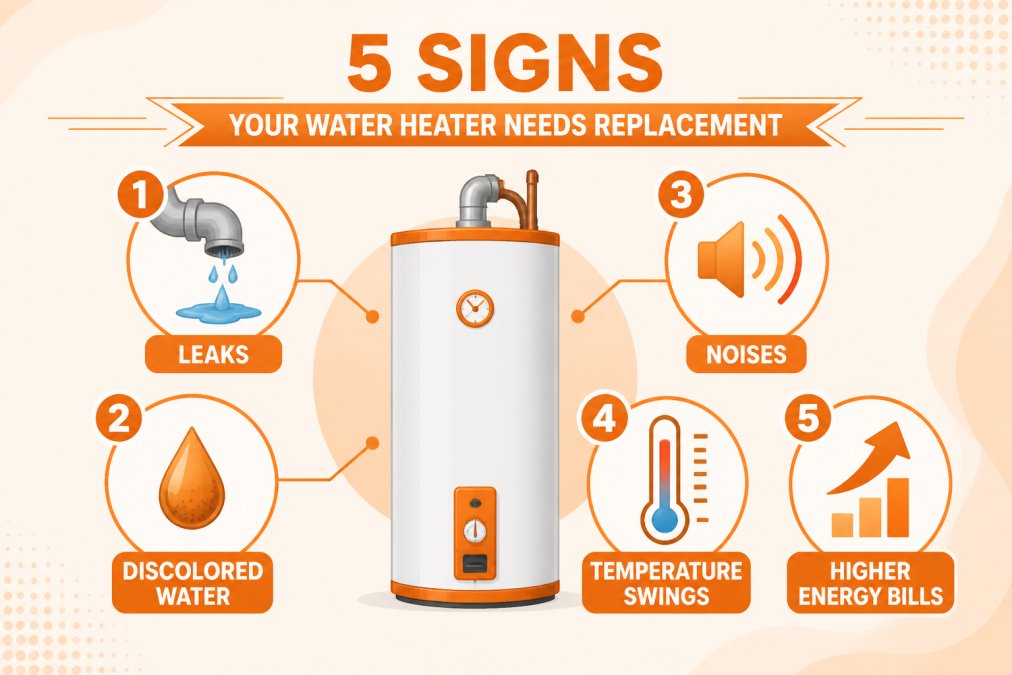
Your water heater is failing when it shows multiple warning signs at once. A single symptom might be fixable, but several together signal replacement is needed.
Leaking water or corrosion around the tank. Puddles beneath your unit or rust-colored deposits around the base mean the tank is corroding from the inside. Once corrosion starts, it spreads, a small leak today becomes a major flood tomorrow.
Rusty or discolored water from the hot tap. Brown, orange, or cloudy water means sediment buildup or internal corrosion is contaminating your supply. If rust-colored water returns within weeks of flushing, the tank is deteriorating.
Strange noises during heating. Knocking, popping, or rumbling sounds mean sediment has accumulated at the tank bottom. As the heating element warms the water, sediment particles crack and shift, creating noise and reducing efficiency.
Inconsistent water temperature or slow recovery. If hot water runs out faster than it used to, or temperature fluctuates wildly, the heating element is weakening or thermal efficiency has declined.
Rising energy bills without explanation. An aging water heater works harder to maintain temperature, consuming more energy. If utility bills climb while usage stays the same, the unit is likely losing efficiency.
How to Check Water Heater Age
The age of your unit is the single best predictor of whether replacement is coming. Most water heaters last 8 to 12 years, depending on water quality and maintenance.
Find the manufacturer's label on your tank. Look for a sticker or metal plate on the side or top of the unit. It will show the model number and serial number. The serial number encodes the manufacture date.
Decode the serial number. Most manufacturers use a two-letter or two-digit code at the start of the serial number. The first character typically represents the month (A=January, B=February, and so on). The second character or digit represents the year. For example, if the serial starts with "C5," the unit was made in March 2015. Check your specific manufacturer's website for their exact dating system.
Contact the manufacturer if the label is missing. Call the brand's customer service line with your model number, or use your installation date as a reference point for planning purposes.
Knowing the exact age helps you decide: if your unit is 7 years old and showing early warning signs, replacement within the next 2-3 years makes sense. If it's 12 years old, replacement is imminent.
Average Water Heater Lifespan and When to Replace
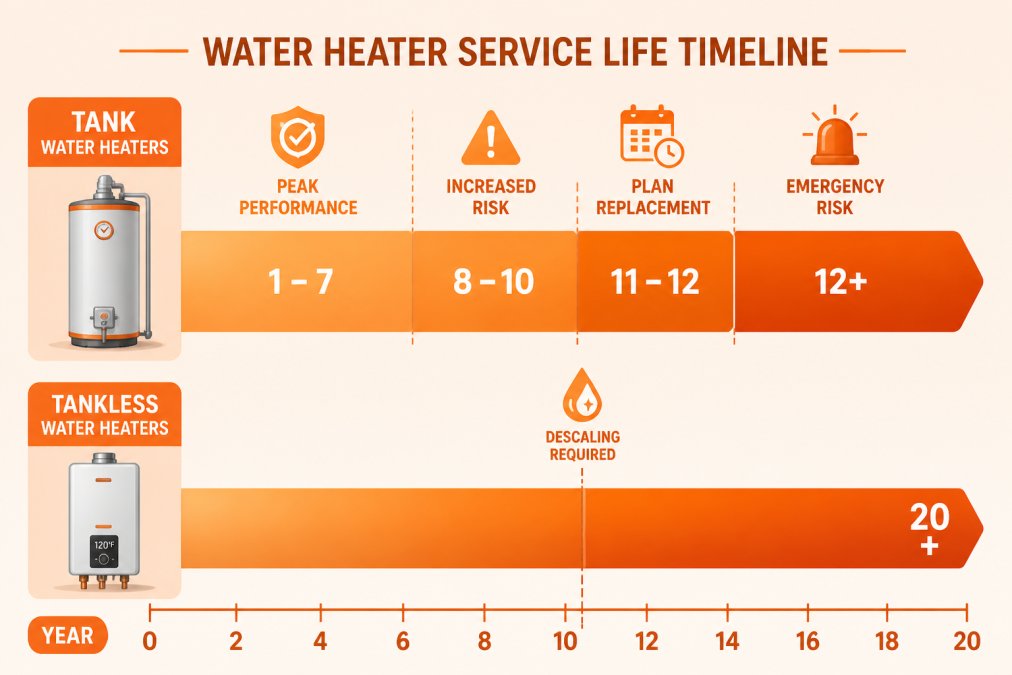
The average water heater lifespan is 8 to 12 years for traditional tank models. Tankless water heaters last longer, typically 15 to 20 years, because they don't store water continuously and experience less corrosion.
Tank-style units decline predictably. Years 1-7: peak performance. Years 8-10: increased risk of leaks, sediment buildup accelerates, energy efficiency drops. Years 11-12: high failure risk, replacement should be planned. Beyond 12 years: failure is likely.
Tankless models have a different timeline. They heat water on demand rather than storing it, reducing wear on internal components. However, they're more sensitive to water quality issues. Hard water causes scale accumulation in the heating chamber. Regular descaling extends their life, but replacement is still expected around 15-20 years.
Regional water quality affects lifespan. Areas with hard water see sediment buildup faster, shortening the useful life of tank units. Soft water areas see longer lifespans.
Once your unit hits 10 years old, start planning for replacement. By year 12, replacement should be scheduled or budget should be reserved for emergency replacement.
Understanding Water Heater Replacement Cost Estimate
When you're ready to replace your water heater, getting an instant water heater replacement quote helps you plan ahead. An estimate shows what the replacement will cost before a plumber arrives on-site.
What an instant estimate includes. A quick online estimate accounts for your unit type (gas or electric), tank capacity, and basic installation requirements. It gives you a ballpark figure based on typical regional pricing and standard installation.
Why the final price may differ. Once a plumber inspects your setup, they may find complications: outdated venting that needs upgrade, electrical work for a new unit, permit requirements, or additional labor if the old unit is difficult to remove. These discoveries change the final price. An instant estimate is called an estimate, not a guaranteed price, the plumber confirms the actual cost on-site after assessing your specific situation.
Factors that affect the estimate. Tank capacity (40 gallons vs. 50 vs. 75) changes the price. Fuel type (natural gas vs. electric vs. propane) matters. Installation complexity, whether the new unit fits in the same space, whether venting or gas lines need adjustment, affects labor time. Permits and inspections add cost in some jurisdictions.
Getting competitive bids is smart. A marketplace that connects you with local, licensed and insured plumbers lets you see competitive bids and choose the one that fits your budget and timeline. This approach helps you avoid overpaying and ensures you're working with vetted professionals.
Replacement: The Right Choice
When a water heater fails, replacement is often the only sensible choice. The decision comes down to age, cost, and how many problems you're seeing.
Replace if the unit is over 10 years old. An aging unit is likely to develop another problem within months. Replacement gives you a fresh unit with a manufacturer's warranty and years of reliable service ahead.
Replace immediately if you see multiple problems at once. Corrosion plus rusty water plus strange noises means the tank is deteriorating across multiple systems. Replacement is the only solution.
Replace if repair costs approach 50% of replacement cost. If a repair runs close to half the cost of a new unit installed, you're better off replacing. You get a new warranty and years of service.
Water heater replacement is a permanent solution that eliminates the risk of recurring failures.
Professional Installation Safety
Installing a water heater yourself is possible if you have plumbing experience, but it carries real risks.
Gas water heaters require venting. Improper venting traps carbon monoxide inside your home, a deadly, odorless gas. Venting must slope correctly, be sealed properly, and meet local code.
Electrical connections on electric units must be done correctly. Wrong wiring can cause shock or fire. Most jurisdictions require a licensed electrician for this work.
Permits and inspections are legally required in most areas. Installing without a permit can void your homeowner's insurance and create liability if something goes wrong.
Professional plumbers carry licenses and insurance. If something goes wrong during installation, their insurance covers the damage. Licensed and insured plumbers handle permits, meet code, and eliminate the guesswork and risk.
Water heater replacement is one of those home repairs that can't wait. When your unit shows multiple warning signs or hits the 10-year mark, replacement becomes inevitable. Getting an instant estimate lets you plan the expense instead of facing an emergency. A marketplace that connects you with local, licensed and insured plumbers provides transparent, competitive bids so you know exactly what replacement will cost before work begins. Get a quote in 30 seconds and see what fair-market pricing looks like for your specific situation.
Frequently Asked Questions
What are the first signs of a water heater going bad?
The earliest warning signs include a puddle or moisture around the base (indicating a leak), rusty or discolored hot water, and strange knocking or popping noises during heating. You might also notice your hot water runs out faster than usual or the temperature becomes inconsistent. If your water heater is over 8 years old and showing any of these symptoms, replacement is often the practical choice.
How do I check my water heater age?
The manufacturer's date code is stamped on the upper part of the tank or on a label on the side. It typically starts with a letter (A-L representing months) followed by numbers for the year. For example, 'E09' means May 2009. If you cannot find the label, a licensed plumber can identify the age during an inspection. Knowing the age helps determine whether replacement or repair makes sense.
What is the average lifespan of a water heater?
Most tank-style water heaters last 8 to 12 years with proper maintenance. Tankless models can last 15 to 20 years. Lifespan depends on water quality, usage patterns, and whether the anode rod (which protects the tank from corrosion) has been maintained. If your unit is approaching 10 years old and experiencing issues like sediment buildup or heating element problems, replacement is typically more cost-effective than repair.
How do I know if I should replace my water heater instead of repairing it?
Compare the cost of the repair against replacement. If the repair approaches 50% or more of a replacement estimate, and your unit is over 8 years old, replacement usually makes financial sense. Also consider energy efficiency, older units consume significantly more energy than modern models. Get an instant replacement estimate to help with your decision and understand what the investment would be for a new, efficient unit.
This article was written using GrandRanker