 how-to
How to Troubleshoot Common Water Heater Problems
Table of Contents
- How to Troubleshoot Common Water Heater Problems
- Signs Your Water Heater Needs Replacement
- Average Water Heater Lifespan and When to Replace
- When DIY Troubleshooting Stops
- When to Get an Instant Estimate for Replacement
- Frequently Asked Questions
Last Updated: September 23, 2026
How to Troubleshoot Common Water Heater Problems
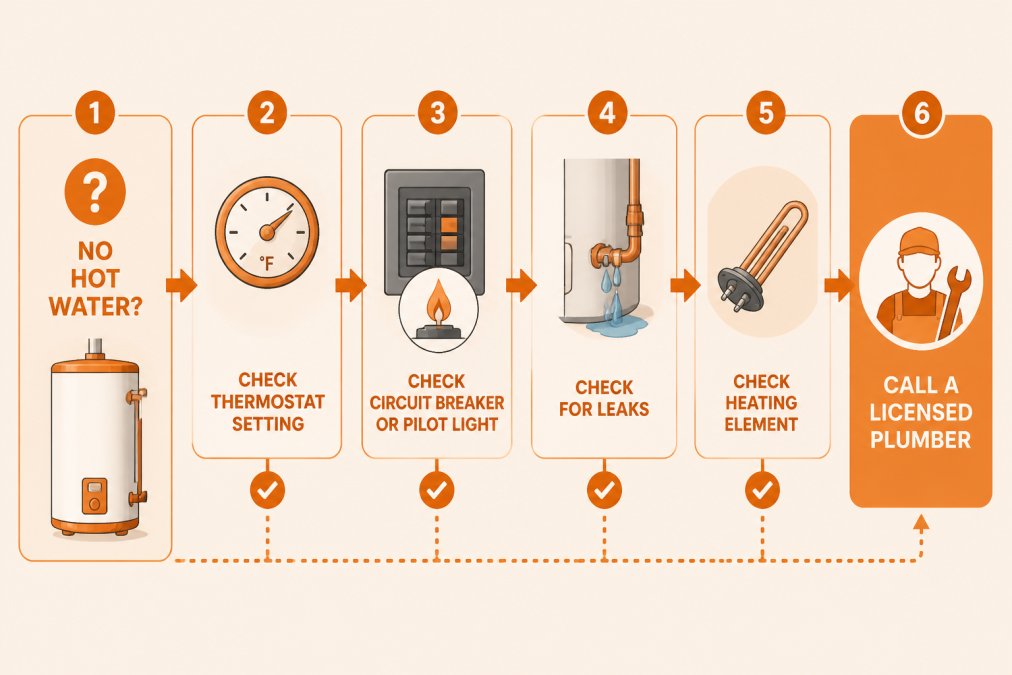
No hot water is frustrating. Before calling for replacement, check a few basics first.
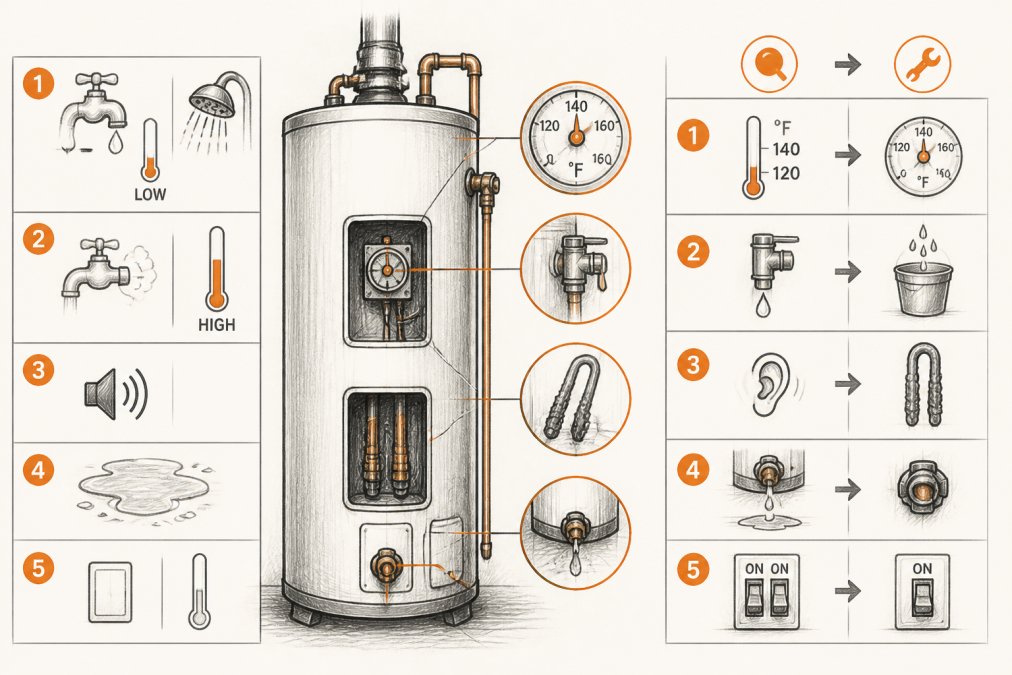
Start with the basics. Check your thermostat setting, most units work best between 120-140 degrees Fahrenheit.
Check your circuit breaker (electric units) or pilot light (gas units) and reset or relight as needed.
Listen for warning sounds.
Check for leaks. Water pooling at the base means the tank is failing and replacement is necessary.
Discolored water is a red flag.
Signs Your Water Heater Needs Replacement
Age matters most. Water heaters typically last 8-12 years; past 10 years, replacement is smart even if it still works.
Multiple problems signal replacement. If your unit leaks, makes noise, and produces rusty water, replacement is more practical.
Frequent repairs add up.
Loss of pressure or volume means the tank or heating element is failing and replacement is needed.
Average Water Heater Lifespan and When to Replace
Most units last 8-12 years, depending on water quality, maintenance, and usage.
Gas units often outlast electric ones when properly maintained.
Maintenance extends lifespan. Annual flushing and checking the anode rod every few years can add 2-3 years to your unit's life.
Plan ahead, don't wait for failure. Knowing your unit's age lets you schedule replacement on your timeline. An instant water heater replacement quote connects you with licensed, insured plumbers who provide estimates so you can compare bids and choose the right professional.
When DIY Troubleshooting Stops
Don't open the tank yourself. Water heaters hold pressurized hot water; opening one risks serious burns or injury.
Gas leaks require immediate professional help. If you smell rotten eggs, turn off the unit and call a licensed plumber immediately.
Electrical work on electric units should be left to professionals. High voltage work risks injury or fire.
Thermocouple testing needs the right tools and professional knowledge.
When to Get an Instant Estimate for Replacement
An instant estimate from a licensed plumber gives you clarity on replacement costs and options.
Get an instant estimate if your unit is over 10 years old, has multiple problems, or leaks, knowing the cost helps you plan. Licensed, insured plumbers bid competitively so you see real market prices and control the timeline.
Frequently Asked Questions
What should I check first if I have no hot water?
Start with the simplest checks: verify the water supply shut-off valve is open, check your thermostat setting (ensure it's set to your desired temperature), and inspect the circuit breaker or pilot light depending on whether you have an electric or gas unit. If basic checks don't restore hot water, contact a licensed plumber for replacement options.
How do I know if my water heater is failing and needs replacement?
Common signs include rust-colored water, persistent leaks from the tank or drain valve, banging or popping noises from sediment accumulation, and water that won't heat above a certain temperature. If your unit is over 10 years old and experiencing multiple issues, replacement is often more cost-effective than repair. A licensed plumber can assess if replacement is the better option.
How long does a typical water heater last before replacement?
Most water heaters last 8 to 12 years. Factors like water quality and usage patterns can influence lifespan. Once your water heater approaches 10 years, start planning for replacement to avoid unexpected failure and emergency costs.