 how-to
How to Troubleshoot No Hot Water in 2026: What to Check
Table of Contents
- No Hot Water? Start With These Troubleshooting Steps
- Signs of a Failing Water Heater You Should Not Ignore
- When to Replace vs Repair a Water Heater
- Frequently Asked Questions
Last Updated: September 25, 2026
No Hot Water? Start With These Troubleshooting Steps
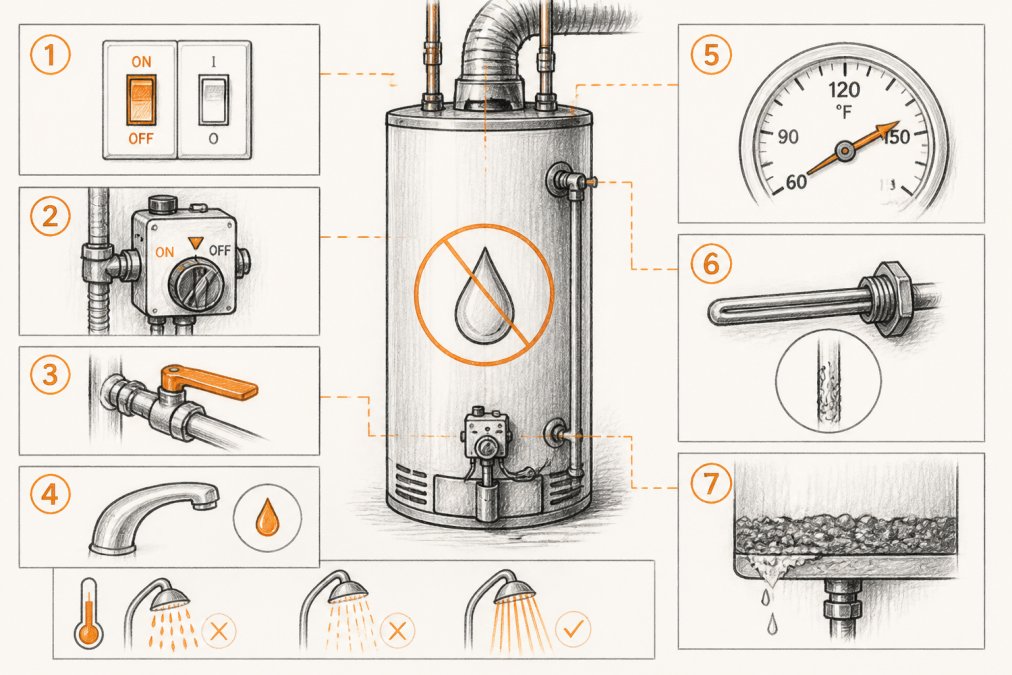
Troubleshooting no hot water starts with one rule: work from the power source outward. Most no-hot-water calls trace back to a tripped breaker, a dead pilot, or a thermostat set wrong, not the tank itself.
Step 1: Check the Circuit Breaker
Find the water heater's breaker. If it sits in the middle position, it tripped, flip it fully off, then back on.
If it trips twice, stop, that points to a bigger problem.
Step 2: Test the Reset Button and Thermostat
Electric water heaters have a reset button behind the access panel. Press it once. If it clicks and stays put, you likely fixed it.
A thermostat knocked low during a power surge leaves you with cold water and no other symptom.
Step 3: Inspect the Pilot Light and Gas Supply
Gas water heaters need a lit pilot light. Open the access panel and look for a small flame. No flame means you need to relight it.
Follow the tank label for relighting steps. If the pilot won't stay lit, the thermocouple is the usual suspect, that needs a pro.
Step 4: Decide Between Repair and Replacement
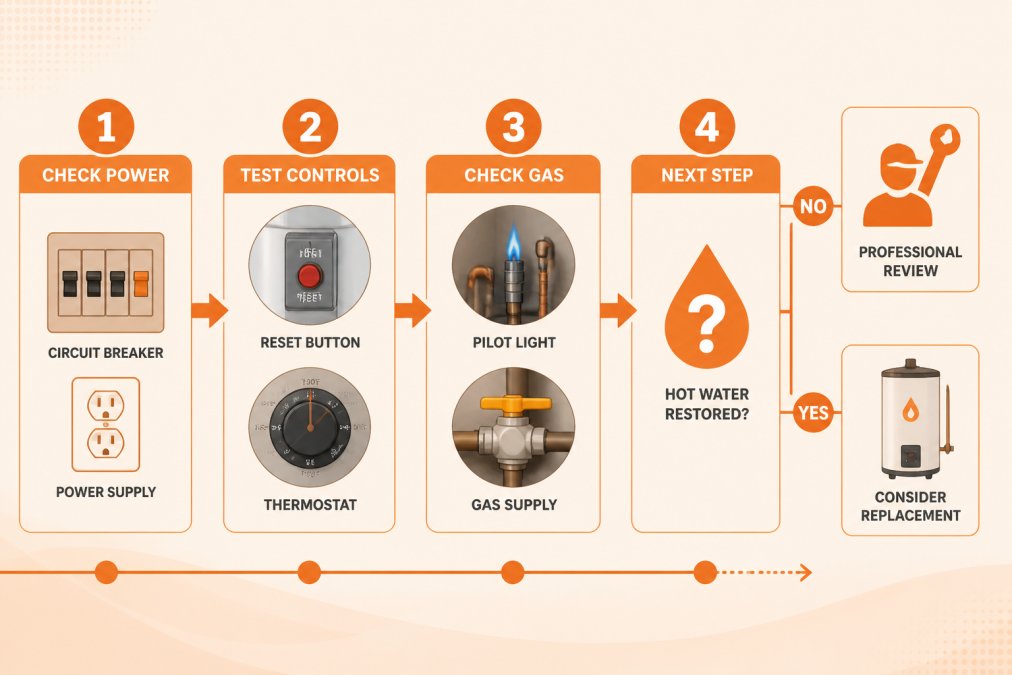
If those checks come up empty, the issue may be deeper: a failed heating element, sediment buildup, or a bad dip tube. That's where most homeowners stop guessing.
Signs of a Failing Water Heater You Should Not Ignore
Rusty water, rumbling sounds, and puddles around the tank are the classic signs of a failing water heater. Catch them early and you plan a replacement on your schedule. Ignore them and you get an emergency.
Watch for rusty or metallic water, rumbling from sediment, moisture at the base, hot water running out faster, and age past 10 years.
A smart leak sensor near the tank can alert your phone before a small drip becomes a flooded garage.
When to Replace vs Repair a Water Heater
Replace your water heater when it is over 10 years old, leaking from the tank, or facing a repair that costs more than half of a new unit.
The simple rule: a tank leak, corrosion, or age 10+ years means replace.
Replacement cost depends on tank size, fuel type, and local labor. Get an instant estimate from QuickHotWater.com in about 30 seconds, then connect with local, licensed and insured plumbers near you.
If you're a licensed plumber, you can apply to join our plumber network and bid on replacement jobs in your area.
Plan the swap before the tank fails and you avoid the emergency premium.
Frequently Asked Questions
What is the first thing to check when there is no hot water?
Start with the power supply. For an electric water heater, check the circuit breaker and confirm it has not tripped. For a gas unit, verify the pilot light is lit and the gas supply line is open. If the breaker trips repeatedly or the pilot light will not stay lit, the issue is likely a failed heating element or thermocouple, which needs a licensed plumber to diagnose and replace.
How can I tell if my water heater is beyond repair?
A tank that leaks from the body, corrosion around fittings, or a unit older than 10 to 12 years usually means replacement is the better path. If you see rusty water, rumbling sounds from sediment buildup, or the unit cannot keep up with demand, those are signs of a failing water heater. A licensed plumber can confirm whether repair is viable or if a like-for-like replacement makes more sense.
Is it worth repairing an old water heater or should I replace it?
If the unit is under 10 years old and the problem is a single component like a heating element or thermocouple, a repair may be reasonable. Once a tank develops leaks, corrosion, or sediment-related failures, replacement is usually the smarter investment. QuickHotWater.com focuses on replacement only, connecting you with local licensed plumbers who bid competitively so you get a fair price without sales pressure.
No hot water is a hassle, but deciding what comes next should not be. QuickHotWater.com connects you with local, licensed and insured plumbers who bid competitively, so you get a fair price without the guesswork. Get an instant estimate in 30 seconds, skip the sales visits, and handle the permit with your install. Get started with QuickHotWater.com and get your hot water back on your terms.