 how-to
Is a Hot Water Heater an Emergency?
Table of Contents
- When a Hot Water Heater Becomes an Emergency
- Water Heater Leaking from Bottom: Is It an Emergency?
- How to Shut Off Water Heater During an Emergency
- Frequently Asked Questions
Last Updated: September 27, 2026
When a Hot Water Heater Becomes an Emergency
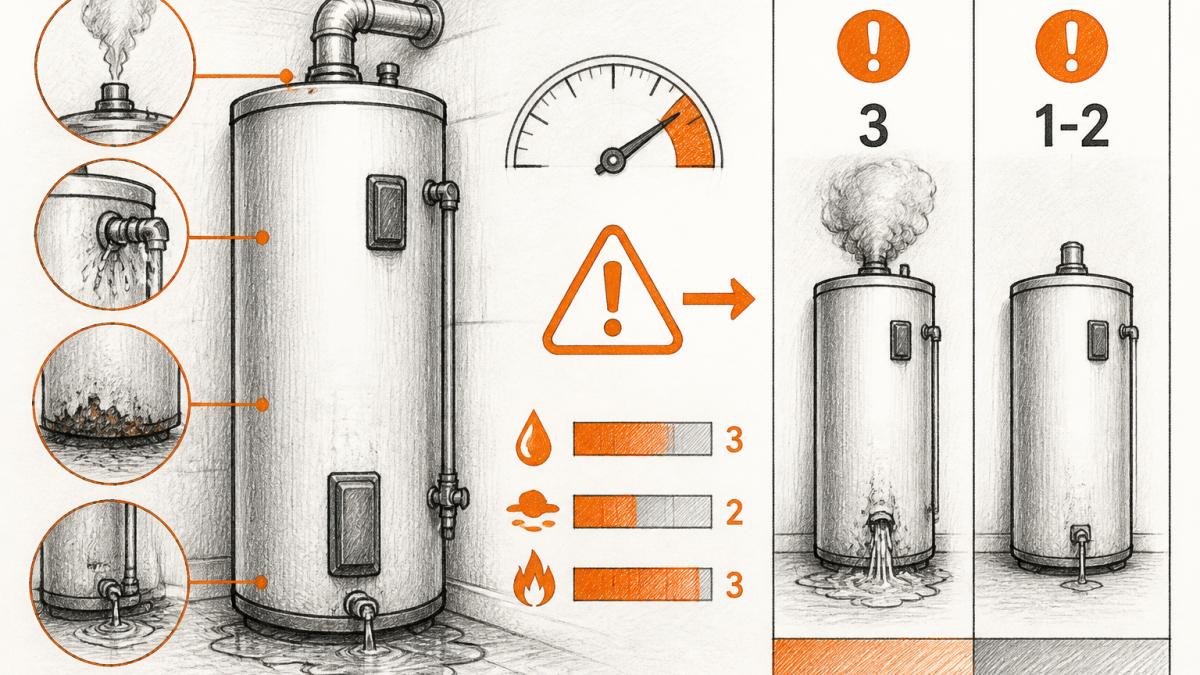
A hot water heater emergency is when your unit fails in a way that creates an immediate safety or livability problem. Not every water heater issue qualifies. A slow leak developing over weeks is different from a burst pipe flooding your basement tonight. The key distinction is whether the problem poses an immediate threat to your home, health, or safety.
Common emergency scenarios include gas leaks, electrical shorts, scalding water, burst tanks, or complete system failure during freezing weather. Non-emergencies include gradual temperature loss, minor drips, or age-related wear that's been happening for months.
Water Heater Leaking from Bottom: Is It an Emergency?
A leak from the bottom of your tank usually signals internal corrosion. The question is whether it's a slow drip or an active flood.
If water is pooling under the unit or spreading across your floor, that's an emergency. Pooling water damages flooring, drywall, and creates mold risk. You need a professional plumber immediately to shut down the system and prevent property damage.
If you notice a small amount of moisture but no active pooling, it's urgent but not necessarily a same-day emergency. Check back in a few hours. If the leak is growing, call a plumber that day. If it stays the same, you can schedule replacement within the week.
Either way, a leaking tank often requires replacement. If you're ready to move forward, you can get an instant water heater replacement quote to understand your options and next steps.
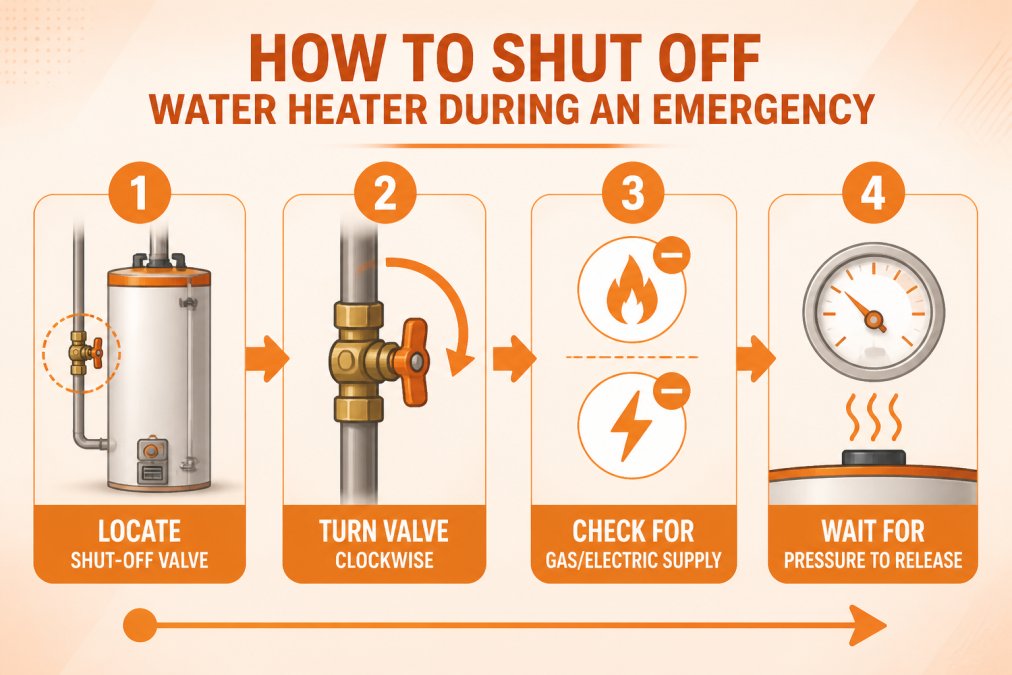
How to Shut Off Water Heater During an Emergency
Knowing how to stop your water heater quickly can prevent serious damage.
Locate your shut-off valve. Most tanks have a valve on the cold-water inlet line at the top. It's usually a small handle pointing left or right.
Turn the valve clockwise. A quarter-turn shuts off water flow. You don't need to force it. If the valve is stuck, stop, forcing it can break it.
For gas units, turn off the gas. Find the gas control knob (usually labeled). Turn it to the "Off" position. Do not relight the pilot yourself.
For electric units, flip the breaker. Your water heater breaker is typically labeled in your electrical panel. Switch it to "Off."
Let pressure release. After shutting off supply, open a hot-water faucet elsewhere in the house briefly. This releases tank pressure safely.
Call a licensed plumber right away. Do not attempt to repair or restart the unit yourself. A professional needs to assess the damage and handle replacement safely.
Frequently Asked Questions
How long can a tenant legally go without hot water?
Most states require landlords to provide hot water as part of habitable living conditions under implied warranty of habitability. Tenants typically cannot go without hot water for more than 24-48 hours before it becomes a legal violation. Check your state's specific tenant rights laws, as timelines vary. If your landlord fails to restore hot water within the required period, you may have grounds for rent withholding or repair-and-deduct remedies. Document the failure date and contact your local housing authority if the issue persists.
Is a leaking water heater considered an emergency?
A leaking water heater can escalate to an emergency depending on the leak's severity and location. A slow drip from the bottom may allow time to schedule replacement, but pooling water or active flooding requires immediate action to prevent water damage and mold. If the leak stems from a burst tank or corroded section, shut off the water supply and call for emergency service. Gas leaks near the unit or burning smells are safety hazards requiring urgent professional attention.
What's the difference between an urgent water heater repair and an emergency replacement?
An urgent issue addresses a problem that needs attention within hours or a day, such as a slow leak or pilot light failure, but doesn't pose immediate safety risk. An emergency replacement is necessary when the unit poses a safety hazard (gas leak, carbon monoxide risk, electrical short), causes active flooding, or leaves occupants without hot water in violation of habitability standards. Emergency situations typically require same-day or next-day service, while urgent issues can often be scheduled within a few days. We handle replacement only, and plumbers confirm the final price on-site after bidding.
When your water heater fails unexpectedly, you need fast action and fair pricing. QuickHotWater.com connects you with local, licensed, and insured plumbers who provide instant estimates for emergency replacement. Get a competitive bid in 30 seconds and move forward with confidence.