 how-to
Signs of Water Heater Leaking From Bottom to Check
Table of Contents
- Signs of Water Heater Leaking From Bottom
- Water Heater Leaking From Bottom vs Condensation
- How to Shut Off a Water Heater and What to Do Next
- Frequently Asked Questions
Last Updated: September 13, 2026
Signs of Water Heater Leaking From Bottom
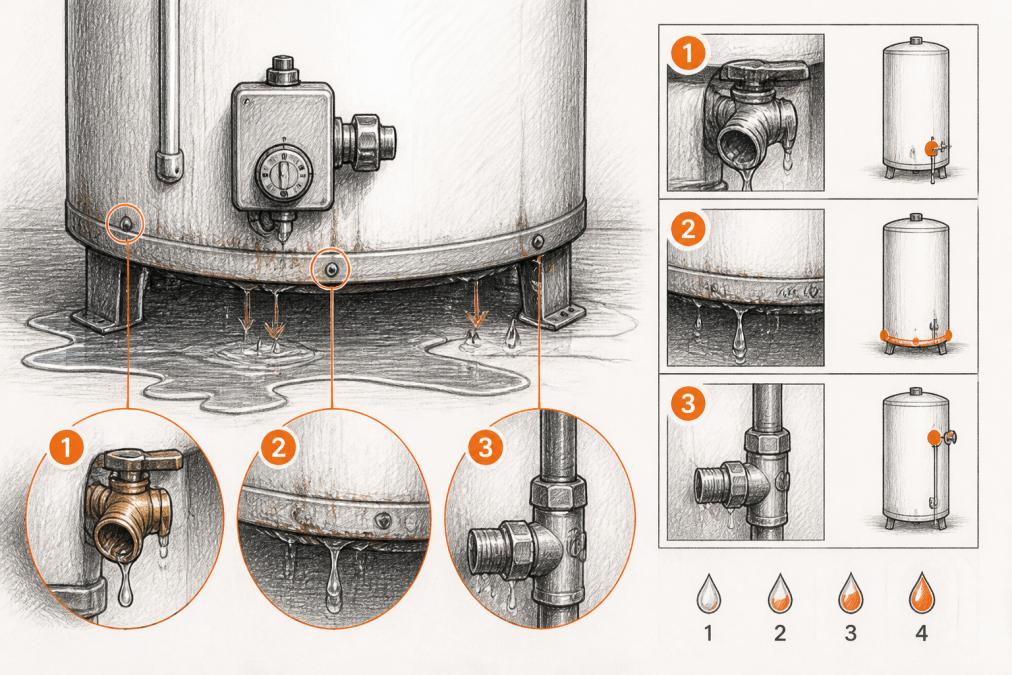
A water heater leaking from the bottom is usually serious, water pooling under the tank often means internal corrosion or a failed fitting, not a minor drip. This guide from QuickHotWater.com covers the signs, how to tell a leak from condensation, and what to do next.
The signs that matter most:
- Pooling water or a wet ring at the tank base
- Rust-colored stains on the tank bottom
- A drip that returns after you wipe it dry
- Moisture on the cold water inlet or fittings
- A corroded tank bottom visible under the unit
If you see any of these, treat it as a failing unit until a licensed plumber says otherwise. Once the tank is compromised, replacement is usually the answer.
Water Heater Leaking From Bottom vs Condensation
Condensation forms on the outside of a cold tank and dries on its own. A true leak keeps coming back, pools at the base, and often leaves rust stains.
| What You See | Condensation | Active Leak |
|---|---|---|
| Timing | Appears after hot water use, dries in hours | Constant, returns after wiping |
| Color | Clear water | Rusty or discolored |
| Trend | Goes away on its own | Gets worse over days |
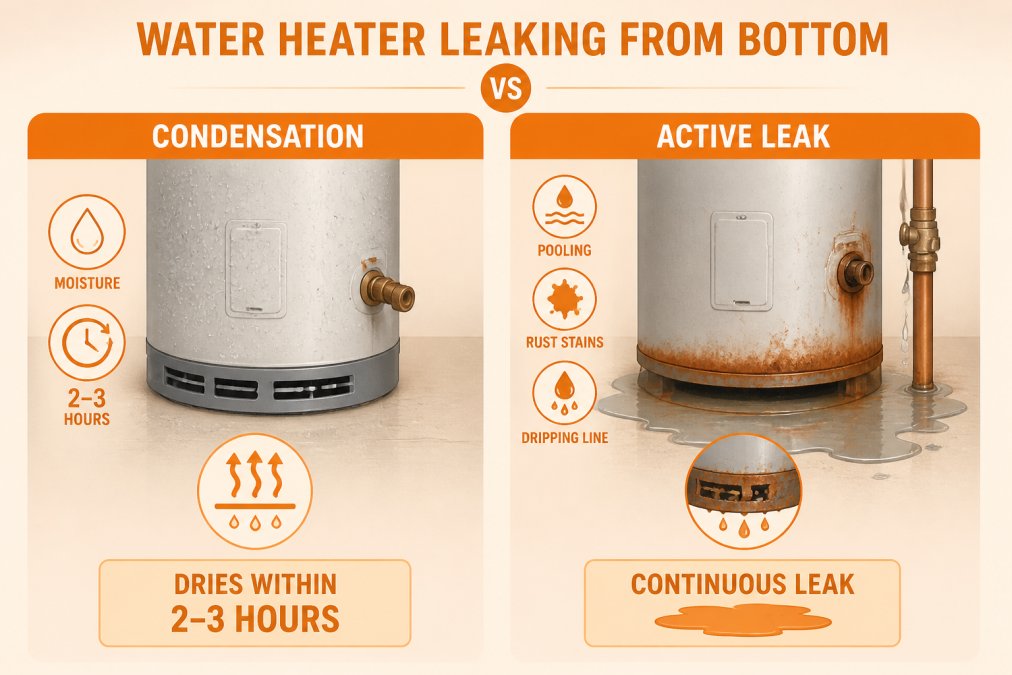
If the moisture is rusty, constant, or pooling, it's a leak. A licensed plumber can confirm, and if the tank is failing, replacement is the fix.
How to Shut Off a Water Heater and What to Do Next
Shutting off a water heater means closing the cold water inlet valve on top of the tank, then cutting the power or gas. Do this first to stop more water feeding the leak and keep the area safe.
Step by step:
- Close the cold water inlet valve at the top of the tank. Turn it clockwise until it stops.
- Cut the power. For electric units, switch off the breaker. For gas, turn the gas shutoff to off.
- If you smell gas, leave the area and call for help.
- Drain the tank if needed using the drain valve, into a bucket or hose.
- Clean up standing water to limit water damage.
- Call a licensed plumber to assess whether the tank needs replacement.
A failing tank rarely gets better. Once you've stopped the water, the real decision is whether to replace. QuickHotWater.com connects homeowners with local, licensed and insured plumbers who bid competitively, so you get a fair price for quality work without overpaying or guessing. You can request an instant water heater replacement quote online, and the plumber confirms the final price on-site after seeing your setup. If you're a licensed plumber, you can also apply to join our plumber network.
Frequently Asked Questions
Is it common for a water heater to leak from the bottom?
Yes. Bottom leaks are one of the most common water heater failure points. The tank base sits directly on the burner assembly or floor, so sediment buildup, internal rust, and a worn drain valve all collect there. Once the glass-lined tank corrodes through, water seeps from the base and no repair will stop it. A bottom leak usually signals the unit is at the end of its water heater lifespan and needs replacement, not a patch.
Can I still use water if the water heater is leaking?
Shut off the water heater first. Turn off the gas supply or the electrical breaker, then close the cold water inlet shut-off valve. Using hot water while the tank leaks can worsen water damage and stress a corroded tank bottom. You can still use cold water in the house, but avoid running the hot tap until the unit is replaced. If water is pooling near electrical connections, stop and call a licensed plumber.
Does a leaking water heater mean it needs to be replaced?
A leak from the tank itself, especially at the base, means replacement. Internal tank corrosion and a corroded tank bottom cannot be fixed. A leak from a loose drain valve, a faulty pressure relief valve, or a loose water supply line fitting may be a simple fix, but those are repair jobs. QuickHotWater.com handles replacement only, so if your tank is leaking from the bottom, get an instant estimate and a local licensed plumber confirms the final price on-site.
A leaking water heater rarely fixes itself, and waiting usually makes the damage worse. If your tank is showing the signs above, stop the water, cut the power, and get a professional opinion fast. QuickHotWater.com matches you with vetted local plumbers, gives you an instant estimate in about 30 seconds, and handles same-fuel, like-for-like replacement with the permit included. Get a quote and get your replacement sorted without the sales visits or spam calls.