 how-to
Water Heater Leak Repair: 5 Steps to Take Now
Table of Contents
- Step 1: Shut Off the Water and Power
- Step 2: Find the Source of the Water Heater Leak
- When to Call an Emergency Plumbing Service Near Me
- Water Heater Replacement Cost vs. Repeated Repairs
- Frequently Asked Questions
Last Updated: September 6, 2026
A leaking water heater can dump 30 to 50 gallons onto your floor in minutes, so stop the flow first. Shut off the water supply and power before calling anyone. This guide from QuickHotWater.com walks you through the first five steps to contain the leak, find its source, and decide whether a full water heater replacement is the smarter move.
Act fast, because standing water warps flooring, stains drywall, and invites mold within hours. If a step feels beyond your skill level, stop and call a professional.
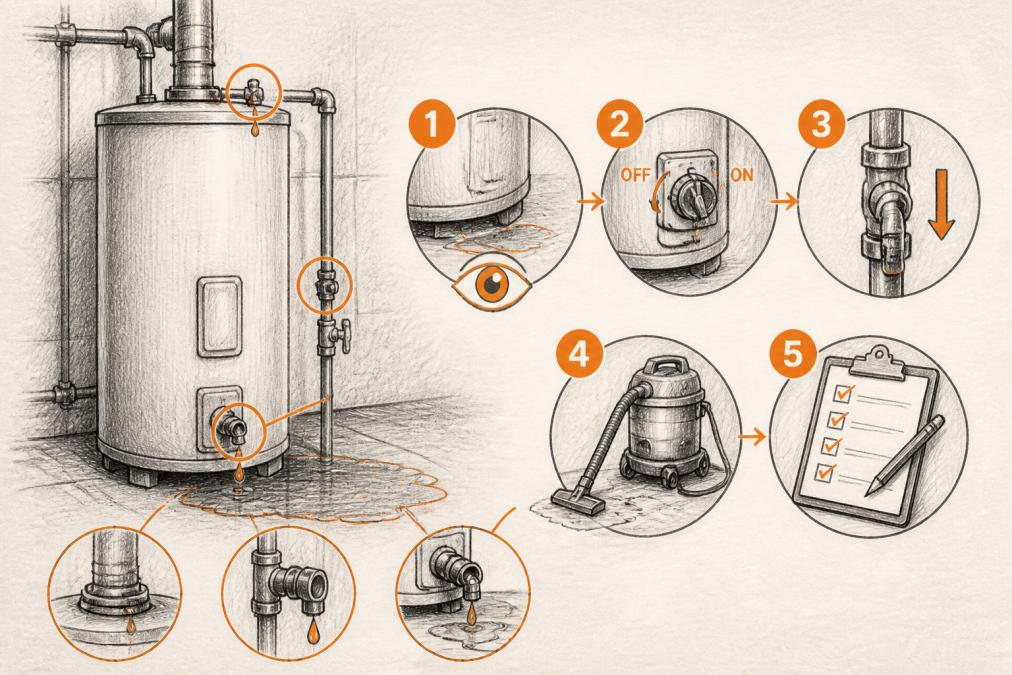
Step 1: Shut Off the Water and Power
Turn off the cold water supply valve on top of the unit first. If it is stuck or you cannot find it, shut off the main water valve for the house.
Next, kill the power source so the tank does not keep heating an empty unit. For an electric heater, flip the dedicated circuit breaker off. For a gas unit, turn the gas control valve to the pilot or off setting.
Once the water and power are off, open a hot water faucet to relieve pressure in the lines and confirm the supply is shut off.
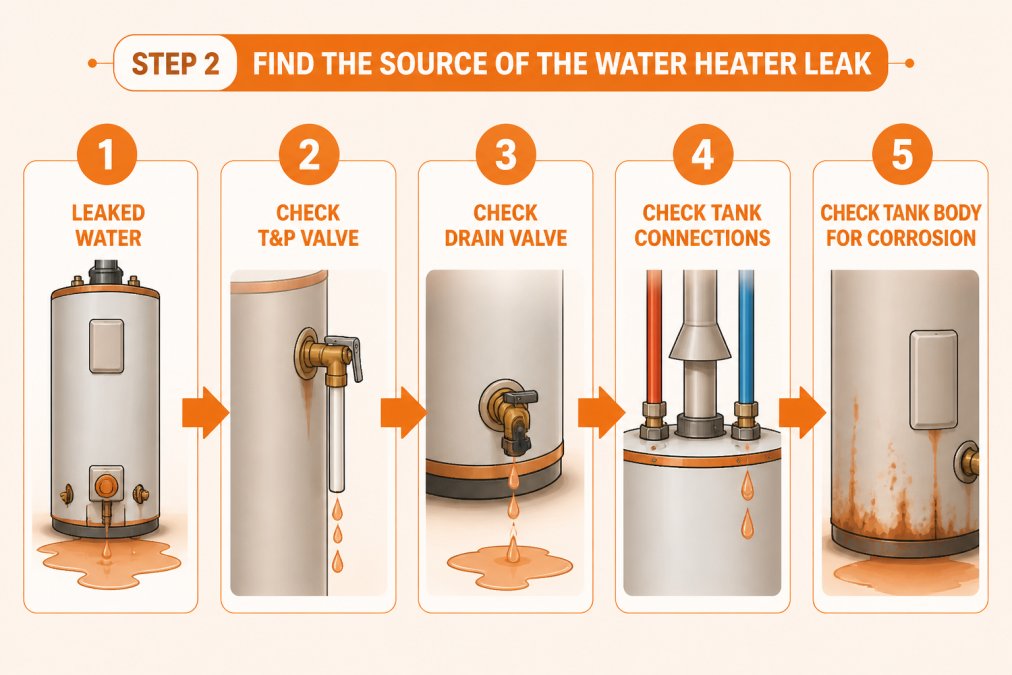
Step 2: Find the Source of the Water Heater Leak
A puddle tells you water is escaping, but not where it starts. Check the top of the tank first: loose pipe connections or a leaking temperature and pressure relief valve often drip down and pool at the base. Dry the tank and pipes, then watch where fresh water appears.
Work through these common leak points in order:
- Pipe connections at the top of the unit where hot and cold lines meet the tank. Tighten with a wrench, but do not overtighten and strip the threads.
- Temperature and pressure relief valve, usually on the side or top of the tank. If water drips from the valve or its discharge pipe, the valve may be faulty or the tank pressure may be too high.
- Drain valve near the bottom of the tank. A worn gasket or a valve that is not fully closed can seep water steadily.
- Tank body itself. Look for rust streaks, bulges, or pinhole leaks on the metal shell. Corrosion here means the tank has failed internally.
When to Call an Emergency Plumbing Service Near Me
Call an emergency plumbing service near me right away if water is pouring from the tank body, if you smell gas, or if you cannot stop the flow at the shut-off valve. A ruptured tank can release hundreds of gallons in under an hour.
Call a professional if the leak comes from the tank itself rather than a fitting. Tank leaks mean the inner liner has failed, and no patch or sealant will hold. The same applies to a leaking T&P valve that keeps dripping.
For leaks from pipe connections or the drain valve, a competent DIYer can often stop the drip with a wrench or a replacement part. But if you are unsure about the source, or the unit is older than 10 to 12 years, plan for replacement. Repeated repairs on an aging tank rarely pay off.
Water Heater Replacement Cost vs. Repeated Repairs
Every repair buys time, but on an aging tank each fix is a gamble. A new drain valve gasket costs a few dollars and takes minutes to install, while a tank failure can flood your basement and cause thousands in water damage. When the tank itself is leaking, replacement is the only option.
The water heater replacement cost depends on your fuel type, tank size, and local labor rates. What matters is the trade-off: a single emergency call and a new unit can be a better investment than one water damage claim, and a new tank comes with a warranty.
| Scenario | Likely Fix | Long-Term Outcome |
|---|---|---|
| Dripping pipe connection | Tighten fitting or replace gasket | Reliable if caught early |
| Leaking drain valve | Replace valve or gasket | Reliable if tank is sound |
| T&P valve discharging | Replace valve or check pressure | Reliable if pressure is the cause |
| Leak from tank body | None; tank has failed | Replacement required |
If the unit is less than eight years old and the leak is from a fitting, a repair makes sense. If the tank is older, corroded, or leaking from the body, put that repair money toward a new unit. QuickHotWater.com connects you with local, licensed and insured plumbers who bid competitively on same-fuel, like-for-like replacements, so you get a fair price without sales visits or spam calls. The permit is included in your instant water heater replacement quote, and plumbers confirm the final price on-site after bidding. If you are a licensed plumber looking for steady replacement leads, you can also apply to join our plumber network to bid on jobs in your area.
Frequently Asked Questions
Can a water heater that's leaking be repaired?
Sometimes. Leaks from a loose pipe connection, a faulty drain valve, or a malfunctioning temperature and pressure relief valve are often fixable. However, a leak from the tank itself, usually caused by corrosion and sediment buildup, means the tank has failed. In that case, repair isn't a lasting option, and you should start planning for a water heater replacement.
Is it safe to keep a leaking water heater running?
No. A leaking water heater can cause significant water damage and poses safety risks. If the leak is from the temperature and pressure relief valve, it could indicate excessive pressure, which is dangerous. Turn off the power supply and the water shut-off valve to stop the flow, then contact an emergency plumbing service near me for a professional assessment.
When is it time to replace a leaking water heater instead of repairing it?
If the leak comes from the tank itself, it's time to replace it. Tank leaks are typically caused by internal corrosion and cannot be sealed effectively. Also, if your unit is over 10 years old or you've already made multiple repairs, the water heater replacement cost is often a better investment than paying for another short-term fix.
A water heater leak is stressful, but the fix starts with clear thinking: shut off the water and power, find the source, and be honest about whether the tank is worth saving. If the unit is old or the tank itself is leaking, do not sink money into repeated repairs. Get an instant estimate from QuickHotWater.com and let vetted local professionals handle the replacement from permit to final hookup, so you can get hot water back without overpaying or guessing.