 how-to
Water Heater Maintenance Tips to Extend Lifespan
Table of Contents
- Water Heater Maintenance Tips That Actually Work
- How Often to Flush Your Water Heater
- Signs a Water Heater Needs Replacement
- Frequently Asked Questions
Last Updated: September 26, 2026
Water Heater Maintenance Tips That Actually Work
Your water heater works hard. It runs every day, heating water for showers, dishes, laundry. Most homeowners ignore it until it breaks. That's expensive.
Water heater maintenance tips don't have to be complicated. A few simple tasks each year can add years to your tank's life. You'll also save money on energy bills.
Your water heater works hard. But before you need a new unit, maintenance matters. Here's what actually works.
How Often to Flush Your Water Heater
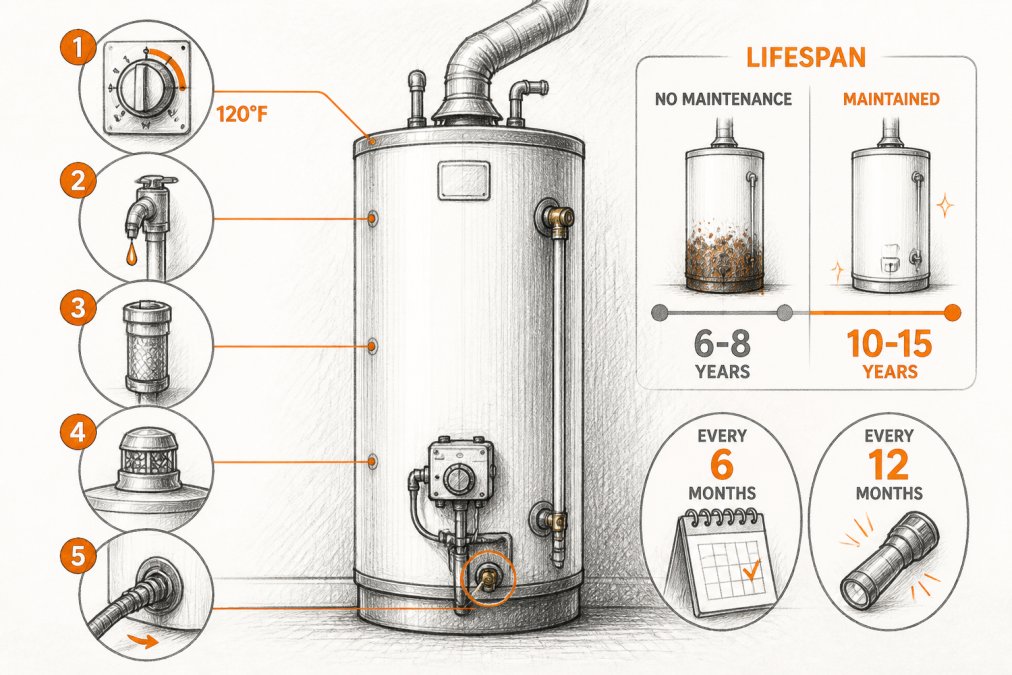
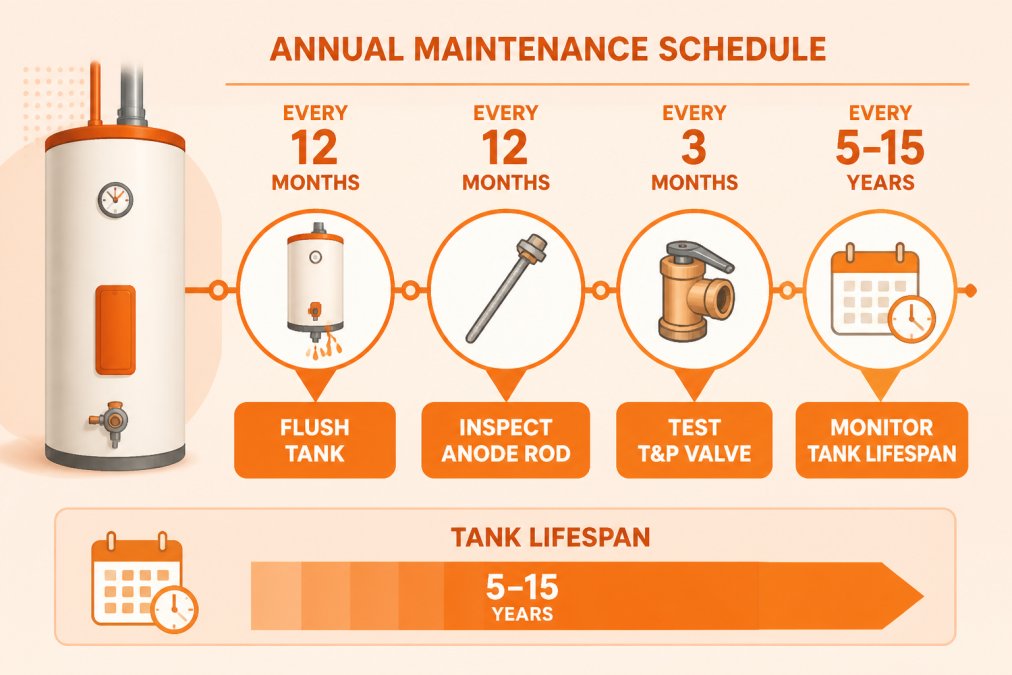
Flush your tank every 12 months. This removes sediment buildup that collects at the bottom.
Sediment is minerals from your water. Over time, it hardens. A thick layer of sediment makes your heater work harder. It wastes energy. It also speeds up corrosion.
How to flush:
- Turn off the water heater (gas or electric)
- Let the tank cool for 30 minutes
- Connect a garden hose to the drain valve at the tank bottom
- Open the drain valve slowly
- Let water run until it runs clear (usually 5-10 minutes)
- Close the valve and refill the tank
- Turn the heater back on
Many homeowners skip this step. Sediment buildup is one of the fastest ways to shorten your heater's life.
Signs a Water Heater Needs Replacement
Your heater won't last forever. Watch for these warning signs:
- Rusty water from hot taps, corrosion inside the tank
- Loud rumbling or popping sounds, sediment overheating
- Leaks around the base, tank failure starting
- No hot water or weak pressure, heating element or dip tube failure
- Age over 10-12 years, most tanks fail by then
If your unit shows these signs, replacement is coming. A broken heater can flood your home and leave you without hot water.
When you're ready to replace, get an instant water heater replacement quote from QuickHotWater.com in 30 seconds. We connect you with licensed, insured plumbers in your area who bid competitively so you pay a fair price.
Frequently Asked Questions
What can I do to make my water heater last longer?
Regular maintenance extends lifespan significantly. Flushing your tank annually to remove sediment buildup, inspecting and replacing the anode rod every 3-5 years, testing the temperature and pressure relief valve quarterly, and insulating the tank and pipes can reduce strain. Installing a water softener can help prevent mineral deposits in hard water areas. These steps can reduce corrosion and electrolysis, which are primary causes of premature failure.
How often should I flush my water heater?
Flushing your water heater annually, or every 6 months if you have hard water, can help. Sediment accumulation reduces heating efficiency and creates scale buildup that accelerates tank corrosion. Flushing removes mineral deposits and extends thermal efficiency. If you notice discolored water or reduced hot water pressure, flushing may be beneficial. The drain valve makes this a straightforward process you can handle yourself or request during a professional service visit.
What are the signs that a water heater is failing and needs replacement?
Watch for rust-colored water, strange noises from the tank, visible leaks around the base, significantly reduced hot water supply, or an age over 10-15 years. If the anode rod has corroded completely, replacement may be more cost-effective than continued repairs. A failing dip tube can also cause cold water mixing. If multiple issues appear together or your unit is approaching the end of its typical lifespan, replacement is usually the practical choice over repair.
Replacing a water heater shouldn't be stressful. Get an instant estimate from qualified local plumbers. Get a Quote with QuickHotWater.com today.