 how-to
Do I Need a Permit for a Water Heater?
Table of Contents
- Is a Water Heater Permit Required in Your Area?
- Consequences of Unpermitted Plumbing Work
- Water Heater Permit Cost: What to Expect
- How to Apply for a Water Heater Permit
- Water Heater Inspection Checklist
- DIY vs. Licensed Contractor: Who Pulls the Permit?
- Retroactive Permits: What to Do If Work Was Already Done
- Conclusion
Last Updated: August 13, 2026
Is a Water Heater Permit Required in Your Area?
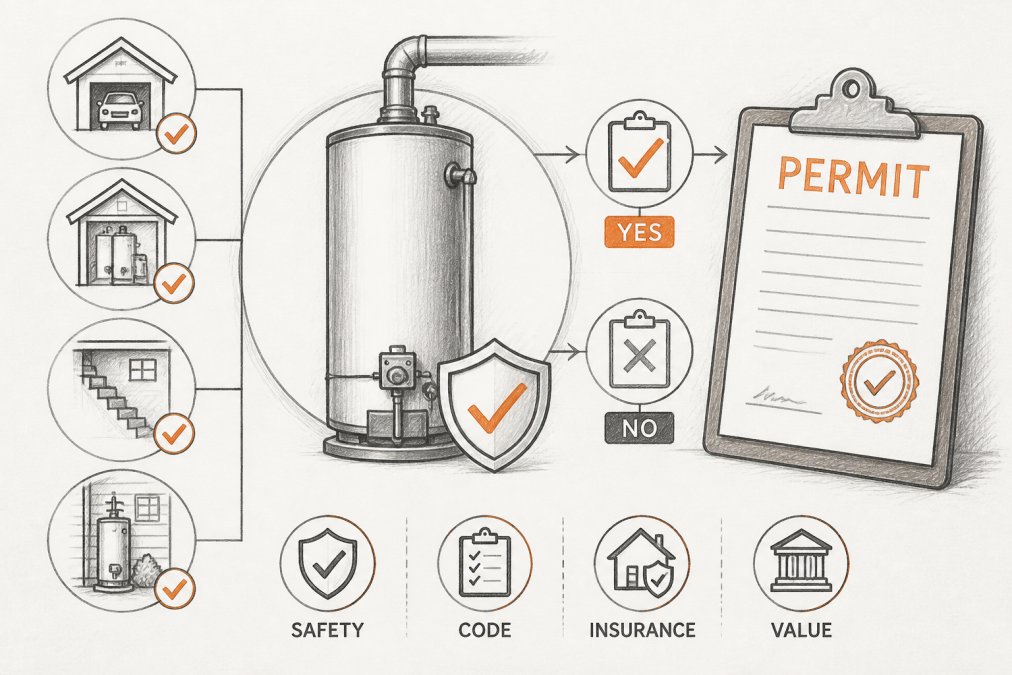
A water heater permit is required for most water heater replacements in the United States. This applies to both tank-style and tankless water heater installations, whether gas or electric. The specific requirement depends on your local jurisdiction, but the overwhelming majority of municipalities follow the International Residential Code, which classifies water heater replacement as a plumbing alteration requiring a permit.
At QuickHotWater.com, we handle permit questions every day from homeowners who are surprised to learn that even a like-for-like replacement needs to go through their local building department. Below, we'll walk you through exactly when a permit is required, what happens if you skip it, and how to get one without the headache.
The short answer: assume you need one. The exceptions are narrow, and the consequences of getting this wrong are significant.
How to Check Your Local Jurisdiction's Rules
Your local building department is the definitive source. Most municipalities publish permit requirements on their official websites, and many now offer online lookup tools where you can confirm requirements by project type.
Practical steps to check your jurisdiction:
- Search "[your city or county] building department water heater permit"
- Call the building department directly, most have a permit desk open during business hours
- Ask your licensed plumber, who should know local requirements by trade
As documented in the International Code Council's residential code resources, the IRC provides the baseline framework that most jurisdictions adopt, though local amendments can add or modify requirements.
Permit Exemptions: When You Might Not Need One
Permit exemptions for water heater replacement are rare, but they do exist. Some rural counties with minimal code enforcement infrastructure do not require permits for residential plumbing work. A small number of jurisdictions exempt like-for-like replacements when no gas line, venting, or structural changes are involved.
That said, even where an exemption technically exists, skipping the permit process removes the inspection safety net. A licensed plumber installing a unit with a faulty pressure relief valve or improper venting has no formal check on their work without an inspection. The permit isn't just bureaucratic paperwork, it's the mechanism that ensures the job was done to code.
Consequences of Unpermitted Plumbing Work
Skipping a water heater permit is a gamble that rarely pays off. The consequences of unpermitted plumbing work range from inconvenient to genuinely costly, and they tend to surface at the worst possible moments, during a home sale or after a water damage claim.
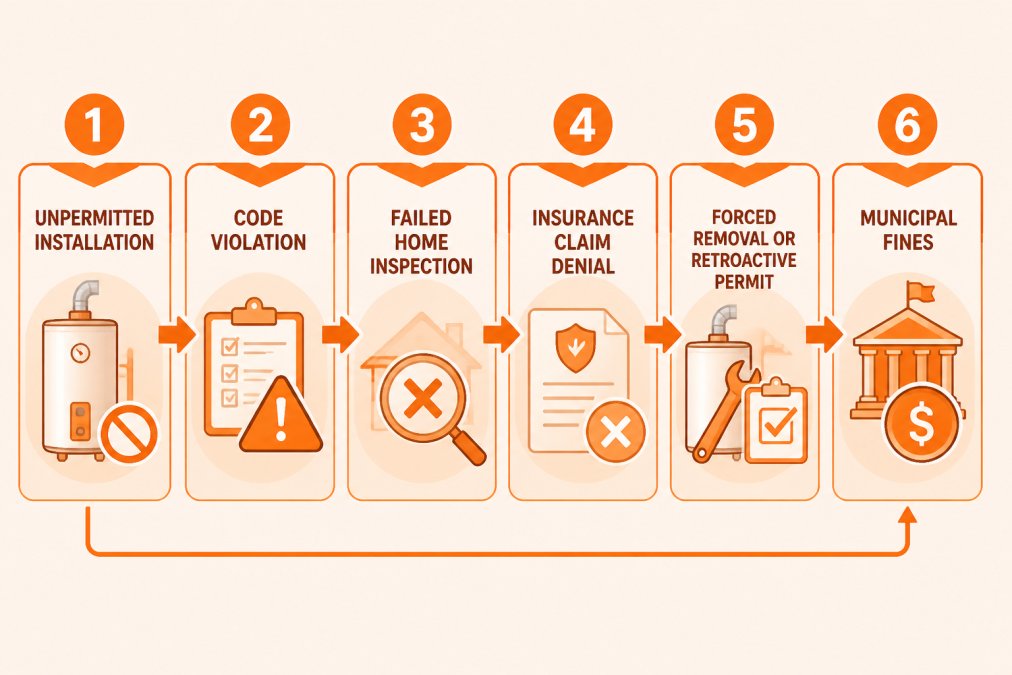
Here is the cascade that typically follows unpermitted work:
- Code violation discovered, during a home inspection or by a code enforcement officer
- Failed home inspection, the sale of your property stalls or falls through
- Insurance claim denial, your insurer refuses to pay for water damage tied to an unpermitted installation
- Forced removal or retroactive permitting, you pay to have the unit inspected or reinstalled to code
- Fines, local jurisdictions can levy fines for code violations, sometimes per day until resolved
According to the U.S. Consumer Product Safety Commission's water heater safety guidance, improperly installed water heaters are a leading source of residential carbon monoxide incidents and scalding injuries. The permit and inspection process exists precisely to catch these installation errors before they cause harm.
Resale Implications and Home Inspections
Unpermitted work is one of the most common deal-killers in residential real estate transactions. Home inspectors are trained to identify water heater installations that lack permit documentation, and buyers' agents routinely flag these issues during due diligence.
The practical impact: your buyer's lender may require the unpermitted work to be remediated before closing. In some cases, buyers simply walk. At minimum, you'll negotiate from a weaker position on price.
Many sellers discover unpermitted water heater installations only when they pull permits for other work or when a buyer's inspector raises the issue. By that point, the path to resolution is more expensive and time-pressured than it would have been during the original installation.
Insurance Claim Denial Risks
This is the consequence most homeowners underestimate. A water heater that fails and causes flooding or property damage may trigger a homeowner's insurance claim. If the insurer's investigation reveals the unit was installed without a permit, the claim can be denied outright.
The logic from the insurer's perspective is straightforward: an unpermitted installation was never verified to meet safety and building code standards. The insurer has grounds to argue that the installation itself was the proximate cause of the damage.
Water heater failures that cause significant property damage are not uncommon. The financial exposure from a denied claim can far exceed the cost of the original permit.
Water Heater Permit Cost: What to Expect
Water heater permit cost varies considerably by jurisdiction. Many municipalities charge a flat fee for residential plumbing permits, while others calculate fees based on the project's estimated value or use a tiered schedule.
Common fee structures you'll encounter:
| Permit Type | Typical Structure | Notes |
|---|---|---|
| Flat fee residential plumbing | Fixed amount per project | Most common for straightforward replacements |
| Valuation-based fee | Percentage of estimated project cost | More common in larger municipalities |
| Tiered schedule | Fee increases with scope of work | Applies when gas line or venting changes are involved |
| Inspection fee (separate) | Charged per inspection visit | Some jurisdictions bundle this with the permit fee |
The right approach is to contact your local building department for the current fee schedule. Permit fees are set by municipal ordinance and change periodically. A licensed plumber familiar with your area will also know the current rates.
When you get an estimate through QuickHotWater.com, permit costs are included in the pricing, no separate line-item surprises after the fact.
How to Apply for a Water Heater Permit
The permit application process is more straightforward than most homeowners expect. Most jurisdictions have simplified residential plumbing permits, particularly for standard tank replacements.
Step 1: Contact Your Local Building Department
Your first call is to the building department, not the plumber. Confirm that a permit is required for your specific project type, ask about the fee schedule, and find out whether the homeowner or the contractor must pull the permit. In most jurisdictions, either party can apply, but the licensed contractor typically handles this as part of their service.
Step 2: Submit Your Permit Application
Most building departments now accept online applications for residential plumbing permits. You'll typically need:
- Property address and owner information
- Description of work (e.g., "like-for-like water heater replacement, 50-gallon gas tank")
- Contractor license number and insurance certificate (if a licensed contractor is pulling the permit)
- Estimated project value or equipment specifications
- Site plan or location diagram (required in some jurisdictions for tankless installations)
Processing times range from same-day approval for over-the-counter permits to several business days for jurisdictions with higher volume. Emergency replacements can sometimes be expedited, ask the permit desk directly.
Step 3: Schedule and Pass the Inspection
After installation, you must schedule an inspection with your local building department. The inspector will verify that the installation meets residential code requirements before issuing final approval.
As explained in the International Association of Plumbing and Mechanical Officials' code resources, inspections for water heater installations typically focus on venting, gas line connections, the pressure relief valve, seismic strapping (in applicable regions), and clearances from combustible materials.
Do not cover or conceal any part of the installation before the inspection. Inspectors need clear access to all connections and components.
Water Heater Inspection Checklist
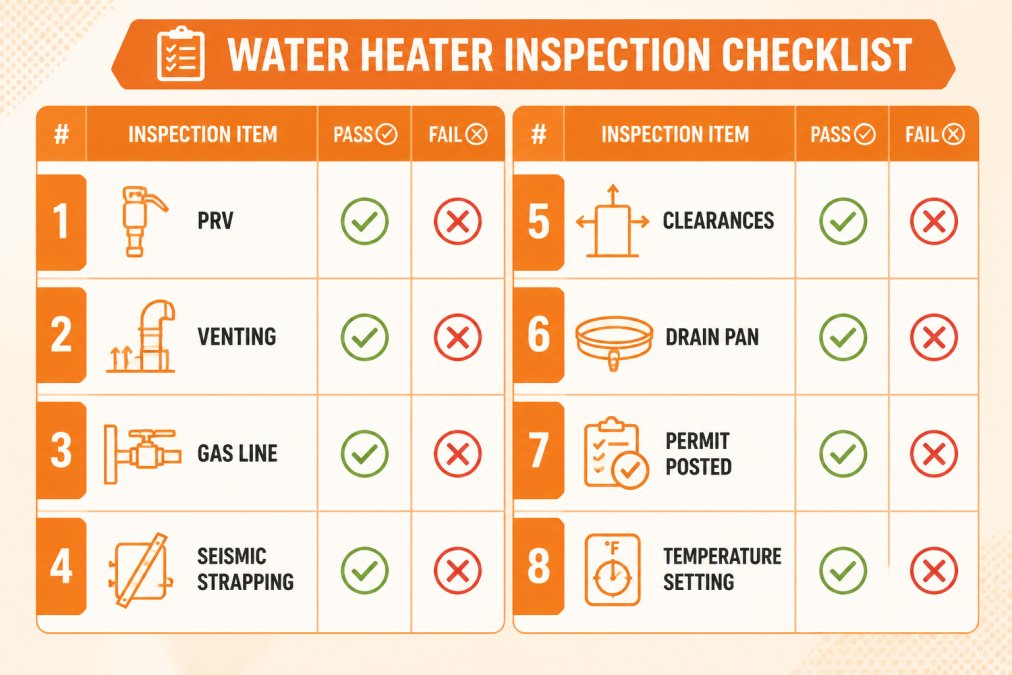
A water heater inspection covers specific code compliance items. Knowing what the inspector looks for helps you confirm the installation is ready before scheduling the visit.
| Inspection Item | What the Inspector Checks |
|---|---|
| Pressure relief valve (PRV) | Installed, correct rating, discharge pipe properly directed |
| Venting requirements | Proper diameter, slope, material, and termination point |
| Gas line connections | No leaks, correct fittings, shut-off valve accessible |
| Seismic strapping | Required in seismic zones, two straps at upper and lower thirds |
| Clearances | Minimum distance from combustible materials on all sides |
| Drain pan | Present and properly drained (required in many jurisdictions) |
| Permit posted on site | Permit card visible and accessible during inspection |
| Temperature setting | Set to safe operating temperature per code |
A common mistake is scheduling the inspection before the plumber has posted the permit on site. Inspectors will not proceed without it, and a re-inspection fee may apply.
DIY vs. Licensed Contractor: Who Pulls the Permit?
Most jurisdictions allow homeowners to pull their own plumbing permits for work on their primary residence. The question of whether you should do DIY water heater installation is separate from whether you can.
The practical reality: gas water heater installation involves gas line connections, venting requirements, and pressure relief valve configuration. These are not beginner tasks. An improper gas connection is a carbon monoxide and explosion risk. Improper venting causes the same. The permit and inspection process exists partly because these risks are real and the consequences are severe.
For electric water heater replacement, the barrier is somewhat lower, but electrical connections to a 240V circuit still carry significant risk without proper knowledge.
For most homeowners, the right answer is a licensed, insured plumber who pulls the permit as part of the job. This is the standard practice for good reason. QuickHotWater.com connects homeowners with licensed and insured plumbers who handle the permit process, so you're not navigating the building department on your own during what is often an emergency situation.
Retroactive Permits: What to Do If Work Was Already Done
Discovering that a previous owner (or a contractor you hired) skipped the permit is stressful. The good news: retroactive permitting is a real process, and most building departments have a clear path for it.
A retroactive permit is a permit applied for after work has already been completed, allowing the building department to inspect and officially approve the installation.
Here is how to approach it:
- Contact your building department and explain the situation. Most permit offices have handled this before and will guide you through their retroactive process.
- Expect a higher fee, many jurisdictions charge a penalty fee for retroactive permits, sometimes double the standard rate.
- Schedule an inspection of the existing installation. If the work meets current code, it will pass. If it does not, the inspector will specify what needs to be corrected.
- Make any required corrections and schedule a re-inspection. This may involve a licensed plumber making modifications to bring the installation into compliance.
- Obtain the certificate of approval, this closes out the permit and creates a record that the installation has been inspected.
According to guidance from the National Association of Realtors on unpermitted home improvements, disclosing known unpermitted work during a sale and resolving it proactively is significantly better than having it surface during a buyer's inspection. Sellers who address retroactive permitting before listing avoid the negotiating pressure that comes with a buyer discovering it mid-transaction.
If you are purchasing a home and discover the water heater was installed without a permit, factor the cost of retroactive permitting and any required corrections into your offer. It is a solvable problem, but it is your problem once you own the property.
Permit requirements catch many homeowners off guard, especially during an emergency replacement when the priority is getting hot water restored fast. The permit process does not have to slow you down. QuickHotWater.com provides instant price estimates that include permit costs, and connects you with licensed, insured plumbers who handle the permit application and inspection scheduling as part of the job. Get a quote in 30 seconds and know exactly what you're paying before anyone shows up at your door.
Frequently Asked Questions
Why is a permit required for water heater replacement?
Most jurisdictions require a plumbing permit because water heater installation involves gas lines, venting, pressure relief valves, and electrical connections, all of which carry safety risks if done incorrectly. A permit triggers a mandatory inspection by a code enforcement officer who verifies the work meets residential building code standards. Without that inspection, there's no independent verification that your home's plumbing system is safe.
What are the consequences of installing a water heater without a permit?
Installing without a permit can result in fines from your local building department, a forced removal of the unpermitted unit, and complications when you sell the home. Home inspectors routinely flag unpermitted work during real estate transactions. Your homeowners insurance policy may also deny claims related to water damage or fire if the installation wasn't inspected and approved. Retroactive permitting is possible but typically costs more and requires opening walls for inspection access.
How much does a water heater permit typically cost?
Water heater permit costs vary widely by municipality. Fees generally range from around $25 in smaller jurisdictions to over $200 in larger cities, with some areas also charging plan review fees on top of the base permit fee. Tankless water heater installations sometimes carry higher fees due to added complexity. The best way to get an accurate figure is to contact your local building department directly or use a licensed contractor who handles permit applications as part of the installation.
Will my homeowners insurance cover a water heater installed without a permit?
It depends on your policy, but many homeowners insurance policies exclude coverage for damage caused by unpermitted work. If a water heater installed without a permit leaks and causes property damage, your insurer may deny the claim on the grounds that the installation did not meet local building code requirements. Getting a permit and passing inspection creates a documented record that the work was done correctly, which protects your coverage.
This article was written using GrandRanker