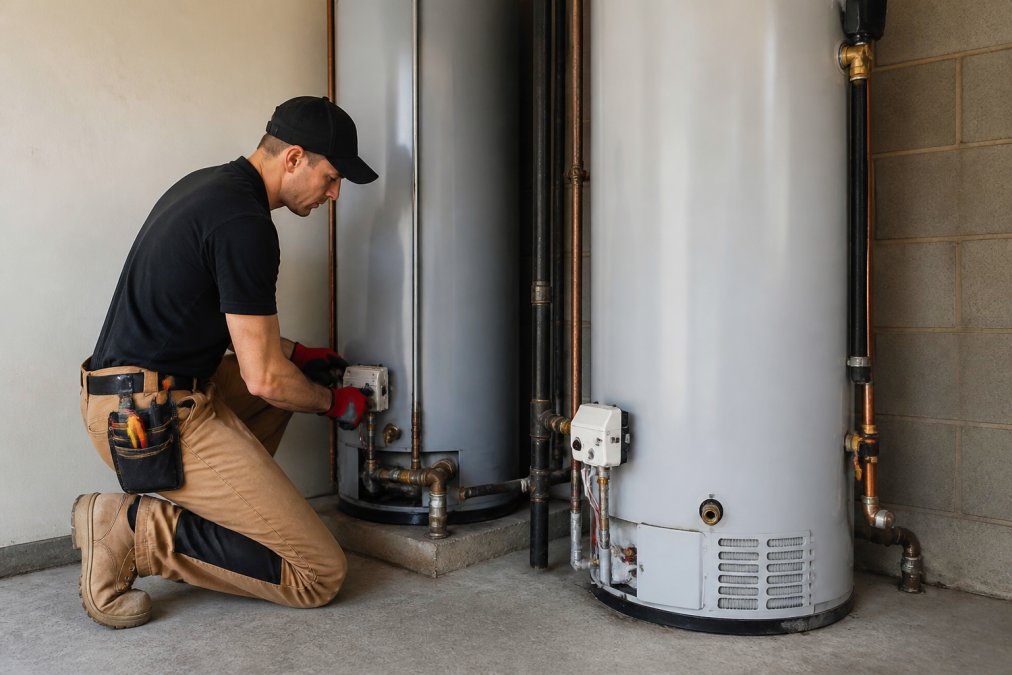
 how-to
Get an Instant Water Heater Replacement Quote
Table of Contents
- What Your Water Heater Replacement Quote Actually Covers
- Average Cost to Replace a Water Heater in 2026
- Signs You Need a Water Heater Replacement Now
- How a Water Heater Replacement Estimate Calculator Works
- Questions to Ask a Plumber Before Water Heater Installation
- DIY vs. Professional Installation: Safety and Legal Risks
- Financing, Rebates, and Post-Installation Maintenance
- Conclusion
Last Updated: August 12, 2026
What Your Water Heater Replacement Quote Actually Covers
A water heater replacement quote is a bundled estimate that accounts for equipment, labor, permits, and site-specific conditions. Understanding what's inside that number is the fastest way to avoid sticker shock.
At QuickHotWater.com, we built our instant estimate tool because homeowners kept getting surprised by unexplained costs. Below, we'll break down every component that goes into a replacement quote, explain what drives costs up or down, and give you the tools to make a confident decision.
A water heater replacement quote is a total project cost estimate that includes the new unit, professional installation labor, disposal of the old unit, and any required permits or code-compliance upgrades specific to your home.
Labor Fees and Permit Costs
Labor fees cover the time a licensed plumber spends on-site: draining and removing the old unit, installing the new one, making all connections, testing for leaks, and confirming proper operation. Most straightforward same-fuel, like-for-like replacements take two to four hours. Complex jobs, switching from electric to gas or relocating the unit, take longer and cost more.
Permit costs are non-negotiable in most jurisdictions. A plumbing permit for water heater installation is required by local building codes across most of the country. Skipping it creates real liability: if your home is inspected during a sale, an unpermitted installation can delay or kill the transaction. According to the International Association of Certified Home Inspectors, unpermitted work is one of the most common issues flagged during home inspections. Reputable plumbing services include permit handling as part of the job.
A thermal expansion tank is another line item that catches homeowners off guard. Many local codes now require one when a pressure-reducing valve is present on the home's water supply.
Tank vs. Tankless: How Unit Type Changes the Price
The biggest variable in any water heater replacement estimate is the unit type. Tank water heaters, traditional 40- to 50-gallon cylinders, are the most common replacement scenario. They have lower upfront equipment costs and straightforward installation requirements.
Tankless water heaters cost more upfront and have different venting requirements. Gas models may require a gas line upgrade for higher BTU output, and electric tankless units often need dedicated high-voltage circuits that existing homes don't have. Your total project cost for a tankless conversion includes potential electrical or gas line work on top of the unit and labor.
| Unit Type | Equipment Cost Range | Installation Complexity | Best For |
|---|---|---|---|
| Tank (gas or electric) | Lower upfront | Simple, like-for-like | Most standard replacements |
| Tankless (gas) | Higher upfront | Moderate to complex | High hot water demand households |
| Tankless (electric) | Moderate to high | May require electrical upgrade | Homes with adequate voltage capacity |
| Heat pump (hybrid) | Higher upfront | Requires adequate space | Energy efficiency priority |
The first-hour rating, how much hot water a unit can deliver in the first hour of use, matters more than tank size alone. A plumber sizing your replacement should ask about your household's peak hot water demand before recommending a unit capacity.
Average Cost to Replace a Water Heater in 2026
The average cost to replace a water heater varies widely based on unit type, fuel source, local labor rates, and site conditions. The most accurate approach is to get a quote based on your specific setup. Use QuickHotWater.com's estimate tool to get market-based pricing for your area in about 30 seconds, no sales visit required.
A straightforward like-for-like tank replacement is almost always the least expensive scenario. Costs climb when the job involves fuel type conversion, new venting, electrical upgrades, or relocating the unit. Emergency same-day service also carries a premium over scheduled installations.
Factors That Move the Final Number Up or Down
Several site conditions affect your final installation cost:
- Fuel type change: Switching from electric to gas requires a gas line extension and possibly a new venting run.
- Venting requirements: Gas and propane units need proper exhaust venting. Deteriorated or non-compliant venting must be replaced.
- Water pressure: High water pressure may require a pressure-reducing valve, which adds to the job scope.
- Sediment buildup in lines: Heavy mineral buildup sometimes requires flushing or partial pipe replacement.
- Access difficulty: Units in tight crawl spaces or elevated locations take more labor time.
- Code upgrades: Older homes may require code-compliance updates, like adding a seismic strap in earthquake-prone regions, before a permit will be issued.
The most common mistake homeowners make is comparing quotes without confirming they cover the same scope. A low quote that excludes permit fees, haul-away, or a required expansion tank isn't actually cheaper.
Signs You Need a Water Heater Replacement Now
Most water heaters give clear warning signs before they fail completely.
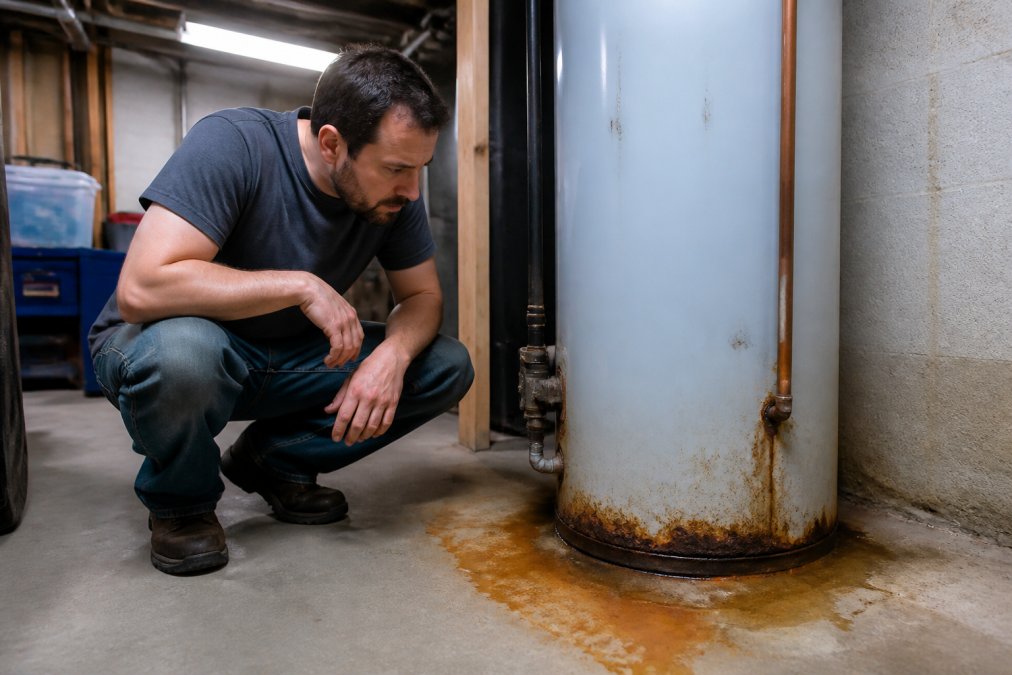
Watch for these indicators:
- Age: Tank water heaters typically last 8 to 12 years. If yours is approaching or past that range, replacement is smarter than repeated repairs. Once the anode rod depletes, the tank itself corrodes.
- Rusty or discolored water: Rust-colored hot water points to internal tank corrosion. This is not fixable; the unit needs replacement.
- Rumbling or popping sounds: Sediment buildup on the tank floor causes these noises as the heating element struggles through the mineral layer, accelerating tank wear.
- Visible leaks or moisture: Water pooling around the base is a red flag. Tank cracks cannot be repaired.
- Inconsistent hot water: If your water runs hot, then cold, then lukewarm, the heating element or thermostat may be failing, or the unit is undersized for your demand.
- Rising energy bills: An inefficient aging unit works harder to maintain temperature, showing up on your utility bill before complete failure.
An emergency replacement after complete failure always costs more and causes more disruption than a proactive swap. If your unit is showing two or more of these signs, get a replacement quote now.
How a Water Heater Replacement Estimate Calculator Works
A water heater replacement estimate calculator generates a total project cost based on inputs about your home and current unit. The best tools account for unit type, fuel source, tank size, local labor rates, and permit costs, not just equipment price.
Here's what a reliable estimate tool asks for:
- Current unit type (tank or tankless) and fuel source (gas, electric, propane)
- Tank capacity (gallons) or current unit model
- Replacement preference (like-for-like or upgrade)
- Location (to apply local labor rates and permit cost data)
The output should be a total project cost range, so you know what to expect before a plumber arrives. According to the U.S. Department of Energy's guidance on water heater selection, fuel type and unit efficiency rating are the two biggest factors in both upfront cost and long-term operating expense.
QuickHotWater.com's instant estimate takes about 30 seconds and reflects real market-based pricing from licensed, insured plumbers in your area. There are no sales visits, no spam calls, and no obligation to book after you see your number.
Questions to Ask a Plumber Before Water Heater Installation
Getting a quote is step one. Vetting the plumber before you commit is step two.
Ask these questions before any water heater installation work begins:
- Are you licensed and insured in this state? A licensed plumber has passed competency exams and carries liability insurance. If something goes wrong, you're protected.
- Does your quote include the permit? Permit handling should be the plumber's responsibility, not yours.
- What brand and model are you installing? Get the specific unit on paper. Warranty coverage varies significantly between brands.
- What's your warranty on labor? Equipment warranties cover the unit. Labor warranties cover the installation work.
- What happens if you find additional issues on-site? Ask how the plumber handles scope changes and whether they'll get your approval before proceeding beyond the original quote.
- What's your timeline for same-day or emergency service? Confirm the plumber can meet your timeline before booking.
DIY vs. Professional Installation: Safety and Legal Risks
DIY water heater replacement is legal in some jurisdictions for homeowners replacing their own electric units. Gas water heater replacement is a different matter entirely.
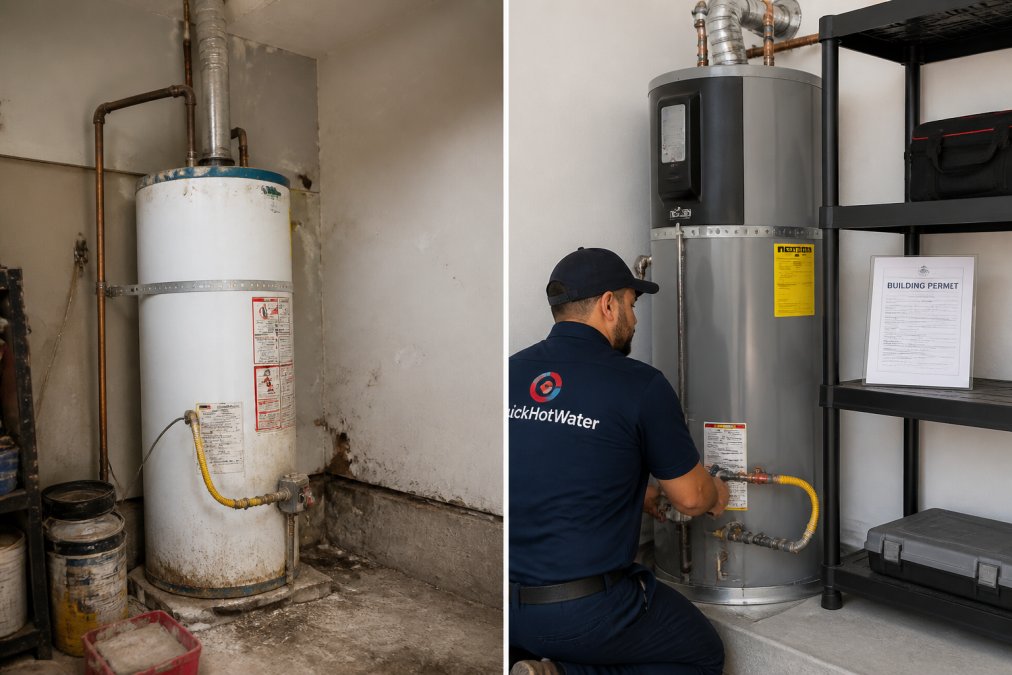
Gas line work carries serious safety risks. An improper connection can cause carbon monoxide buildup, gas leaks, or fire. Most states require a licensed plumber or gas fitter for any work involving gas lines. The Occupational Safety and Health Administration's guidelines on gas safety make clear that gas line work requires proper training and equipment.
For electric units, DIY installation is technically feasible but risky. Incorrect wiring can create shock hazards, void the unit's warranty, and fail inspection. Voltage requirements for larger electric units often exceed standard outlet capacity, requiring panel work most homeowners shouldn't attempt.
An unpermitted installation may void your homeowner's insurance coverage for water damage claims. If you sell your home, an unpermitted water heater is a disclosure issue that can complicate or derail the sale.
Professional installation by a licensed plumber eliminates these risks. The permit is pulled in the plumber's name, the work is inspected, and you have documented proof that the installation meets code.
Financing, Rebates, and Post-Installation Maintenance
The upfront cost of a water heater replacement doesn't have to come entirely out of pocket.
Federal Tax Credits and Utility Rebates
The federal government currently offers tax credits for qualifying high-efficiency water heaters through the Inflation Reduction Act's energy efficiency provisions. Heat pump water heaters qualify for meaningful credits that offset their higher upfront cost. Check the current credit amounts through the IRS guidance on residential clean energy credits or the ENERGY STAR program.
Many utility companies also offer rebates for replacing older units with high-efficiency models. These rebates vary by utility and region. Your local utility's website is the best starting point; rebate programs can reduce total project cost significantly.
Financing options are also available through many licensed plumbing services. Ask your plumber about payment plans when you receive your quote.
Post-Installation Maintenance Checklist
A new water heater is an investment. Proper maintenance extends its lifespan and protects your warranty coverage.
- Flush the tank annually. Sediment buildup reduces efficiency and accelerates corrosion. Attach a hose to the drain valve and flush until the water runs clear.
- Inspect the anode rod every 2-3 years. Replace it when more than 50% depleted. This single step can double your tank's lifespan.
- Test the pressure relief valve annually. Lift the lever briefly to confirm it opens and reseats properly.
- Check the temperature setting. The U.S. Department of Energy recommends setting water heater temperature to 120°F to balance energy efficiency with scalding prevention.
- Inspect venting connections (gas units). Check for corrosion, gaps, or disconnections in the flue annually.
- Check for moisture or rust around the base. Catching a slow leak early prevents floor damage and gives you time to plan a replacement.
- Confirm warranty registration. Most manufacturers require registration within 30 days of installation to activate full warranty coverage.
Most of these tasks take under 15 minutes once a year. Skipping them consistently is how a 12-year unit becomes a 7-year unit.
Water heater replacement catches most homeowners off guard, either because the unit fails without warning or because the quote process feels opaque. QuickHotWater.com solves both problems: get an instant water heater replacement estimate in 30 seconds, with transparent market-based pricing that includes permit handling and connects you only with licensed, insured plumbers. No sales visits, no spam calls, no surprises. Get a quote today and know exactly what your replacement will cost before anyone sets foot in your home.
Frequently Asked Questions
Is a 30-second online water heater replacement estimate actually accurate?
An instant estimate built on local market data, unit capacity, fuel type, and site conditions is far more accurate than a rough ballpark. QuickHotWater.com generates estimates from real market-based pricing, so the number you see reflects what licensed plumbers in your area actually charge. If your job involves non-standard conditions, a gas line conversion, unusual venting requirements, or a thermal expansion tank, the plumber will note those additions before any work begins, so there are no surprises.
What factors influence the total cost of a water heater replacement?
The biggest variables are unit type (tank vs. tankless), fuel source (gas vs. electric), unit capacity and BTU output, venting requirements, whether a plumbing permit is required, and local labor fees. Switching fuel types, for example, from electric to gas, adds gas line conversion work and can raise the total project cost significantly. Site conditions like tight access, old water pressure issues, or sediment buildup in existing lines can also affect the final price.
Is it better to repair or replace an old water heater?
The standard rule is to replace any tank-style water heater older than 10-12 years, especially if it needs a repair costing more than half the price of a new unit. Recurring sediment buildup, a failing anode rod, or rust-colored water are signs that repairs will only delay the inevitable. For newer units under warranty coverage, a targeted repair often makes more financial sense. A licensed plumber can assess first-hour rating performance and give you a clear recommendation.
Should I get multiple quotes before hiring a plumber for water heater installation?
Getting more than one replacement quote is always smart for home improvement work. A marketplace like QuickHotWater.com delivers competitive, market-based bids from vetted local plumbers without requiring sales visits or triggering spam calls. You can compare upfront pricing, warranty coverage, and same-day service availability in one place. The goal is finding a licensed and insured professional at a fair price, not just the cheapest option, since poor installation can void manufacturer warranties and create code violations.
This article was written using GrandRanker