 how-to
What Happens if Water Heater Leaks: Act Fast
Table of Contents
- Immediate Steps When Your Water Heater Leaks
- Signs of Water Heater Failure and What They Mean
- Real Risks: Water Damage, Mold, and Structural Problems
- Finding Emergency Plumbing Service When You Need It
- Frequently Asked Questions
Last Updated: September 1, 2026
Immediate Steps When Your Water Heater Leaks
When you spot pooling water under your water heater, act immediately. A leak can cause serious damage within hours.
First, shut off the water supply by turning the valve on the cold water line clockwise. If you can't locate it, close the main water shutoff valve for your house. Next, turn off the power: flip the circuit breaker to OFF for electric units, or turn the gas control knob to "Off" for gas units. Open the drain valve at the bottom of the tank into a bucket to empty it, the water is hot. Document everything with photos for insurance purposes.
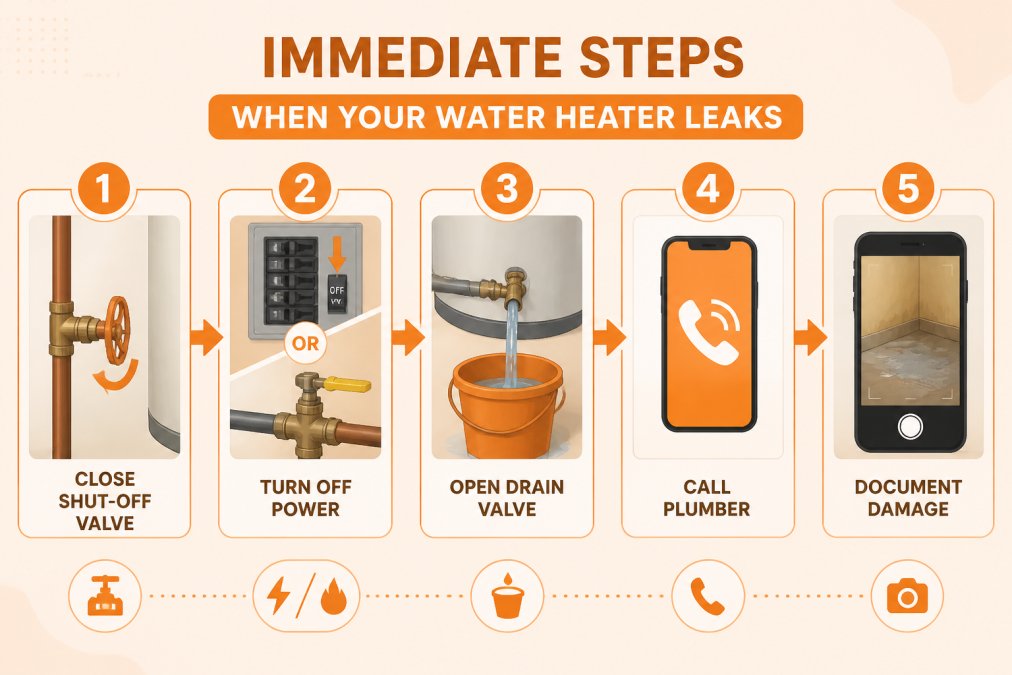
Call a licensed plumber immediately. A leaking water heater needs replacement. The sooner you get a professional on-site, the sooner you prevent structural damage and mold growth.
Signs of Water Heater Failure and What They Mean
Visible rust or corrosion signals that tank integrity is compromised. Once corrosion reaches this stage, replacement is the only option.
Rumbling or popping noises mean sediment has built up inside the tank, accelerating corrosion and weakening the tank walls.
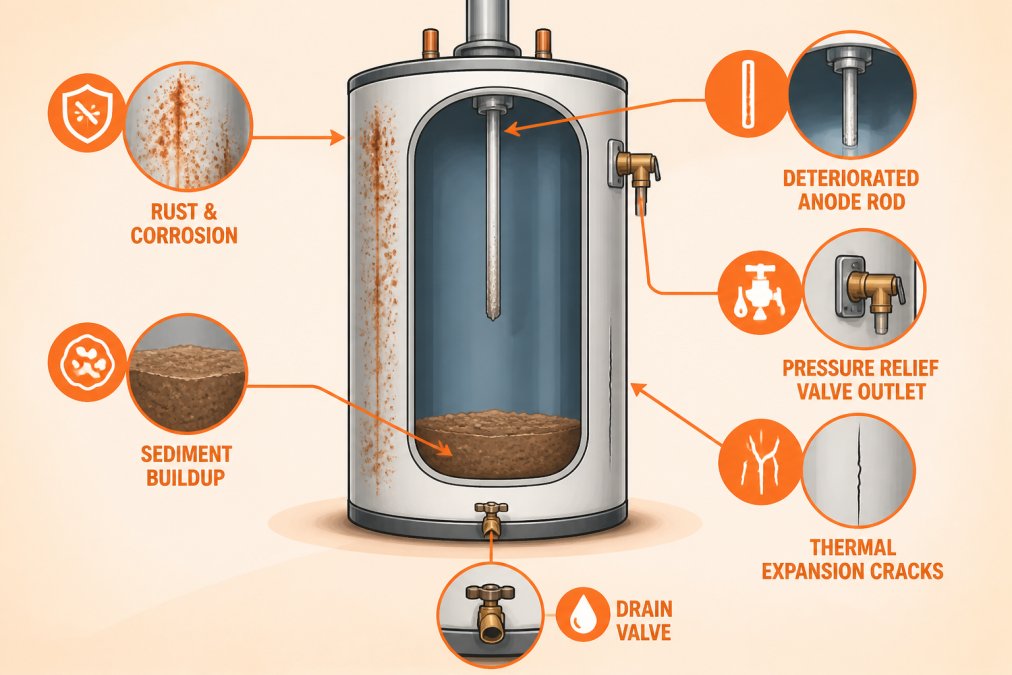
Discolored or rusty water from hot taps means the tank's interior is deteriorating. Rust particles indicate the tank wall is breaking down and a leak is likely coming soon.
Leaking from the pressure relief valve happens when internal pressure builds up. Persistent leaking suggests the tank is under stress and replacement is near.
Bulging or swelling on the tank means pressure inside has become dangerous. Call a plumber the same day you notice this.
Age of the tank is itself a risk factor. Most water heaters last 8-12 years. If yours is older than 10 years, failure is not a question of if but when.
Real Risks: Water Damage, Mold, and Structural Problems
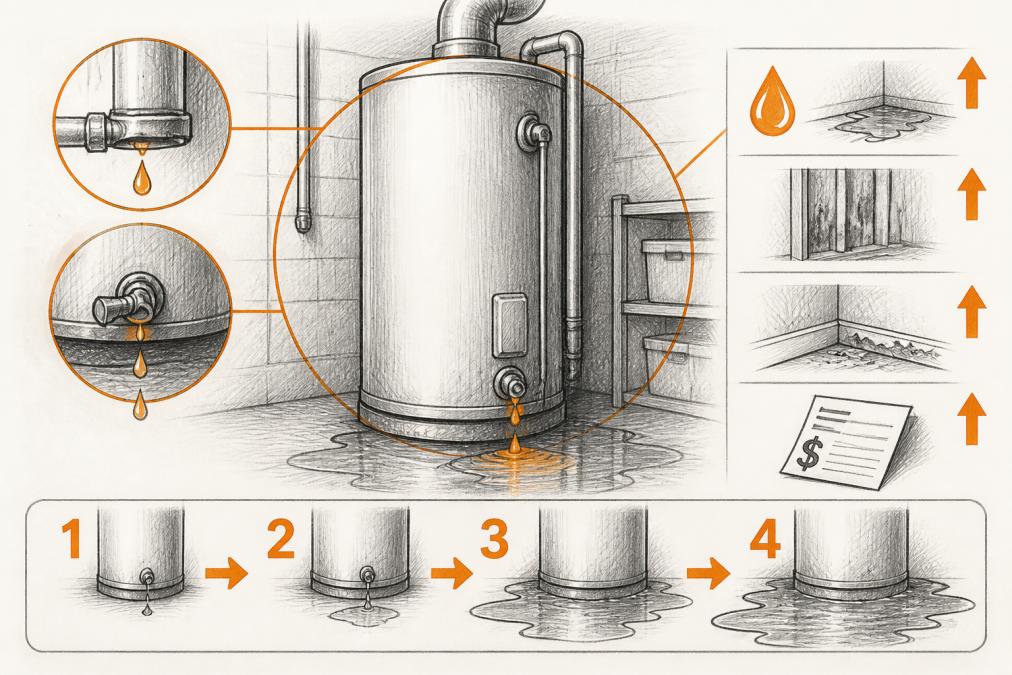
A slow leak can saturate flooring, drywall, and insulation within days. Mold thrives in damp environments and can colonize within 24-48 hours, spreading spores through your home and triggering respiratory issues. Professional remediation costs thousands of dollars.
Water seeping into foundations or wooden support beams weakens your home's structure. Wood rot and concrete cracks can cost tens of thousands to repair. Electrical hazards emerge when water contacts wiring or outlets, never touch electrical equipment if water is present.
Replacing a failing water heater before it leaks is always cheaper than cleanup and repair.
Finding Emergency Plumbing Service When You Need It
Start with your network. Ask neighbors, friends, or family for plumber recommendations, specifically about pricing and whether final bills matched estimates.
Search online for licensed plumbers in your area. Verify they're licensed and insured. Licensing requirements vary by state, but most require plumbers to pass exams and carry current credentials. Insurance protects you if something goes wrong during installation.
Get instant estimates from multiple plumbers. When you contact a plumber, describe your situation clearly: water heater is leaking, you need a replacement, and you want a quote. Reputable plumbers provide estimates quickly, many online based on your tank size and fuel type. An instant water heater replacement quote from QuickHotWater.com gives you transparent pricing within 30 seconds from local, licensed, and insured plumbers, so you know what to expect before anyone shows up at your door.
When the plumber arrives, confirm the scope of work. You're replacing the water heater, not repairing it. The new unit should be the same fuel type and capacity as the old one. Ask about permits, most jurisdictions require them, and the plumber should handle paperwork and costs. Get everything in writing, including the water heater model, installation details, permit handling, and total cost.
A leaking water heater is a genuine emergency, but it doesn't have to be stressful. Act fast to stop the leak, document the damage, and call a professional. Get an instant water heater replacement quote and have your replacement handled by a licensed local plumber who bids competitively, so you get fair pricing and quality work without overpaying or guessing.
Frequently Asked Questions
Is it safe to use my water if my water heater is leaking?
If water is pooling around the tank or dripping from the drain valve, stop using hot water immediately. A leaking water heater poses electrical hazards if it's electric-powered, and gas leaks are possible with gas models. Shut off power and water supply right away. If the leak is minor condensation on the outside of the tank (common in humid conditions), it may be safe temporarily, but have a licensed plumber inspect it to confirm. When in doubt, don't use it, call for emergency service.
What are the main signs of water heater failure I should watch for?
Common signs include rust-colored water, popping or rumbling noises from the tank, pooling water underneath the unit, moisture on the tank surface, and reduced hot water supply. These indicate sediment buildup, corrosion, anode rod deterioration, or tank integrity failure. A leaking water heater often shows visible water dripping from the drain valve or seeping from the tank seams. If you notice any of these, contact a licensed plumber for immediate inspection and likely replacement.
How do I document a water heater leak for an insurance claim?
Take clear photos and video of the leak, pooling water, and any damage to flooring, walls, or belongings. Note the date and time you discovered the leak, and document how long it went undetected if possible. Keep receipts for any emergency cleanup or temporary repairs. Contact your homeowner's insurance promptly and provide the documentation. Ask your plumber for a detailed report of the failure cause and date of replacement. Insurance may cover water damage if the leak was sudden and not due to lack of maintenance, so having thorough records strengthens your claim.
This article was written using GrandRanker