 Listicle
Common Causes of Water Heater Tank Failure
Last Updated: November 7, 2026
Quick Summary
Most water heater tank failure comes down to rust from the inside out, sediment baking on the tank floor, pressure the tank was never built to hold, and a worn-out anode rod. A steel tank lined with glass and protected by a sacrificial rod rusts through once that protection runs out, and no patch fixes a rusted-through tank.
- Hard water leaves calcium and magnesium that bake into a crust on the tank floor, cracking the lining.
- The sacrificial anode rod corrodes so the tank does not; once used up, the steel becomes the anode.
- A stuck or faulty temperature and pressure relief valve lets pressure climb inside the tank.
- Most tanks last roughly 10 to 15 years, and wear and tear accounted for 27% of assessed failures.
- A loose fitting, cracked dip tube, or failed valve can mimic tank failure and can be replaced.
Table of Contents
- Common Causes of Water Heater Tank Failure
- Hot Water Heater Problems Symptoms to Watch For
- What to Do if Your Water Heater Is Leaking From the Bottom
- Frequently Asked Questions
Common Causes of Water Heater Tank Failure
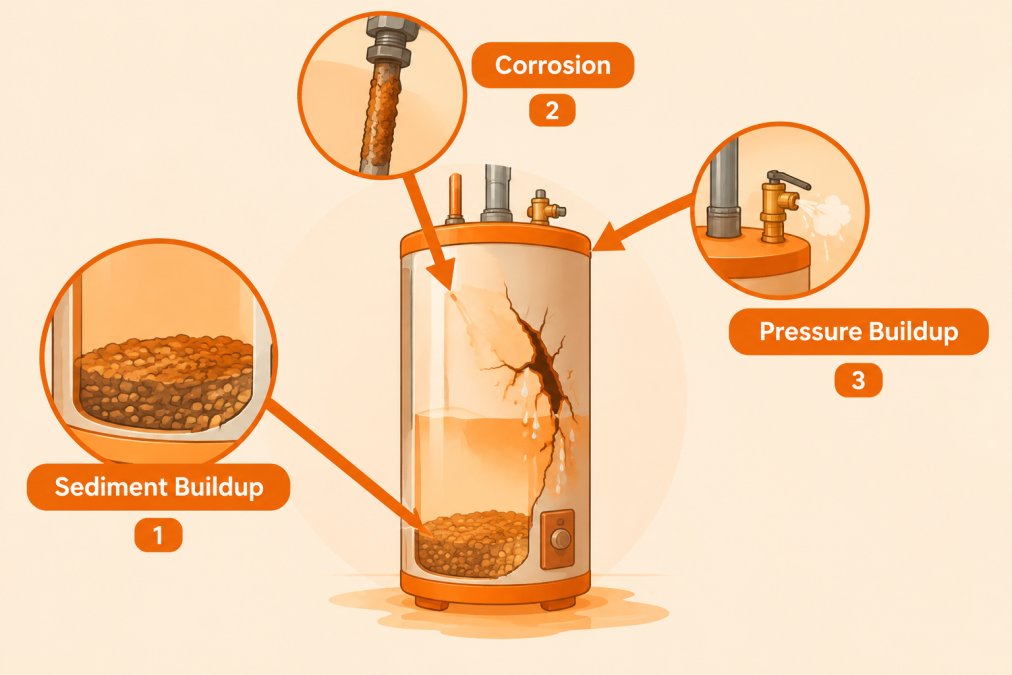
Most water heater tank failure comes down to rust from the inside out, sediment baking on the tank floor, pressure the tank was never built to hold, and a worn-out anode rod. A storage tank is a steel vessel lined with glass and kept alive by a sacrificial rod; when that protection runs out, the tank rusts through and weeps, and no patch fixes a rusted-through tank.
1. Corrosion and rust inside the steel tank
Steel plus water equals rust, and the glass lining never covers every seam and fitting. NJR Home Services on why water heaters fail notes that steel tanks can rust from the inside.
2. Sediment buildup and mineral deposits
Hard water leaves calcium and magnesium behind, which settle on the tank floor and bake into a crust, so the bottom overheats, the lining cracks, and rust gets a head start.
3. A depleted anode rod
The sacrificial anode rod corrodes so the tank does not. Once it is used up, the steel becomes the anode. Better Water Heaters' guide to premature failure explains that a spent anode rod leaves the steel tank exposed to corrosion.
4. Pressure buildup and relief valve failure
A stuck or faulty temperature and pressure relief valve lets pressure climb inside the tank. Rheem on sudden water heater failure points to excessive water pressure and faulty relief valves as contributors to sudden failure.
5. Wear and tear and age
Most tanks last roughly 10 to 15 years. Alpine Intel's analysis of water heater failure causes cites StrikeCheck data showing wear and tear accounted for 27% of assessed failures.
6. Loose fittings, dip tubes, and plumbing connections
Not every leak is a dead tank. A loose fitting, a cracked dip tube, or a failed valve can mimic tank failure, and those components can be replaced, while a rusted-through tank cannot.
| Cause | Warning Sign | Can It Be Repaired? |
|---|---|---|
| Corrosion and rust | Rust streaks, weeping seams | No, replace the tank |
| Sediment buildup | Rumbling, popping, short hot water | Partly, flushing helps early on |
| Depleted anode rod | Rust at seams, tank age past 6 years | Rod can be swapped before tank damage |
Hot Water Heater Problems Symptoms to Watch For
Symptoms show up before the leak: rumbling or popping, hot water running out faster, rusty or metallic hot water, moisture at the base, and a relief valve that keeps discharging. EXTERNAL_LINK: How to tell if your water heater is failing | quickhotwater.com gives a fuller checklist.
What to Do if Your Water Heater Is Leaking From the Bottom
A leak from the bottom of the tank is usually the end of that tank, not a repair job. Shut off the water supply and the power or gas, and get a replacement estimate, water at the base usually means the shell has failed.
If the water is running, not dripping, treat it as an emergency. EXTERNAL_LINK: What to do when a water heater bursts | quickhotwater.com covers the burst-tank steps in order. For a steady drip at the base, EXTERNAL_LINK: Water heater leak repair: 5 steps to take now | quickhotwater.com walks through the immediate response.
Once you know the tank is gone, the next step is a replacement. We match homeowners with local, licensed and insured plumbers who bid on the job, so you get a fair price for quality work without a sales visit. EXTERNAL_LINK: Get an instant emergency replacement estimate | quickhotwater.com takes about 30 seconds, or you can request an instant water heater replacement quote directly. Plumbers confirm the final price on-site after bidding, so treat the number as an instant estimate, not a guaranteed quote. If you are a licensed plumber looking for replacement work, you can apply to join our plumber network.
A leaking tank does not fix itself, and waiting usually means more water damage and a colder house. We connect you with local, licensed and insured plumbers who bid competitively on like-for-like replacements, with permits handled and no sales visits. Get an instant estimate in 30 seconds, compare real bids, and book the plumber you trust. Get started with QuickHotWater.com and get your hot water back without overpaying.
Frequently Asked Questions
What is the average lifespan of a water heater tank?
Most storage tank water heaters last about 10 to 15 years, depending on water quality, maintenance, and how hard the unit works. Tanks in areas with hard water often fail sooner because mineral deposits and corrosion speed up wear. If your tank is past 10 years old and you notice rumbling, rust-colored water, or moisture around the base, plan for replacement rather than waiting for a full leak.
Can sediment buildup cause a water heater tank to fail?
Yes. Minerals in hard water settle at the bottom of the tank as sediment. That layer insulates the burner from the water, so the tank overheats, rumbles, and works harder. Over time the extra heat and pressure weaken the steel and speed corrosion. Flushing the tank yearly helps, but once sediment hardens into scale, replacement is usually the practical fix.
What should I do if my water heater is leaking from the bottom?
Shut off the cold water supply and the power or gas to the unit, then move valuables away from the area. A leak from the bottom often means the tank itself has failed, and that cannot be repaired. Get an instant replacement estimate from QuickHotWater.com and a licensed plumber can confirm the price on-site before any work begins.