 listicle
Best Water Heater Brands for Hard Water 2026
Table of Contents
- Best Water Heater Brands for Hard Water Areas
- How Hard Water Affects Water Heaters
- Rheem vs. A.O. Smith: Which Handles Hard Water Better
- Frequently Asked Questions
Last Updated: October 13, 2026
Best Water Heater Brands for Hard Water Areas
Hard water causes mineral buildup inside water heaters, shortening their lifespan and reducing efficiency. When selecting water heater brands hard water areas require careful consideration, as choosing the right brand matters more than it does for homeowners with soft water.
At QuickHotWater.com, we connect homeowners with local, licensed, and insured plumbers. Instead of guessing which brand to buy, you get an instant water heater replacement quote and competitive bids from qualified professionals.
Quick Picks for Hard Water:
- Best Overall Protection: Rheem, proven anode rod design and tank lining for hard water resistance
- Best Alternative: A.O. Smith, strong sediment flushing capability and corrosion-resistant construction
- Solid Mid-Range Option: Bradford White, reliable performance in mineral-heavy conditions
How Hard Water Affects Water Heaters
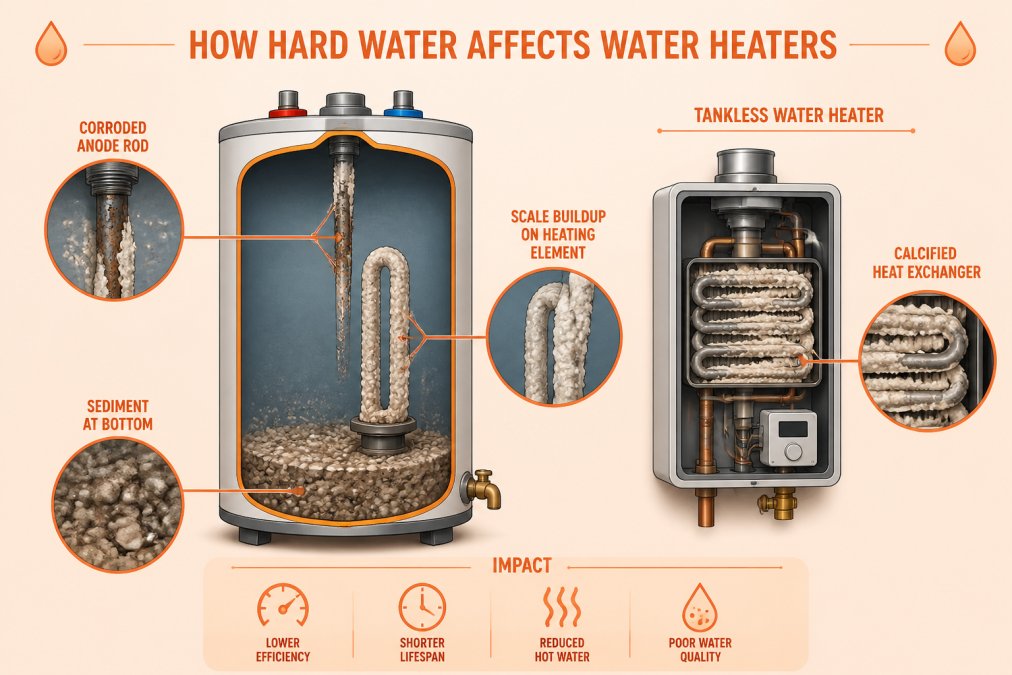
Hard water contains dissolved minerals, primarily calcium and magnesium. These accumulate as sediment and scale, coating the heating element and reducing heat transfer efficiency, forcing your heater to work harder and wear out faster.
The sacrificial anode rod corrodes to protect the steel tank from rust. In hard water, mineral deposits accelerate this, so the rod depletes faster; once it's gone, the tank rusts from the inside, leading to leaks.
Scale buildup also reduces water flow and can damage the heat exchanger in tankless systems. Homeowners in hard water areas need more frequent maintenance and face shorter equipment lifespan than those with soft water.
Rheem vs. A.O. Smith: Which Handles Hard Water Better
Rheem excels in hard water conditions because of its heavy-duty anode rod design and durable tank lining. Many models use thicker tank walls for extra corrosion protection in mineral-heavy water.
A.O. Smith offers strong sediment flushing ports that make draining mineral deposits easier during maintenance. Their tanks feature a glass-lined interior that resists scale better than standard steel.
Both water heater brands hard water performance significantly outpace budget alternatives. Rheem emphasizes tank durability through anode rod strength, while A.O. Smith focuses on ease of maintenance and sediment removal.
| Brand | Tank Lining | Anode Rod Design | Sediment Flushing | Best For |
|---|---|---|---|---|
| Rheem | Heavy-duty steel with protective coating | Extra-thick sacrificial rod | Standard drain valve | Durability-first approach |
| A.O. Smith | Glass-lined interior | Standard rod | Easy-access flush ports | Hands-on maintenance |
| Bradford White | Steel with corrosion barrier | Dual anode option | Multiple drain points | Balanced protection |
When you're ready to replace your water heater, get an instant estimate from QuickHotWater.com. Our network of local, licensed plumbers will bid competitively so you get a fair price for quality work.
Frequently Asked Questions
What kind of water heater is best for hard water?
Tank water heaters with thicker tank linings, quality anode rods, and larger flush ports perform better in hard water. Look for brands like Rheem, A.O. Smith, and Bradford White that build models with corrosion-resistant materials. Tankless systems can work in hard water but require regular descaling. Heat pump water heaters also handle hard water well if you prioritize energy efficiency. The best choice depends on your household size, budget, and maintenance commitment.
How does hard water affect a water heater?
Hard water contains dissolved minerals, primarily calcium and magnesium, that form scale deposits on heating elements and tank walls. This mineral buildup reduces heating efficiency, forces the heater to work harder, and can shorten equipment lifespan. Scale also insulates the heating element, causing temperature fluctuations and higher operating costs. In severe hard water areas, mineral deposits can clog inlet screens and reduce flow rate. Regular flushing and anode rod replacement help slow this damage.
How often should a water heater be flushed in a hard-water area?
In hard water areas, flush your water heater annually or every 6 months if water hardness exceeds 120 parts per million. Flushing removes sediment and mineral buildup that accumulates on the tank bottom and heating element. More frequent flushing extends equipment lifespan and maintains heating efficiency. If you have a tankless system in hard water, descale it annually using a descaling solution per the manufacturer's instructions. A licensed plumber can assess your water hardness and recommend the right maintenance schedule for your setup.
Hard water replacement decisions shouldn't mean guessing which brand will last longest. QuickHotWater.com connects you with vetted local plumbers who understand hard water challenges and can install a water heater built to handle mineral-heavy conditions. Get your instant estimate today and let qualified professionals handle the replacement with transparent, market-based pricing.