 comparison
Electric vs Gas Water Heaters: Pros and Cons
Table of Contents
- Electric vs Gas Water Heaters: Key Differences
- Gas vs Electric Water Heater Installation Requirements
- Average Lifespan of Water Heater and Maintenance
- Frequently Asked Questions
Last Updated: September 28, 2026
Electric vs Gas Water Heaters: Key Differences
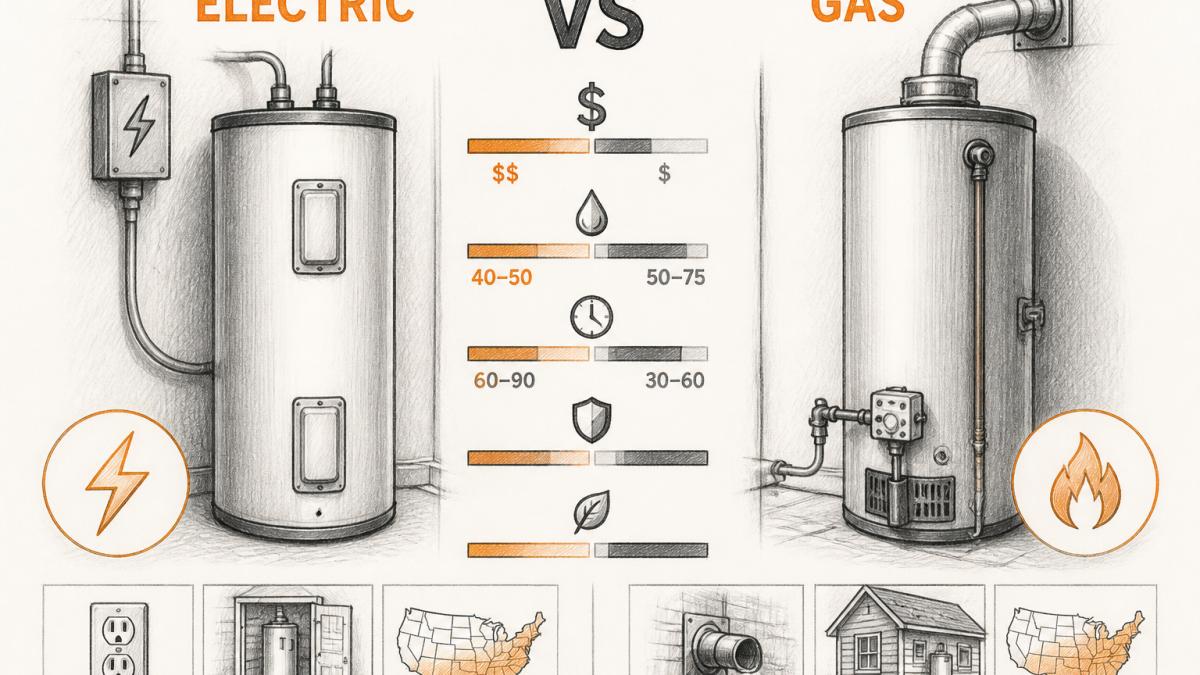
Choosing between electric vs gas water heaters depends on your home's infrastructure, energy costs, and priorities. Both heat water effectively but differ in operating cost, recovery speed, and upfront expense.
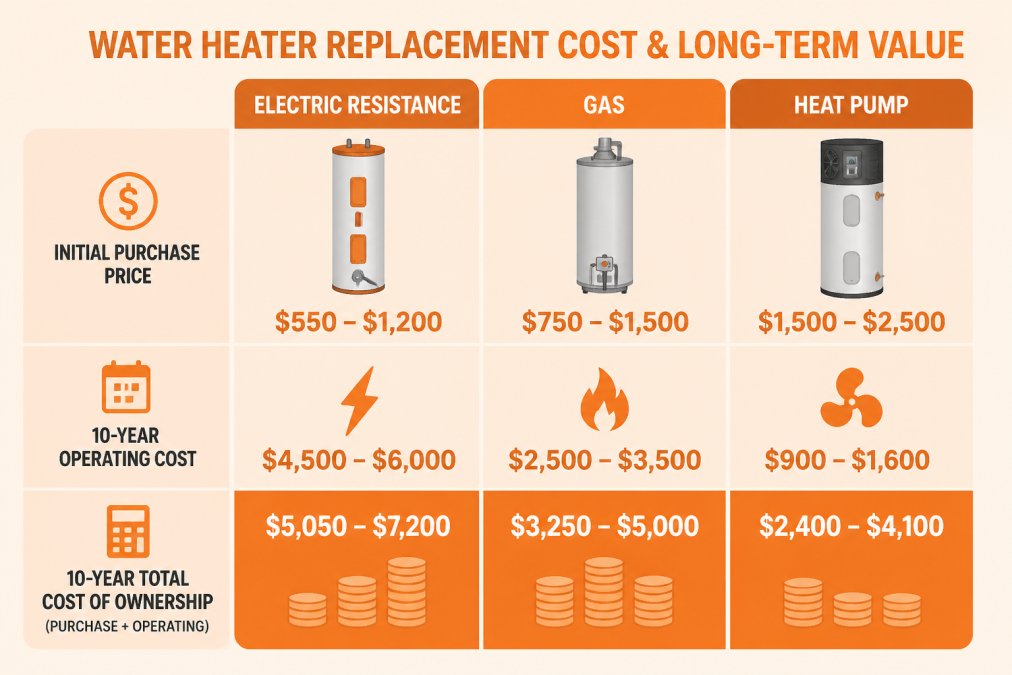
Gas water heaters use a burner at the tank base; electric models use resistance heating elements. Heat pump water heaters extract warmth from air, offering the best energy efficiency but higher upfront cost.
Gas typically costs less to operate monthly; electric costs less upfront. Heat pump models cost more initially but have the lowest long-term operating expense.
Gas vs Electric Water Heater Installation Requirements
Installation complexity and home infrastructure determine whether you can switch fuel types or need to stick with what you have.
Gas water heaters require a dedicated gas line, proper venting to the roof or exterior wall, and clearance from combustibles. If your home lacks a nearby gas line, installation adds significant cost and complexity.
Electric water heaters are simpler to install, requiring only a 240-volt circuit with no gas line or venting. Heat pump models also use 240 volts but need space for air circulation.
The real constraint is your home's existing infrastructure. Switching fuel types requires new gas lines or electrical work; like-for-like replacement keeps costs lower.
Average Lifespan of Water Heater and Maintenance
Water heater lifespan ranges from 8 to 15 years depending on fuel type and maintenance. Gas units typically last 8-12 years; electric resistance models 10-15 years. Heat pump units, being newer, show promise into their second decade.
Sediment buildup is the biggest lifespan factor. Annual tank flushing removes hard water deposits and extends life. Gas units need pilot light cleaning and anode rod inspection every few years.
Electric resistance models require less maintenance overall, no pilot light, no gas combustion byproducts. Heat pump units are more complex mechanically, but their sealed systems tend to keep sediment issues minimal.
Regular maintenance is straightforward: drain a few gallons annually, check the temperature setting (120°F is standard), and listen for unusual noises. A rumbling sound often signals sediment accumulation. Most homeowners never perform this maintenance, which is why many units fail before their design lifespan ends.
When your water heater fails, replacement is your only option. Getting a fair price on replacement matters. An instant water heater replacement quote connects you with local, licensed, and insured plumbers who provide competitive bids without sales pressure or unnecessary site visits. Plumbers confirm the final price on-site after assessing your specific setup, so you know exactly what you're paying before work begins.
Frequently Asked Questions
What's the difference in operating costs between electric and gas water heaters?
Operating costs depend on your local utility rates and energy efficiency. Gas water heaters typically have lower monthly fuel costs in most regions, but electricity rates vary widely. Electric resistance heaters have higher monthly operating costs but may offer lower upfront installation expenses. Heat pump water heaters reduce long-term energy consumption significantly, though they cost more upfront. Get an instant estimate to see what local plumbers charge for installation and learn your region's typical operating costs.
How long does a typical water heater last?
Most gas and electric tank water heaters last 8 to 12 years with proper maintenance. Lifespan depends on water quality, sediment buildup, and regular anode rod replacement. Heat pump water heaters may last 10 to 15 years if maintained well. Factors like mineral content in your water supply and maintenance frequency affect durability. Knowing your unit's age helps you plan ahead for replacement before failure.
Are there rebates or tax credits for water heater replacement?
Yes. Federal tax credits are available for qualifying heat pump water heaters under current energy efficiency programs. Many states and utilities offer additional rebates for energy-efficient models. Eligibility depends on your location and the equipment you choose. Check with your local utility company and the IRS website for current incentives. When you get an instant estimate, ask about available rebates in your area.
What installation requirements differ between gas and electric water heaters?
Gas units need venting to exhaust combustion gases safely, dedicated gas lines, and proper clearance. Electric models require adequate electrical capacity and a dedicated circuit. Gas installation is typically more complex and may need permits and inspections. Electric retrofits are often simpler in existing homes. Installation complexity and infrastructure needs affect overall replacement cost and timeline.
Getting the right water heater replacement at a fair price doesn't require multiple contractor calls or endless research. QuickHotWater.com simplifies the process by matching you with vetted local plumbers who bid competitively. Get an instant estimate in 30 seconds and connect with professionals who handle permits and installation without the hassle. Get a Quote today.