 Comparison
Tank vs Tankless Water Heater: Pros and Cons
Last Updated: October 24, 2026
Quick Summary
A tank vs tankless water heater choice depends on your priorities: tanks cost less upfront with simpler installation, while tankless units deliver continuous hot water and lower energy bills but require higher initial investment and more complex setup.
- Tank water heaters typically last 10-15 years before corrosion and sediment buildup occur.
- Tankless units often run 15-20 years with proper maintenance and descaling every 2-3 years.
- Tankless eliminates standby heat loss, making it more energy efficient than traditional tanks.
- Tankless installation often requires upgrading gas lines, venting, or electrical capacity in your home.
Table of Contents
- Tank vs Tankless Water Heater: Key Differences
- Tank vs. Tankless Water Heater Cost Comparison
- Tankless Water Heater Efficiency, Lifespan, and Installation
- Frequently Asked Questions
Tank vs Tankless Water Heater: Key Differences
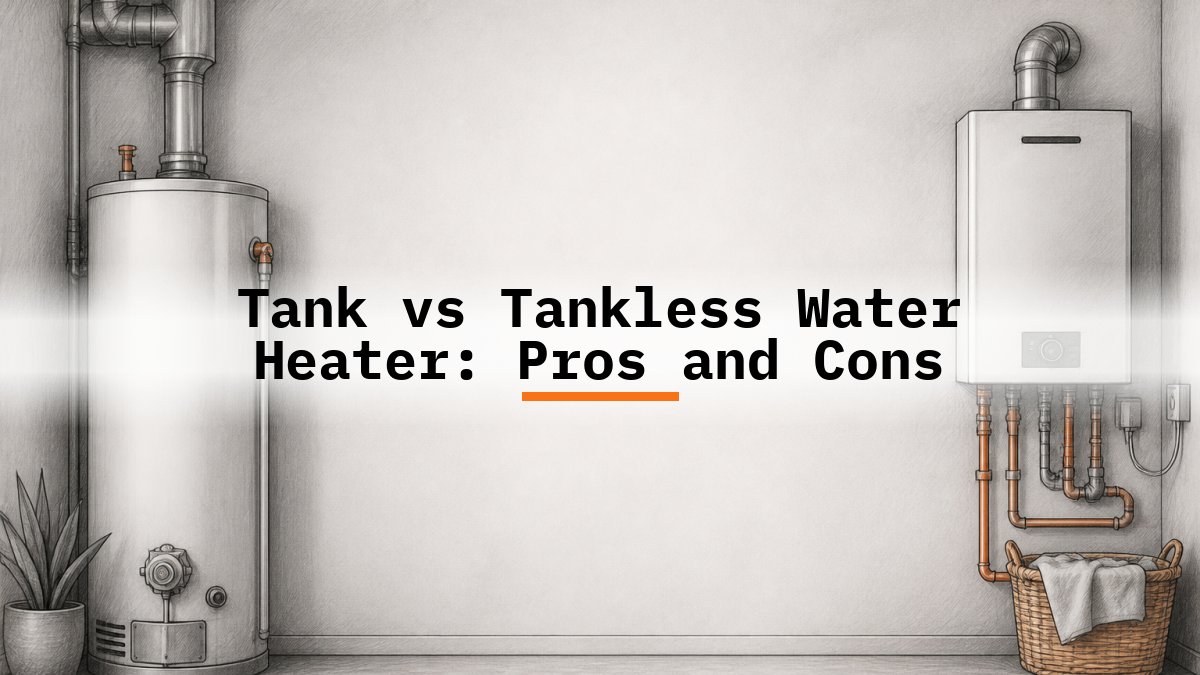
The tank vs tankless water heater choice shapes your home's hot water for years. A tank stores heated water; a tankless unit heats it on demand.
| Factor | Tank Water Heater | Tankless Water Heater |
|---|---|---|
| Upfront Cost | Lower initial investment | Higher initial investment |
| Operating Cost | Higher energy bills | Lower energy bills |
| Hot Water Supply | Limited by tank capacity | Continuous on-demand |
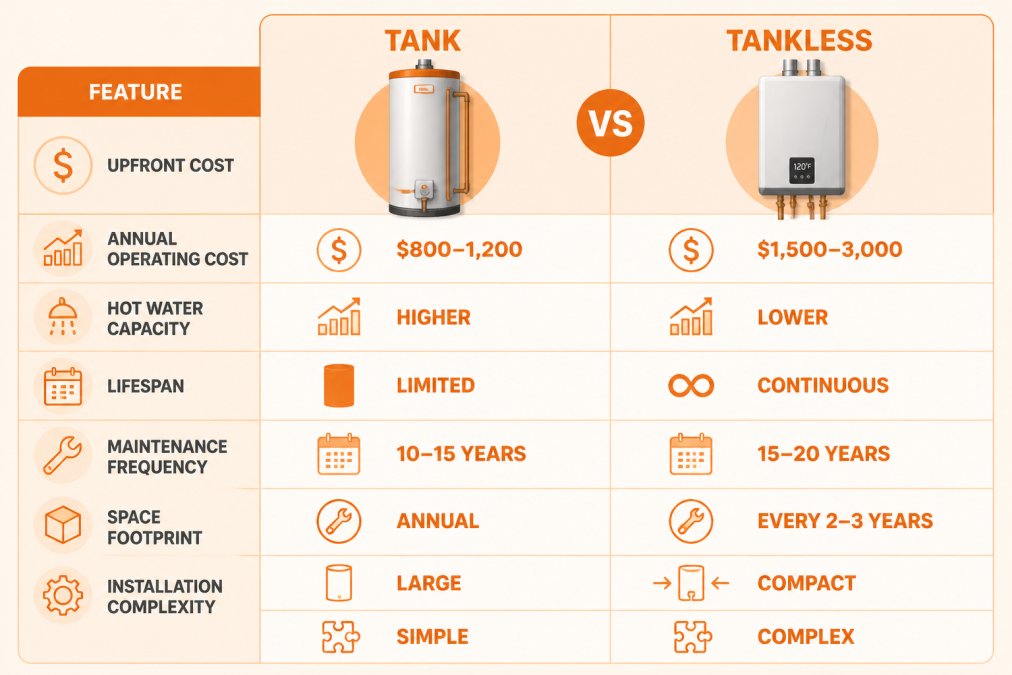
Tanks cost less upfront and install simpler; tankless delivers unlimited hot water and uses less energy but demands more upfront investment and complex installation.
Tank vs. Tankless Water Heater Cost Comparison
Upfront cost favors tanks, since most homes already have connections in place; retrofitting tankless often requires upgrading gas lines, venting, or electrical capacity. Get an instant water heater replacement estimate to see what local licensed, insured plumbers would bid for your home. Tankless uses less energy because it doesn't maintain a tank 24/7, though recouping the higher upfront investment depends on local energy rates, hot-water usage, and how long you stay.
According to This Old House buying guide on tankless water heaters, tankless units can cost less to operate over their lifetime compared to traditional tank systems, particularly for households with moderate to high hot-water demand.
If you're ready to move forward, get an instant water heater replacement quote to see what local licensed, insured plumbers would bid for your home. No sales visit, no spam calls, plumbers confirm final pricing on-site after evaluating your setup.
Tankless Water Heater Efficiency, Lifespan, and Installation
Tankless is more energy efficient because it eliminates standby heat loss. Lifespan favors tankless: tanks typically last 10-15 years before corrosion and sediment buildup, while tankless often runs 15-20 years with proper maintenance.
Installation complexity is where tankless demands more: gas units often require larger gas lines and dedicated venting, and electric units demand upgraded electrical service. Tanks need annual flushing to remove sediment, while tankless requires descaling every 2-3 years, and hard water accelerates this need.
Research from Eccotemp's guide on tank and tankless water heaters highlights that tankless units offer space efficiency and can reduce energy consumption, though installation complexity and maintenance schedules vary by model and water hardness.
Choosing between tank and tankless depends on your hot-water demand, upfront budget, and how long you plan to stay. Tanks suit lower initial investment and simpler installation; tankless rewards those willing to invest more upfront for lower operating costs and longer lifespan.
The best way forward is to get an instant water heater replacement quote from local licensed, insured plumbers who can evaluate your home, water usage, and existing infrastructure. They'll bid competitively so you get a fair price for quality work, no guessing, no overpaying.
Frequently Asked Questions
What are the main pros and cons of a tank vs tankless water heater?
Tank water heaters store hot water in a reservoir, offering lower upfront costs and simpler installation. The downside: they lose heat over time (standby heat loss), require more maintenance, and have a shorter lifespan. Tankless heaters heat water on demand, use less energy, take up less space, and last longer, but cost more upfront and require compatible gas lines or electrical upgrades. Your choice depends on household size, daily hot water use, and budget.
Is a tankless water heater more energy-efficient than a tank model?
Tankless water heaters are typically 24-34% more energy-efficient for homes using 41 gallons or less of hot water daily, since they don't maintain a hot reservoir. Tank heaters continuously reheat stored water, even when no one is using it. However, if your household uses a lot of hot water or has multiple simultaneous demands (showers, laundry, dishwasher), the efficiency advantage narrows because tankless units have flow-rate limits.
How long do tank and tankless water heaters last?
Tank water heaters typically last 10-15 years before corrosion and sediment buildup require replacement. Tankless units last 20+ years because they don't store water, avoiding rust and mineral accumulation. This longer lifespan can offset the higher tankless upfront cost over time, though parts and descaling maintenance add to operating expenses.
What are the tankless water heater installation requirements?
Tankless installation often requires upgrades: gas models may need a larger gas line and upgraded venting; electric models need higher-amperage electrical service. Space requirements are minimal, but retrofit installations in existing homes can be complex. Your plumber will assess your setup on-site and confirm what's needed. QuickHotWater.com connects you with licensed plumbers who handle these details and include permits in their estimate.