 ultimate-guide
Heat Pump Water Heater Benefits: Are They Worth It?
Table of Contents
- How Heat Pump Water Heaters Cut Energy Use and Bills
- Heat Pump Water Heater Pros and Cons for Homeowners
- Heat Pump Water Heater Installation Requirements and Space
- Are Heat Pump Water Heaters Worth It?
- Frequently Asked Questions
Last Updated: October 17, 2026
How Heat Pump Water Heaters Cut Energy Use and Bills
A heat pump water heater moves existing heat from the surrounding air into a storage tank instead of generating heat with electric resistance coils. It runs a compressor like a refrigerator in reverse, pulling ambient heat from the air, concentrating it, and transferring it into the tank. Because it moves heat rather than creating it, a heat pump water heater uses far less electricity to deliver the same hot water. The U.S. Department of Energy guidance on heat pump water heaters describes this as one of the most efficient ways to heat water in a home.
Heat pump water heater energy savings show up on your utility bill every month. Here is how efficiency compares:
| Water Heater Type | How It Heats | Relative Energy Use |
|---|---|---|
| Heat pump (hybrid) | Moves ambient heat with a compressor | Lowest |
| Conventional electric | Resistance coils | Higher |
| Gas tank | Burns fuel in a flue | Moderate to higher |
The numbers that matter are the uniform energy factor and the coefficient of performance, a higher coefficient of performance means more heat per unit of electricity.
Heat Pump Water Heater Pros and Cons for Homeowners
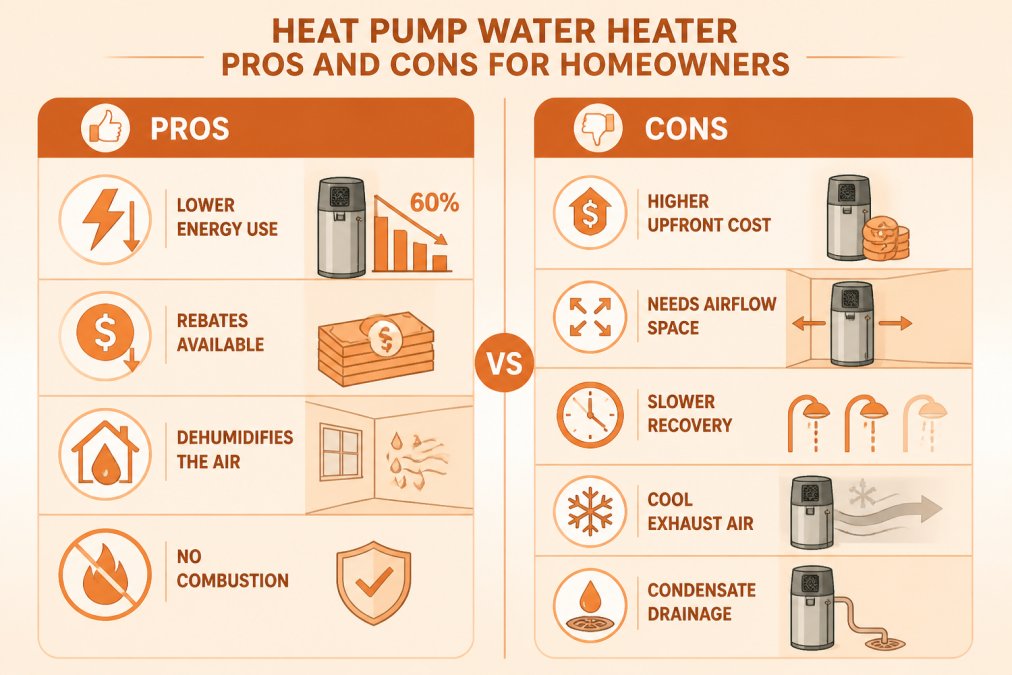
A heat pump water heater isn't right for every home, so weigh the trade-offs.
Pros of a heat pump water heater: lower energy use and smaller bills over time; no combustion by-products; qualifies for many rebates, tax credits, and incentives; dehumidifies the space; quieter, safer operation than a fuel-burning unit.
Cons of a heat pump water heater: higher upfront cost than a basic electric tank; needs space and airflow, ruling out tight closets; slower recovery rate; cool exhaust air; requires condensate drainage.
The payback period depends on your local electric rates, hot water use, and which incentives you qualify for.
Heat Pump Water Heater Installation Requirements and Space
Heat pump water heater installation requirements are stricter than a straight tank swap. Plan for these conditions:
- Space and airflow: it pulls ambient heat from surrounding air, so a large, open area works best; a sealed closet usually fails.
- Condensate drainage: it produces water as it dehumidifies, so it needs a drain line.
- Cold climate performance: in a cold garage or basement, it works harder and may lean on backup resistance heating, which cuts into savings.
For a heat pump water heater in cold climates, efficiency drops and it relies more on backup heating; a conditioned indoor space usually performs better than an unheated garage in winter.
Are Heat Pump Water Heaters Worth It?
For many households, yes, with conditions. The benefits of heat pump water heaters come down to lower energy use, smaller bills, fewer emissions, and incentives, offset by a higher upfront cost and real installation constraints.
When it is time to replace, QuickHotWater.com connects homeowners with local, licensed, and insured plumbers who bid competitively on replacement work. You can request an instant water heater replacement quote in about 30 seconds, with no sales visits and clear market-based pricing before work begins. Plumbers confirm the final price on-site after bidding, so treat the instant estimate as a starting point, not a locked-in figure. We handle replacement only, never repair. If you are a licensed plumber looking for replacement jobs, you can apply to join our plumber network.
Frequently Asked Questions
What are the potential drawbacks of a heat pump water heater?
The main drawbacks are a higher upfront purchase price than a standard electric tank, a need for roughly 700 cubic feet of unheated space with airflow, slower recovery during heavy hot-water use, and cool air plus condensate that must be managed. Operating noise is noticeable in living areas. In colder spaces, backup resistance heating kicks in, which lowers savings. These trade-offs are manageable with correct placement and sizing, and a licensed plumber can confirm whether your home fits.
How much energy can a heat pump water heater save?
A heat pump water heater moves ambient heat into the tank instead of generating heat with resistance coils, so it typically uses far less electricity than a conventional electric model. Actual heat pump water heater energy savings depend on your household demand, the unit's efficiency rating, and where it is installed. Cold garages and basements reduce performance. Expect meaningful bill reductions over a standard electric tank, with the payback period shortened by available rebates and tax credits.
Does a heat pump water heater work in a cold basement or garage?
Yes, but performance drops as ambient temperature falls. Most units operate efficiently down to around 40°F and use backup resistance heating below that, which raises electricity consumption. A cold basement or garage still works, though savings shrink and recovery slows. In cold climates, install the unit in a conditioned or semi-conditioned space when possible, size the tank for peak demand, and confirm airflow and condensate drainage with your installer.
Replacing an aging water heater is a decision you want to get right the first time. QuickHotWater.com matches you with vetted, licensed, and insured local plumbers, includes permit handling in the estimate, and gives you transparent, competitive bids without spam calls or pressure. Get your instant estimate and plan your replacement with confidence.