 ultimate-guide
Water Heater Energy Efficiency Ratings Explained
Table of Contents
- Water Heater Energy Efficiency Ratings Explained: EF, UEF, and What Changed
- Frequently Asked Questions
Last Updated: October 15, 2026
Water Heater Energy Efficiency Ratings Explained: EF, UEF, and What Changed
Water heater energy efficiency ratings explained in plain terms come down to one number on a yellow label: the Uniform Energy Factor (UEF), which shows how much energy heats water and how much escapes as waste. Older units used Energy Factor (EF); newer ones use UEF, similar measures, not directly interchangeable. A higher UEF means less waste and lower operating costs, but fuel type, household size, and hot water use shape what "efficient" means for your home.
What Energy Factor (EF) and Uniform Energy Factor (UEF) actually measure
Energy Factor (EF) was the original metric, estimating how much supplied energy heated water under a standardized test. Uniform Energy Factor (UEF) is the current metric: useful output divided by total input, with a newer test method reflecting real household hot water use. The old EF test assumed a single heavy daily draw; the UEF test uses a more realistic pattern, so numbers shifted when the standard changed, a unit scoring 0.62 under EF might score differently under UEF because the test changed, not the heater.
How to Read a Water Heater EnergyGuide Label and UEF Rating
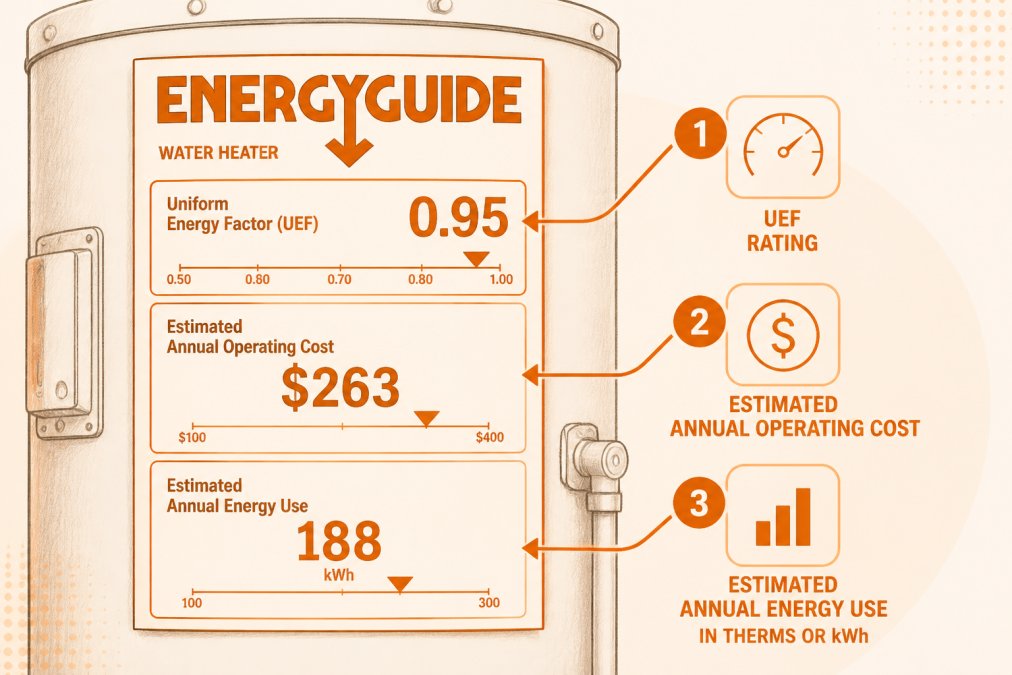
The EnergyGuide label is the yellow sticker on most new water heaters; three numbers matter most: the UEF number (higher is better within the same category), estimated annual operating cost, and estimated annual energy use (usually therms for gas, kilowatt-hours for electric).
The label assumes a set household size and usage pattern, ignores your local energy prices, and doesn't factor in installation, permits, or maintenance.
ENERGY STAR Water Heaters and Tankless Water Heater Efficiency Ratings
ENERGY STAR is a voluntary program for products meeting efficiency levels above the federal minimum; qualifying water heaters generally carry a higher UEF than standard models in the same category.
| Technology | Typical UEF Range | Standby Heat Loss | Best For |
|---|---|---|---|
| Standard gas storage | Lower | Higher | Households with steady, high demand |
| Tankless (gas) | Higher | Minimal | Households with variable demand |
| Heat pump | Highest | Low | Mild climates, space for the unit |
Tankless water heater efficiency ratings run higher than storage tanks because there's no standing tank losing heat around the clock, and heat pump water heaters push efficiency further by moving heat from the air into the water. Real-world performance often diverges: an undersized tankless unit runs constantly, a heat pump in a cold garage struggles, and a storage tank in a cold basement loses heat faster than the label assumes.
What the ratings don't tell you about total cost
UEF and the EnergyGuide label cover operating cost only, they say nothing about purchase and installation. A higher-efficiency unit usually costs more upfront, and whether that premium pays back depends on how long you stay in the home, how much hot water you use, and local energy prices. Rebates and incentives tied to efficiency can shorten payback, but they vary widely by utility and region. Federal efficiency standards set a floor, so the least efficient units can no longer be sold, but the gap between standard and high-efficiency models remains, and the "best" rating depends on your situation.
Turning ratings into a real decision
Efficiency ratings are a tool, not a verdict, combine that number with your household size, fuel type, installation location, and budget. When your water heater fails, that decision gets urgent. QuickHotWater.com provides an instant online estimate in about 30 seconds, then connects you with local, licensed and insured plumbers who bid competitively on the job. There are no sales visits and no spam calls. If you're planning ahead or dealing with an emergency, you can get an instant water heater replacement quote and see real bids from vetted local pros. If you're a licensed plumber looking for steady replacement work, you can also apply to join our plumber network.
Frequently Asked Questions
What does a water heater's UEF rating mean?
UEF stands for Uniform Energy Factor, the current federal metric for water heater efficiency. It estimates how much of the energy going into the unit actually heats water, based on standardized test draws that mimic typical household use. A higher UEF means less energy is wasted. Because it replaced the older Energy Factor scale, you can only compare UEF numbers within the same fuel type and technology, not across them.
Does a higher UEF rating mean a water heater is more efficient?
Within the same category, yes. A gas storage tank with a higher UEF uses less gas to deliver the same hot water than a lower-rated one. Across categories the comparison breaks down: a tankless unit and a heat pump unit are tested under different draw profiles, so their UEF numbers are not directly interchangeable. Use UEF to rank models of the same type and fuel, then compare operating costs separately.
What is the difference between UEF and ENERGY STAR certification?
UEF is the raw efficiency score printed on the EnergyGuide label. ENERGY STAR is a certification that a model meets a higher efficiency threshold than the federal minimum for its category. A water heater can have a UEF and still not qualify for ENERGY STAR. If efficiency is a priority, look for both: a strong UEF number and the ENERGY STAR mark on the label.
How do you compare the efficiency of tank and tankless water heaters?
Compare within each type first, then weigh total cost of ownership. Tankless units typically carry higher UEF numbers because they heat on demand instead of holding a tank of hot water, which eliminates standby heat loss. But installation, venting, and gas line requirements can differ. When you request a replacement estimate, a licensed plumber can confirm what your home supports and price a like-for-like swap.
Choosing a water heater on efficiency alone leaves money on the table. The rating tells you how the unit performs in a lab; your home decides how it performs in practice. Get the estimate, compare the bids, and let a licensed plumber confirm the details on-site before you commit. Start with QuickHotWater.com and get a clear, no-pressure estimate for your replacement.