 listicle
Hiring Local Licensed Plumbing Contractors
Table of Contents
- Why Licensed Plumbing Contractors Matter for Water Heater Replacement
- How to Verify Plumbing Contractor License and Credentials
- How to Check Plumbing Contractor Insurance and Bonding
- Questions to Ask a Plumber Before Hiring
Last Updated: August 15, 2026
Why Licensed Plumbing Contractors Matter for Water Heater Replacement
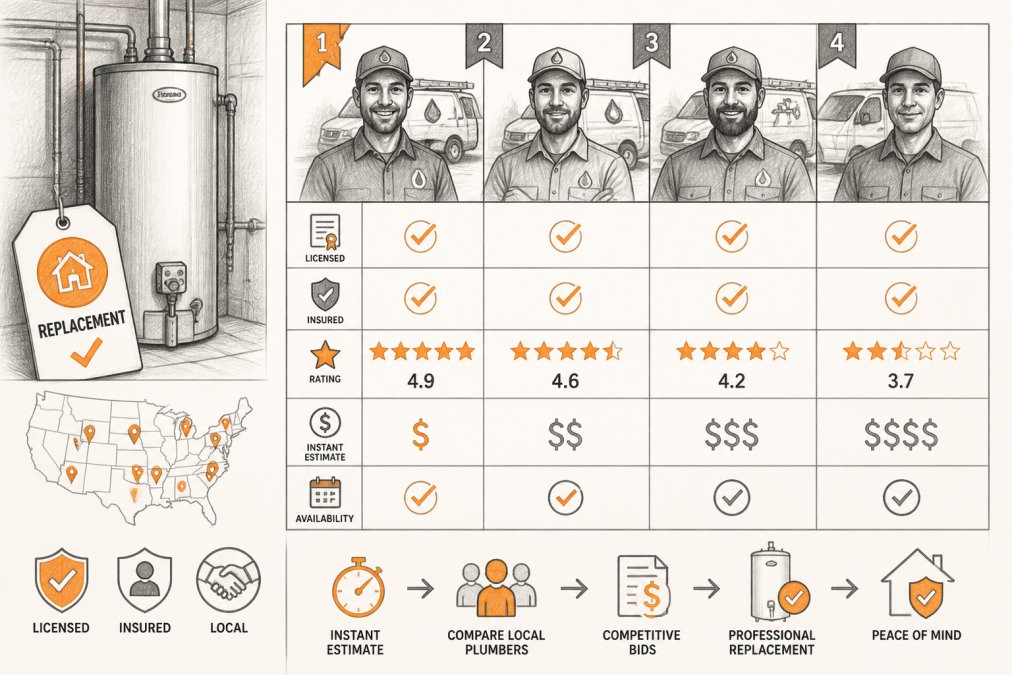
A water heater replacement isn't a small job, and it's not one where you want to cut corners or guess about who's handling it. Hiring local licensed plumbing contractors ensures the work meets code, protects your home, and gives you recourse if something goes wrong.
The difference between a licensed contractor and someone operating without proper credentials goes beyond paperwork. Licensed professionals carry liability insurance, follow building codes, and have passed state-mandated exams that verify their knowledge. When something fails after installation, you know who's responsible and how to get it fixed. Unlicensed operators leave you exposed.
A licensed plumbing contractor has invested in ongoing education, maintains their standing with state boards, and can pull the permits your replacement needs. Water heater installation involves gas lines, electrical work, venting systems, and compliance with local building codes.
How to Verify Plumbing Contractor License and Credentials
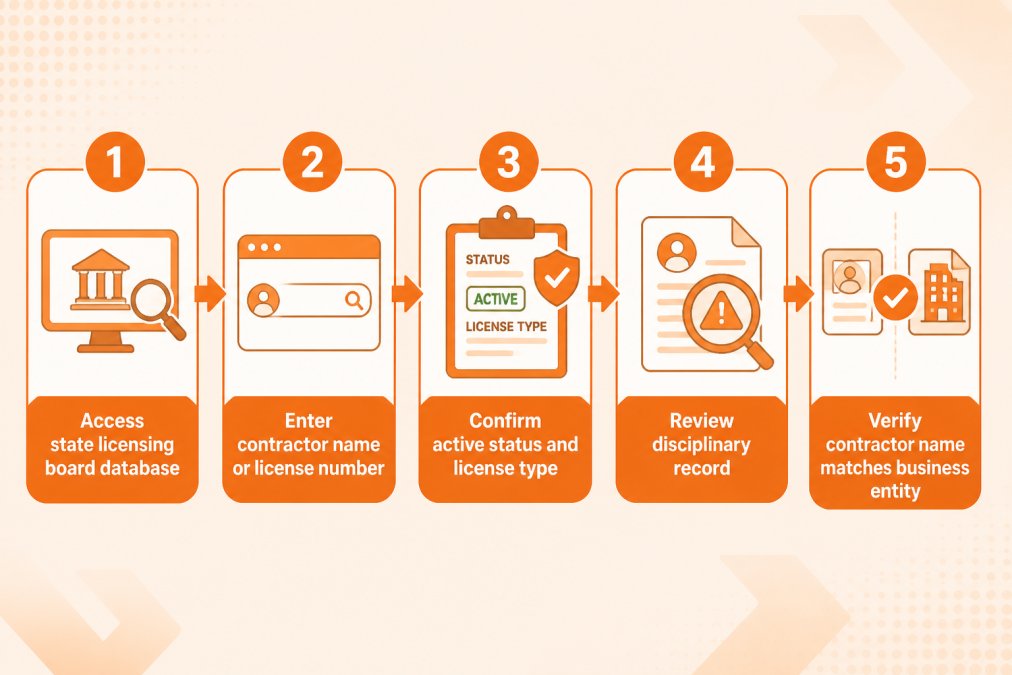
Before you hire anyone, verify their license directly with your state's licensing board. Every state maintains a database of licensed contractors, and checking it takes minutes.
Start by searching your state's plumbing licensing board or contractor regulatory agency. Most states have online databases where you enter the contractor's name or license number and see their current status, any disciplinary history, and what type of license they hold. Some states distinguish between apprentice plumber, journeyman plumber, and master plumber credentials, each representing different levels of training and responsibility.
Look for these specific details in the records:
- Current status: The license should be active, not expired or suspended
- License type: Verify it covers water heater installation
- Disciplinary history: Check for complaints, violations, or past suspensions
- Contractor name match: The name on the license should match the business name they're quoting under
How to Check Plumbing Contractor Insurance and Bonding
Licensed doesn't automatically mean insured. Confirm they carry general liability insurance and, ideally, bonding. These protections cover you if the work causes damage or isn't completed properly.
General liability insurance covers accidents, injuries, or property damage during the job. If a plumber damages your flooring while replacing your water heater, their liability insurance pays for it.
Bonding guarantees that the contractor will complete the work as promised or pay the homeowner for losses. If a bonded contractor abandons the job or does substandard work, the bonding company compensates you.
Ask the plumber for proof of both before they start work. Request a certificate of insurance and bonding certificate. Call the insurance company or bonding company directly to verify coverage is active.
Here's what to verify on the insurance certificate:
- Policy holder name: Should match the contractor's business name
- Coverage limits: Liability should be at least $1 million per occurrence
- Policy dates: Confirm the policy is current
- Endorsements: Check that water heater installation is specifically covered
Questions to Ask a Plumber Before Hiring
Before you commit, ask these questions to understand their process, experience, and how they handle the job.
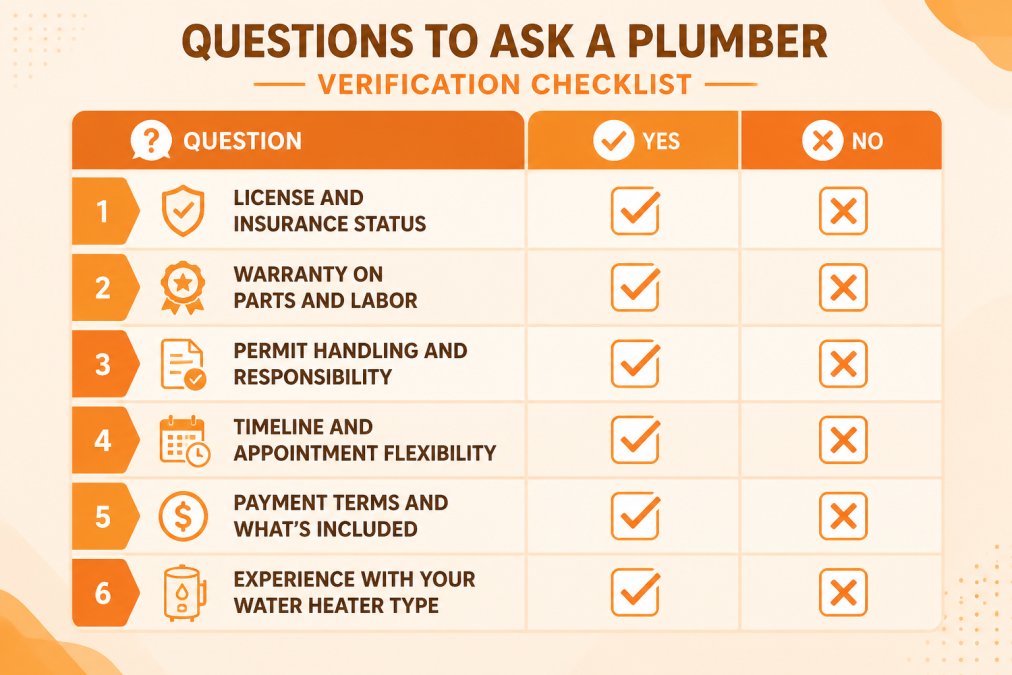
"How long have you been doing water heater replacements?" Experience matters. A plumber with years of replacements under their belt knows the common complications and how to handle them.
"Do you handle the permit, or do I?" Water heater replacement typically requires a permit from the local building department. A professional contractor either pulls the permit themselves or clearly explains who's responsible.
"What's your warranty on parts and labor?" Most water heater manufacturers warrant the tank for 6-12 years. The plumber should warranty their installation work for at least a year.
"What's your payment schedule?" Legitimate contractors don't demand full payment upfront. A typical arrangement is a deposit to schedule the work, with the balance due upon completion.
"Are you bonded and insured?" Ask them directly and ask to see current proof. Their willingness to show documentation indicates professionalism.
"What happens if you find something unexpected during installation?" Sometimes a replacement uncovers a problem: corroded pipes, a gas line issue, or venting complications. Ask how they handle scope changes and whether they'll notify you before doing additional work.
"What's included in your estimate?" Confirm whether the estimate covers the water heater unit, installation labor, permits, disposal of the old unit, and any required code upgrades. An instant water heater replacement quote gives you a baseline, but the plumber confirms the final price on-site after assessing your setup.
Hiring a licensed plumbing contractor protects your investment and ensures the job is done right. Verify credentials, confirm insurance and bonding, and ask the right questions before work begins. When you work with a qualified professional, a water heater replacement is straightforward.
To connect with vetted local licensed and insured plumbers who bid competitively, get an instant water heater replacement quote from QuickHotWater.com. You'll see transparent pricing upfront and connect with contractors in your area ready to provide fair bids for quality work.
Frequently Asked Questions
How do I verify if a plumbing contractor is licensed?
Contact your state's plumbing board or licensing authority directly with the contractor's name and license number. Most states maintain online databases where you can check current license status, expiration dates, and any disciplinary actions. Never rely on the contractor's word alone. Ask for their license number, then verify it independently through the official state board. This protects you from unlicensed work that could violate local building codes.
What is the difference between a licensed, bonded, and insured plumber?
A licensed plumber has passed exams and meets state requirements to perform plumbing work. Bonded means the contractor carries a surety bond that protects you financially if they fail to complete work or violate the contract. Insured means they carry general liability and workers' compensation insurance to cover injuries or property damage. All three matter: licensing ensures competence, bonding provides financial protection, and insurance covers accidents. Always require all three.
What questions should I ask before hiring a local plumber?
Ask about their license number and current status, whether they carry general liability and workers' compensation insurance, how they handle permits, their warranty on parts and labor, estimated timeline, and how they price the job. Also ask for references from recent water heater replacements. Request their pricing structure upfront, whether they use flat-rate pricing or hourly labor rates. Finally, confirm they handle permit applications, as this is often a source of confusion for homeowners.
Should I get multiple estimates when hiring a plumbing contractor?
Yes. Multiple estimates help you understand the fair market price and compare how different contractors approach the job. Licensed plumbing contractors may quote differently based on their overhead, experience level, and service guarantees. Getting two or three bids from qualified, licensed professionals ensures you're not overpaying or guessing at fair pricing. Compare not just the total cost but what's included: permits, warranty, timeline, and cleanup. Be wary of estimates that are significantly lower than others, they may indicate corner-cutting.
Why is it important to hire a licensed plumbing contractor for water heater replacement?
Licensed contractors must follow plumbing codes and building standards that protect your home and family. They carry insurance to cover accidents and provide warranties on their work. Unlicensed plumbers may save money upfront but risk code violations, failed inspections, voided manufacturer warranties, and no recourse if something goes wrong. Water heater replacement involves gas or electrical connections and plumbing integration, mistakes can create safety hazards. Licensing ensures the work is done correctly and inspected properly.
This article was written using GrandRanker