 ultimate-guide
How Accurate Are Online Plumbing Quotes
Table of Contents
- Why Online Plumbing Quotes Have Accuracy Limits
- What a Professional Quote Should Include
- How to Compare Plumbing Bids and Spot Red Flags
- Questions to Ask Before Hiring a Plumber
Last Updated: August 29, 2026
Why Online Plumbing Quotes Have Accuracy Limits
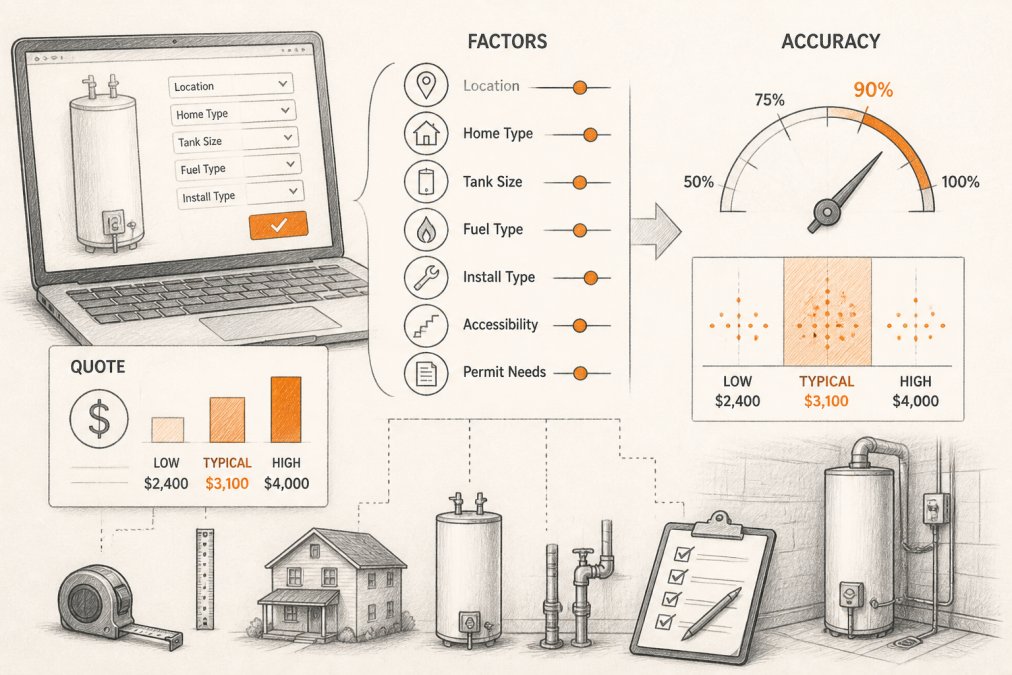
Online plumbing quotes offer speed and convenience, but they come with real constraints. Most online tools estimate based on generic data: your zip code, water heater type, and basic specifications. They can't see your actual installation, existing piping, accessibility issues, or unexpected complications that only an on-site inspection reveals.
A professional plumber needs to see the job in person to assess pipe material, water pressure, space constraints, and permit requirements. An online tool can't detect a corroded fitting, a tight crawlspace, or code violations that affect labor and materials. This is why instant estimates work best as a starting point, not a final number.
The gap between an online estimate and a plumber's final quote often comes down to hidden defects discovered during assessment. When you get an instant water heater replacement quote, you're receiving a ballpark based on standard conditions, but the licensed plumber who inspects your home will confirm the actual price after seeing your specific setup, piping, and any complications that affect the job.
What a Professional Quote Should Include
A solid plumbing estimate breaks down into clear categories so you understand what you're paying for. The estimate should itemize labor costs separately from materials, specify the water heater model, installation labor hours, and any additional parts needed.
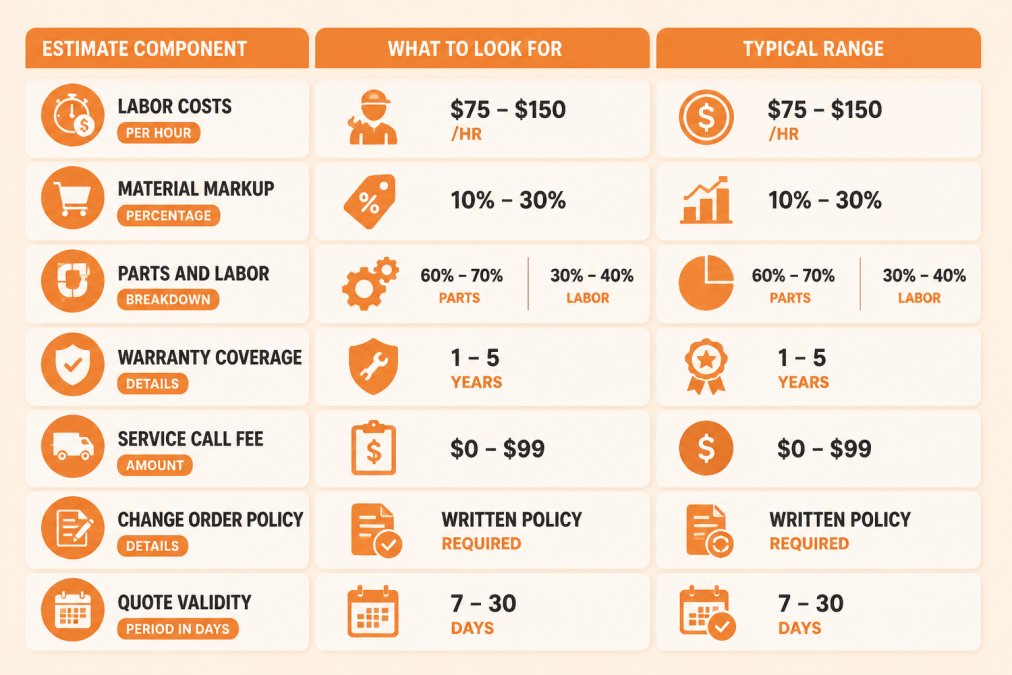
A written agreement protects both you and the plumber. It should include the project scope, start date, estimated completion, warranty coverage, and what happens if unexpected issues arise. The change order policy defines how extra work gets priced if the plumber discovers something unforeseen. A fair estimate also specifies the quote validity period, typically 30 days.
Material markup is standard practice, plumbers purchase at wholesale and mark up for retail. Understanding these components helps you compare bids fairly and spot outliers.
How to Compare Plumbing Bids and Spot Red Flags
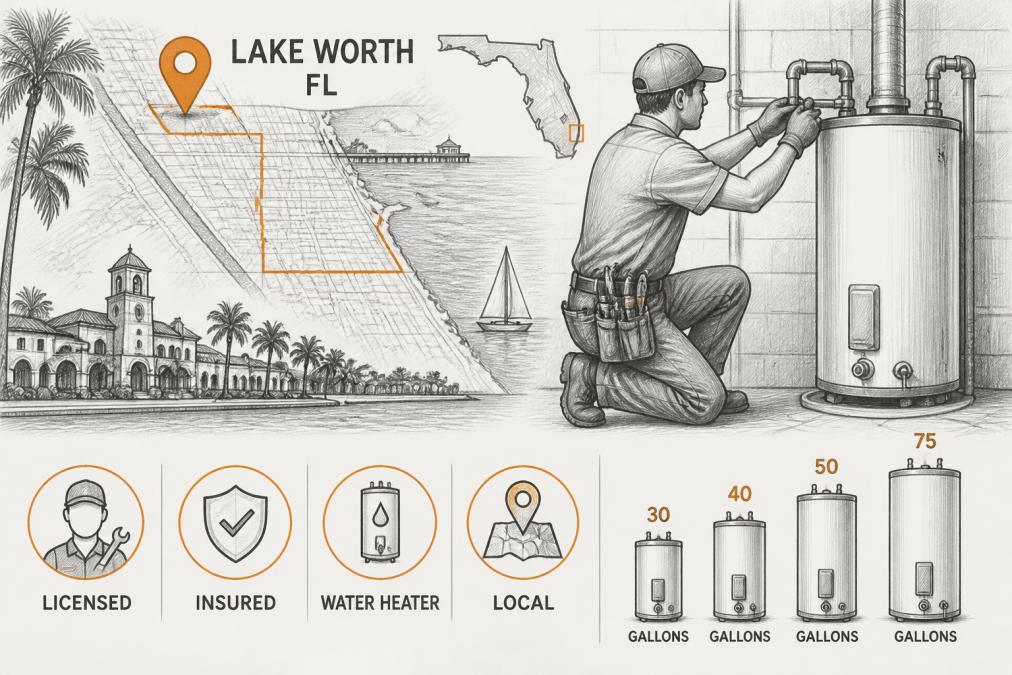
Getting multiple bids is essential, but comparing them requires more than looking at the total. Start by verifying that each plumber is licensed and insured. This is non-negotiable. An uninsured plumber might quote lower, but you're exposed to liability if something goes wrong.
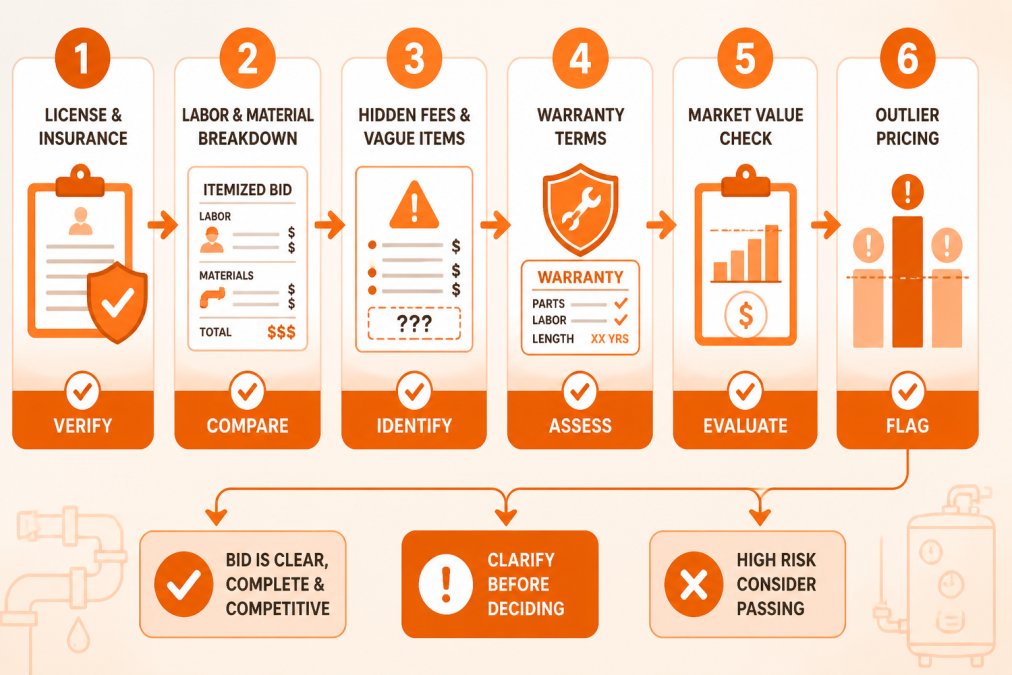
Red flags appear when bids vary wildly or lack detail. A quote that's suspiciously low often means the plumber underestimated the scope or plans to cut corners. A bid that's vague, saying "labor" without specifying hours or "materials" without listing items, makes it impossible to evaluate fairly. Ask for an itemized breakdown.
Pay attention to what's included and what isn't. Does the estimate cover permit fees? Disposal of the old unit? Testing and startup? Clarify before hiring. Also ask about the warranty on both parts and labor. A reputable contractor typically guarantees their work for at least one year.
Questions to Ask Before Hiring a Plumber
Before you commit, ask the plumber how they handle unexpected discoveries. What if they find corroded pipes? Will they stop and call you, or proceed and bill extra? A professional plumber will explain their process for handling contingencies.
Ask about their experience with your specific water heater type and fuel source. Ask how long they've been in business and whether they're bonded. Clarify the timeline: how soon can they start, how long will installation take, and will they handle permit applications? Many jurisdictions require permits for water heater replacement.
Finally, ask about payment terms. Do they require a deposit? When is the balance due, upon completion or before? Understand the terms so there are no misunderstandings on invoice day.
Getting accurate pricing for a water heater replacement starts with understanding the limits of online estimates and the value of professional assessment. An instant estimate gives you a ballpark, but the final price depends on what a licensed plumber finds on-site. Get an instant water heater replacement quote and compare bids from qualified, licensed, and insured professionals to ensure you're paying fair market value for quality work.
Frequently Asked Questions
Q: Why do online plumbing quotes often differ from what plumbers quote on-site?
A: Online plumbing quotes rely on limited information, typically just water heater size and fuel type. A plumber's on-site assessment reveals hidden defects, local installation standards, permit requirements, and existing infrastructure that affect the final price. Factors like pipe condition, accessibility, and code compliance can't be assessed remotely, which is why a professional quote requires a site inspection.
Q: What should a professional plumbing estimate include?
A: A detailed estimate should itemize labor costs, material markup, parts and labor separately, warranty coverage, the project scope, and a quote validity period. It should also note any contingencies or change order policies. An itemized breakdown helps you understand what you're paying for and compare bids fairly across different contractors.
Q: How can I tell if a plumbing quote is fair?
A: Compare multiple bids from licensed and insured plumbers in your area. Check that each includes a detailed breakdown of labor and materials. Be wary of quotes significantly lower than others, these often signal incomplete scope assessment or inexperienced contractors. Verify contractor licensing, ask about warranty coverage, and confirm the quote validity period. Fair pricing reflects fair market value for quality work, not the lowest bid.
This article was written using GrandRanker