 ultimate-guide
How to Choose Water Heater Size: A 2026 Guide
Table of Contents
- How to Choose Water Heater Size: Key Factors
- First Hour Rating Explained and Why It Matters
- Average Water Usage Per Person: Calculate Your Needs
- Tankless Water Heater Sizing Guide
Last Updated: August 27, 2026
How to Choose Water Heater Size: Key Factors
Choosing the right water heater size is critical, get it wrong and you'll either run out of hot water or waste energy. The goal is to match your household's actual hot water demand to a system that delivers it reliably without oversizing.
Household occupancy, climate, and appliance types all factor in. More people means higher simultaneous usage. Groundwater temperature varies across the country, affecting how hard your heater must work. Modern high-flow showerheads and energy-efficient dishwashers influence peak demand differently than older fixtures.
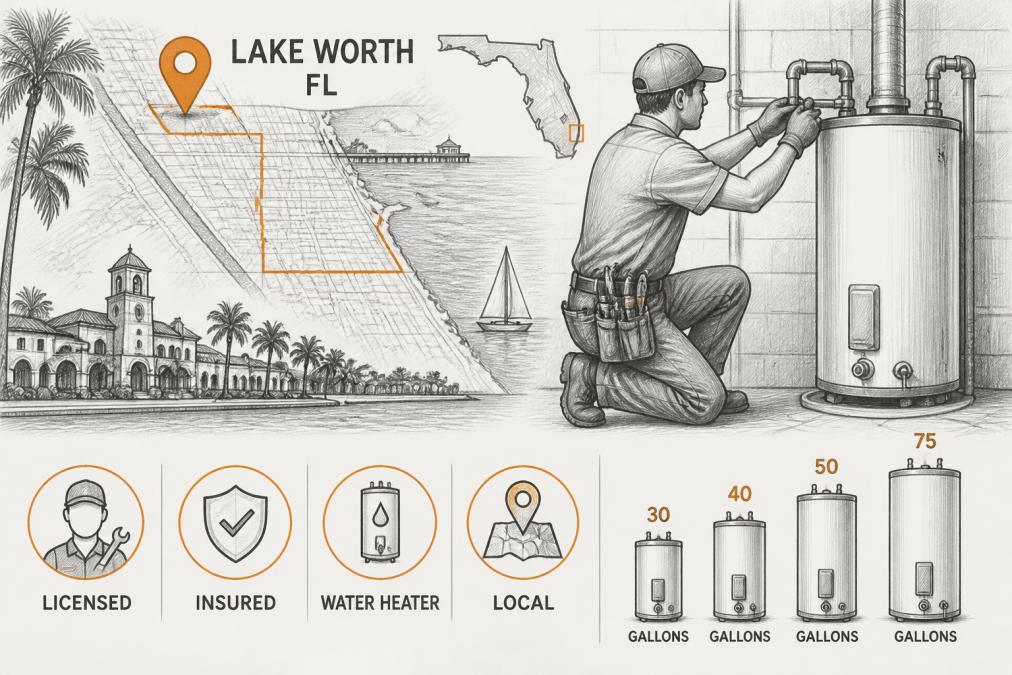
QuickHotWater.com connects you with local, licensed and insured plumbers who understand regional conditions and can recommend the right capacity for your home. When you're ready to replace, you can get an instant water heater replacement quote and competitive bids from vetted professionals in your area.
First Hour Rating Explained and Why It Matters
First-hour rating (FHR) is the total amount of hot water a tank-style water heater can deliver during the first 60 minutes of use. This metric reflects how well your system handles peak demand, typically morning routines when multiple showers, laundry, and dishwashing happen simultaneously.
FHR combines tank storage volume and recovery rate (how quickly it reheats water after use). A 40-gallon tank with slow recovery might deliver only 50 gallons in the first hour; the same tank with faster recovery could deliver 70 gallons or more.
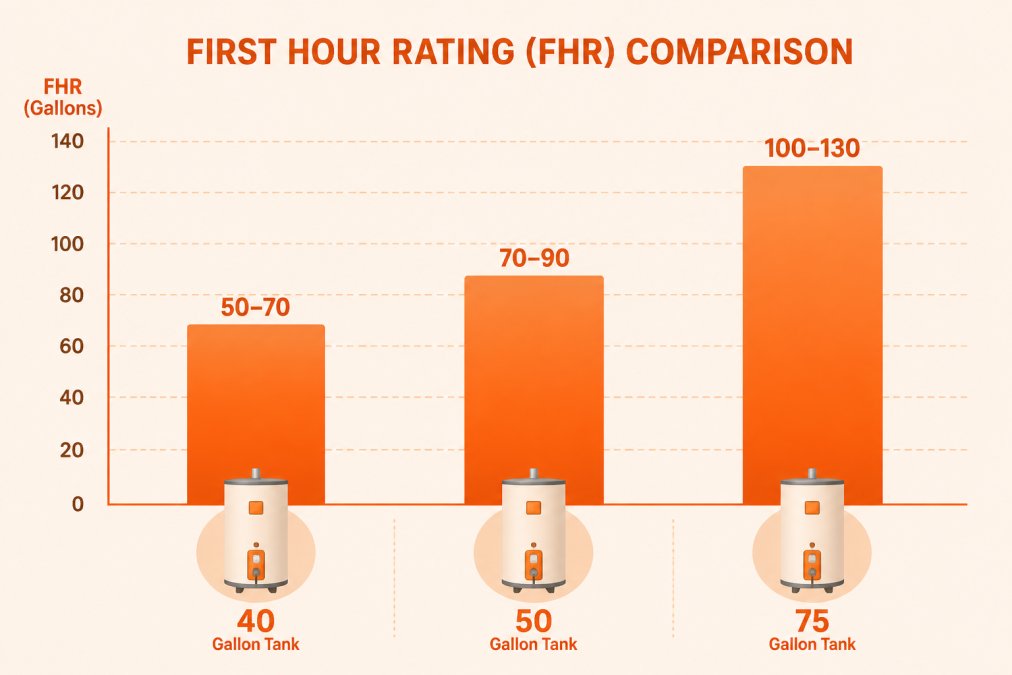
If your household's peak demand exceeds your system's FHR, you'll run out of hot water. A family of four running two showers, laundry, and a dishwasher simultaneously might need 80+ gallons in the first hour. Recovery rate depends on fuel type, gas heaters recover faster than electric resistance heaters, which is why many homes choose gas for larger households.
Average Water Usage Per Person: Calculate Your Needs
The average person uses 15-20 gallons of hot water daily (the EPA). Peak demand, the amount needed during your busiest hour, determines tank size.
A 10-minute shower uses about 25 gallons at standard 2.5 GPM flow rates (the EPA). A dishwasher cycle uses 27 gallons. A washing machine load uses 40 gallons. Two back-to-back showers plus laundry means 65+ gallons needed in a short window.
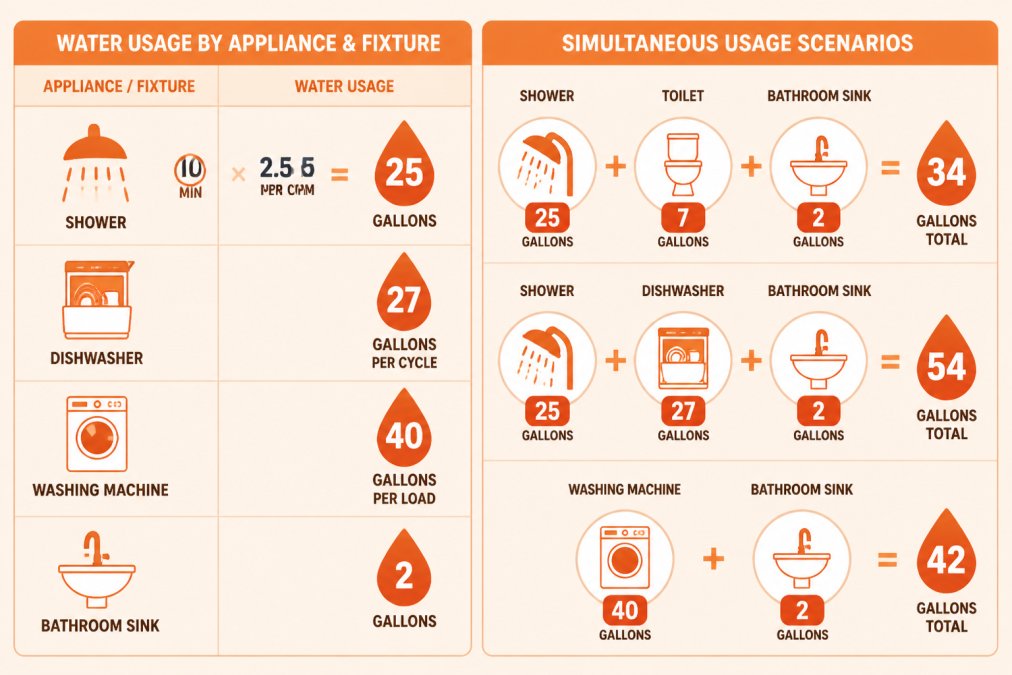
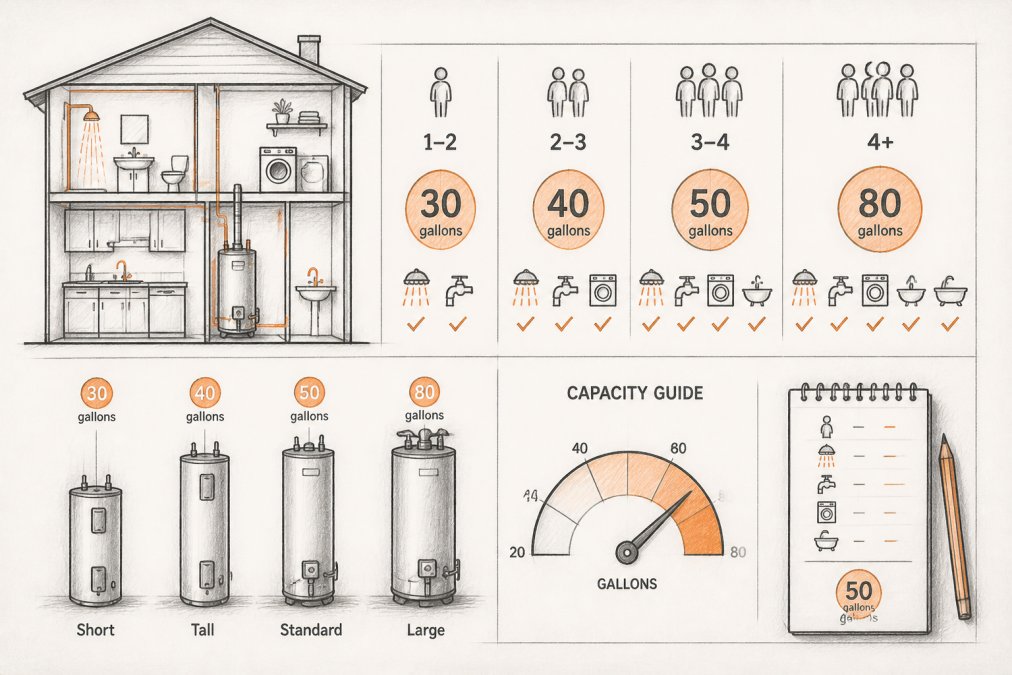
List your household's simultaneous hot water needs during peak hours and add them up, that's your target capacity. A household of four with two simultaneous showers, laundry, and dishes might need 90+ gallons available during peak demand.
Climate affects this too. In cold climates where groundwater is 35-45°F, your heater must work harder to reach 120°F than in milder regions where groundwater starts at 55-60°F (usgs.gov). Colder climates benefit from larger tanks or faster recovery rates.
Tankless Water Heater Sizing Guide
Tankless systems size differently than tank models. Instead of storage capacity, you focus on continuous flow rate, measured in gallons per minute (GPM). A tankless heater must deliver hot water at the rate your household demands it.
Most tankless units deliver 3-5 GPM. Running two showers simultaneously requires 5 GPM just for showers alone. Many households need units rated for 6-8 GPM, or they install multiple units.
Temperature rise also matters. Tankless heaters are rated by their ability to raise incoming water temperature by a specific amount. A unit rated to raise water 70°F will struggle in colder climates where groundwater is 35°F. You may get lower flow rates or need a higher-capacity unit.
Tankless systems excel at energy efficiency and space savings. But they require careful sizing to avoid disappointment, and installation typically demands more complex venting and sometimes gas line upgrades.
Selecting the right water heater size prevents running out of hot water and wasting energy. The process requires understanding your household's peak demand, your climate's groundwater temperature, and whether a tank or tankless system fits your home's infrastructure and usage patterns. When you're ready to move forward with a replacement, QuickHotWater.com connects you with local, licensed and insured plumbers who can assess your setup on-site and provide an instant estimate. You'll get competitive bids from vetted professionals and a straightforward replacement process without guessing about what you'll actually pay.
Frequently Asked Questions
Q: Is a 40-gallon water heater enough for a family of 4?
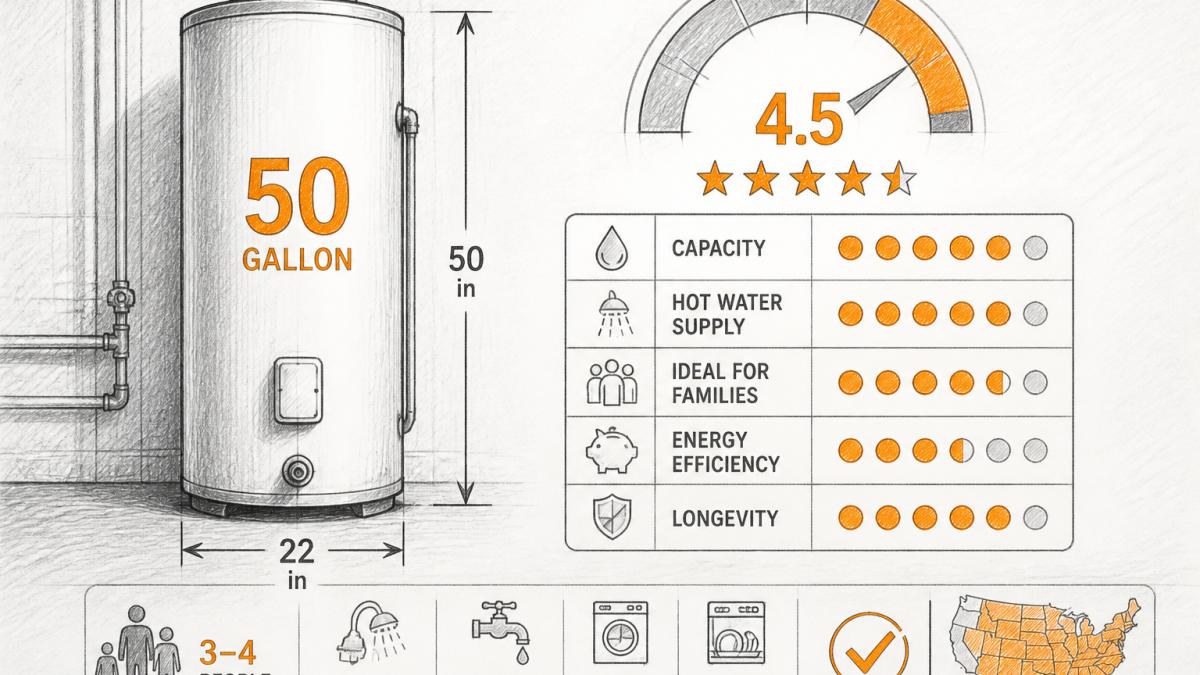
A: A 40-gallon tank works for families of 3-4 people with moderate usage patterns and staggered showers. Check the first-hour rating (FHR) to confirm it meets your peak demand. If multiple showers run simultaneously or you have high-flow fixtures, a 50-gallon tank or tankless system may be needed. Your actual requirements depend on groundwater temperature and recovery rate.
Q: How do I calculate the first hour rating for my home?
A: First-hour rating (FHR) estimates how many gallons of hot water your tank delivers in the first hour. Add up your simultaneous fixture flow rates (showerheads typically 2.0-2.5 GPM, faucets 1.5-2.0 GPM) and multiply by the minutes you'll use them. Compare that total to your tank's FHR on the label. If your peak demand exceeds the FHR, you'll run out of hot water during peak times.
Q: What size water heater do I need if I have a tankless system?
A: Tankless water heater sizing depends on temperature rise and continuous flow rate, not storage volume. Calculate the GPM you need (sum of simultaneous fixtures) and the temperature rise required (incoming groundwater temperature varies by climate). Most homes need 5-8 GPM for simultaneous showers. Gas tankless systems typically handle higher flow rates than electric models, so confirm BTU input and electrical capacity before choosing.
This article was written using GrandRanker