 how-to
How to Find a Licensed and Insured Plumber for Water Heaters
Table of Contents
- Why Hiring a Licensed and Insured Plumber Matters
- How to Verify Plumbing License and Insurance
- Questions to Ask a Plumber Before Installation
- Understanding Water Heater Replacement Permit Requirements
Last Updated: August 26, 2026
Why Hiring a Licensed and Insured Plumber Matters
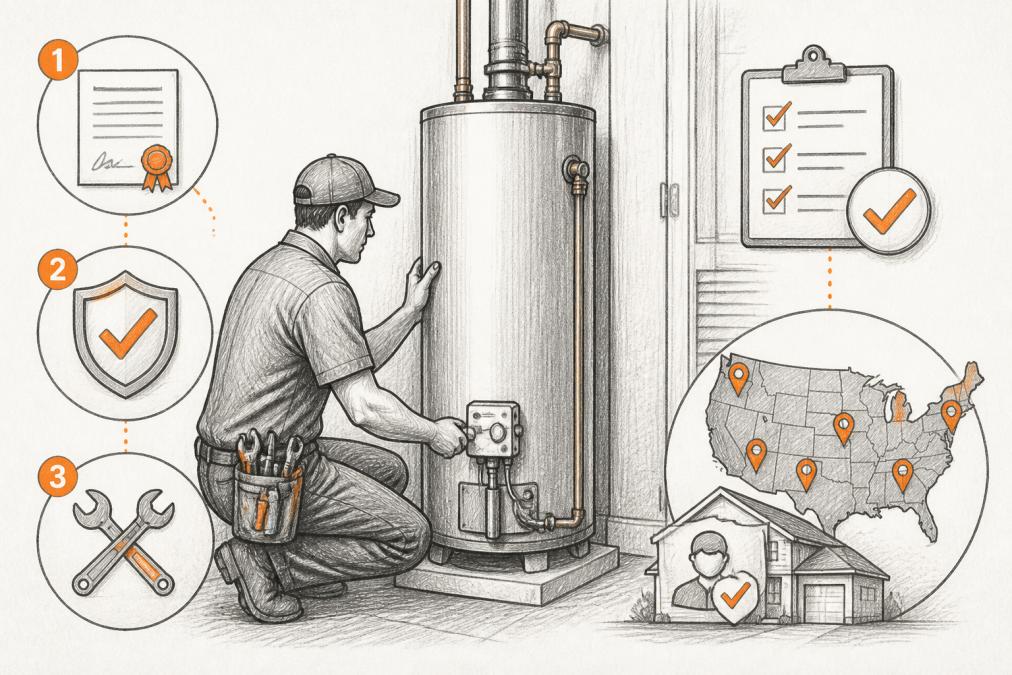
When your water heater fails, rushing to hire the first plumber you call can cost you thousands in unnecessary work or leave you with a botched installation. A licensed and insured plumber protects your home and wallet.
Unlicensed plumbers may be cheaper upfront but sidestep permit requirements, skip inspections, and carry no liability insurance. If something goes wrong, a gas leak, water damage, or code violation, you're liable and your homeowner's insurance may refuse to cover damage from unpermitted work. A licensed and insured plumber pulls required permits, follows local building codes, and carries insurance that protects you if something fails.
At QuickHotWater.com, we connect homeowners with vetted local plumbers who meet these standards. Every plumber in our network is licensed and insured. You get an instant water heater replacement quote from qualified professionals competing for your business, which means transparent pricing without sales pressure.
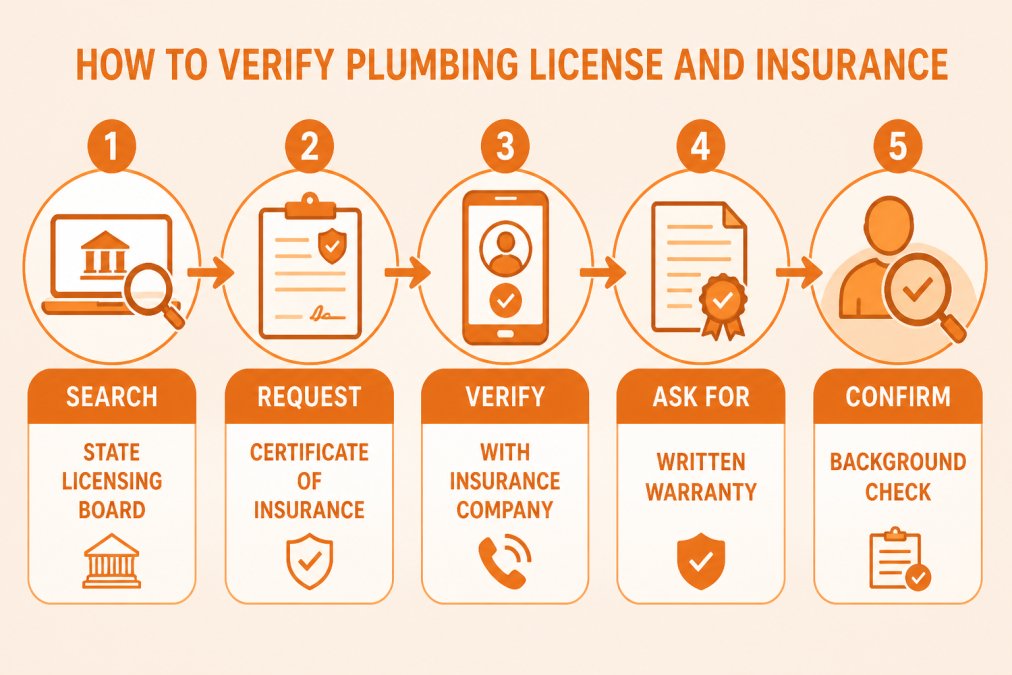
How to Verify Plumbing License and Insurance
Verification takes minutes and protects you from costly mistakes.
Check the state licensing board. Search your state's plumbing or contractor licensing board (usually under your state's Department of Consumer Affairs). Enter the plumber's name and license number to verify active status and disciplinary history.
Request proof of insurance. Ask for a Certificate of Insurance showing general liability coverage and workers' compensation with coverage amounts and policy dates. Call the insurance company's phone number on the certificate to verify it's real.
Verify workmanship guarantees. Licensed plumbers typically offer warranties on labor. Ask for this in writing.
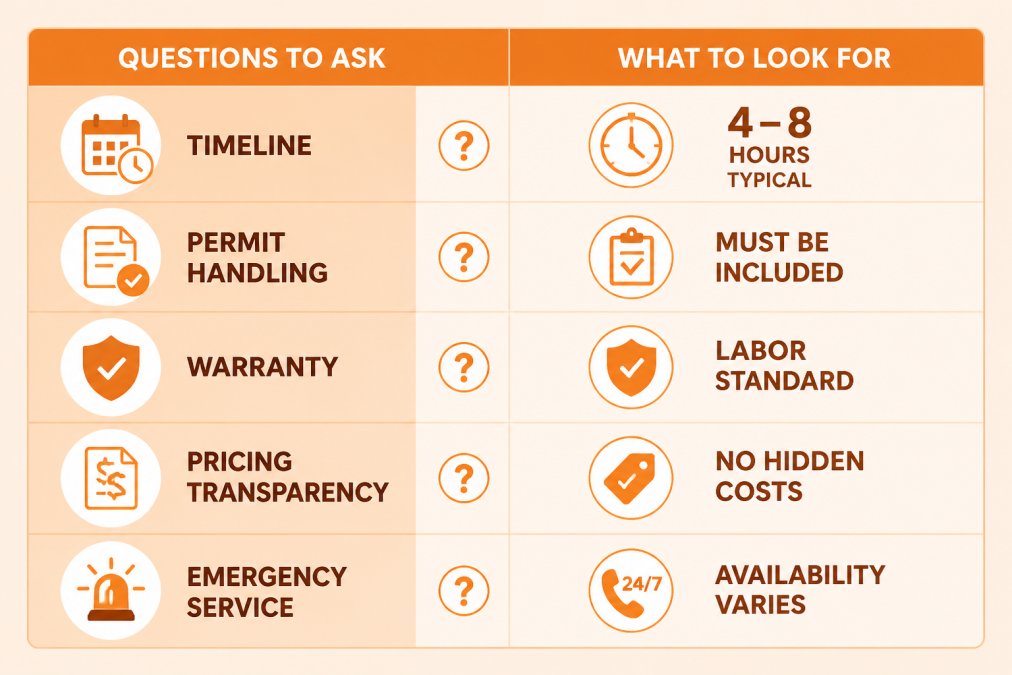
Questions to Ask a Plumber Before Installation
The conversation before work starts determines whether you'll get a fair price and quality installation.
Timeline and availability. "When can you start, and how long will installation take?" Most water heater replacements take 4-8 hours depending on type and your home's setup (peer-reviewed research).
Permit handling. "Will you pull the required permit, and is it included in your estimate?" A licensed plumber pulls permits automatically. If a plumber says permits aren't necessary, that's a deal-breaker.
Warranty and guarantees. "What's covered under your warranty, and for how long?" Ask separately about labor warranty and parts warranty. Get this in writing.
Pricing transparency. "Is this estimate final, or could it change on-site?" When you request an instant estimate from multiple local plumbers through QuickHotWater.com, you can compare pricing without pressure and see upfront what you're paying for.
Emergency support. "Do you offer after-hours support if something goes wrong?"
Understanding Water Heater Replacement Permit Requirements
Permits aren't bureaucratic red tape, they're your protection. A permit triggers an inspection that confirms the installation meets local building codes. Without it, your home may fail inspection when you sell, your insurance may deny claims, and you're personally liable if something goes wrong.
What requires a permit. Water heater replacement always requires a permit in most jurisdictions. A licensed plumber knows the requirements for your area and pulls the permit automatically.
Who pays for the permit. The plumber includes the permit cost in their estimate. When you get an instant estimate from QuickHotWater.com, the permit is included in upfront pricing, so there are no surprises.
The inspection process. After installation, a local building inspector verifies the work meets code, checking gas line connections, venting, electrical work, and safety features like the pressure relief valve (nfpa.org). The inspector signs off and you receive a certificate of completion, proof that work is done to code, critical if you sell your home or file an insurance claim.
What happens without a permit. Unpermitted work creates liability. If water damage occurs and your insurance investigates, they'll deny the claim if work wasn't permitted. A licensed and insured plumber handles permits as part of the job, one of the clearest signs you've hired a professional who takes responsibility for the work.
Frequently Asked Questions
Why is it important to hire a licensed and insured plumber for water heater replacement?
A licensed and insured plumber has met state training requirements, understands local building codes, and carries liability insurance to protect you if something goes wrong. Unlicensed work can void warranties, create safety hazards with gas lines or electrical connections, and leave you liable for code violations or damage. Licensed professionals ensure the job is done safely and to code.
How can I verify if a plumber is insured and licensed?
Ask for their license number and verify it through your state's licensing board website. Request a copy of their liability and workers' compensation insurance certificates directly from their insurer, not just from the plumber. Reputable plumbers keep this information readily available and welcome verification.
Does a water heater replacement require a building permit?
Most jurisdictions require a permit for water heater replacement to ensure the installation meets local building codes and safety standards. Permits typically involve inspection of the installation, gas line connections, venting, and electrical work. A licensed plumber handles permit applications and coordinates inspections. Skipping permits can create liability issues when selling your home and may result in fines.
Finding a licensed and insured plumber for water heaters doesn't have to be stressful. The three steps, verify credentials, ask the right questions, and confirm permit handling, take less than an hour and protect your home for years. When you're ready to move forward, QuickHotWater.com connects you with vetted local plumbers who bid competitively on your replacement. Get an instant estimate in 30 seconds and compare quotes from multiple professionals without sales visits or spam calls.
This article was written using GrandRanker