 how-to
How to Maintain a Gas Water Heater
Table of Contents
- Essential Maintenance Tasks for Your Gas Water Heater
- How to Flush a Gas Water Heater
- Gas Water Heater Maintenance Schedule and Lifespan
- Frequently Asked Questions
Last Updated: October 10, 2026
Essential Maintenance Tasks for Your Gas Water Heater
Regular maintenance extends your gas water heater's lifespan and prevents costly breakdowns. Here's how to maintain a gas water heater properly.
Start with a visual inspection: look for water pooling around the base, supply lines, and drain valve, and check gas connections for a rotten-egg smell, which signals a potential leak.
Test the temperature and pressure relief valve by lifting the lever briefly to hear water flow into the drain pipe; if nothing happens, the valve may need replacement.
Inspect the sacrificial anode rod. This metal rod corrodes instead of the tank, protecting it from rust. If your tank is 3-5 years old, have a plumber check the rod's condition.
Check your thermostat setting and adjust to 120°F for safety and energy efficiency.
How to Flush a Gas Water Heater
Flushing removes mineral deposits and sediment that accumulate over time and is one of the most important steps in how to maintain a gas water heater.
Before you start: Turn off the gas supply and wait at least 2 hours for the water to cool.
- Attach a garden hose to the drain valve and route it to a floor drain or outside.
- Open the drain valve slowly; water may be cloudy at first.
- Open a hot water tap inside your home to allow air into the tank.
- Let the tank drain completely (10-15 minutes).
- Close the drain valve, remove the hose, and turn the gas back on.
Gas Water Heater Maintenance Schedule and Lifespan
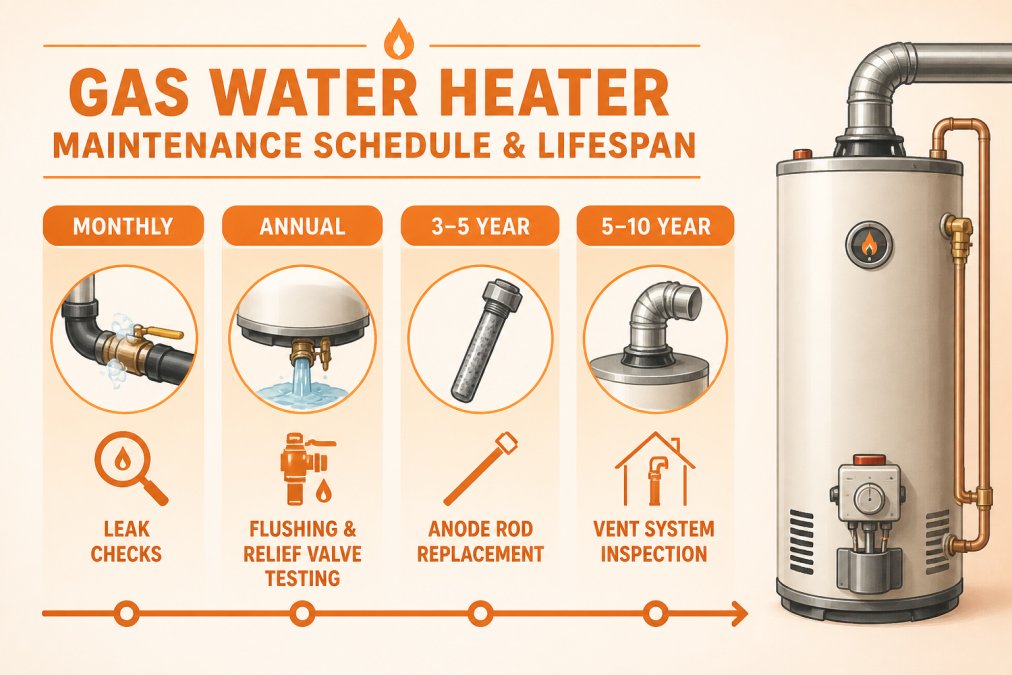
Most gas water heaters last 8-12 years with proper care and a consistent maintenance schedule.
Monthly: Check for leaks. Annually: Flush the tank, test the relief valve, and inspect the anode rod. Every 3-5 years: Replace the anode rod. Every 5-10 years: Have a professional inspect the venting system and air intake.
When your water heater approaches 10 years old, plan for replacement rather than waiting for failure. A sudden breakdown leaves you without hot water and forces expensive emergency service calls. Get an instant water heater replacement quote from local, licensed, and insured plumbers in your area, compare bids from qualified professionals in seconds with no sales visits or guessing required.
Frequently Asked Questions
How often should you flush a gas water heater?
Flush your gas water heater annually or every 12 months to remove sediment buildup. In areas with hard water, consider flushing twice yearly. Regular flushing prevents mineral accumulation that reduces efficiency and can damage the storage tank.
What is the average lifespan of a gas water heater?
Most gas water heaters last 8 to 12 years with proper maintenance. Units in areas with softer water or those receiving consistent annual maintenance may approach 15 years. Hard water, neglected flushing, and corrosion of the sacrificial anode rod shorten lifespan significantly. If your unit is nearing 10 years old, monitor it closely for leaks, rust stains, or reduced hot water recovery time, signs that replacement may be needed soon.
Can I flush a gas water heater myself?
Basic flushing is possible for homeowners with mechanical confidence, but it carries risks. You must turn off gas supply and water inlet, drain the tank safely, and manage hot water properly. If your tank is old, has heavy sediment, or you're uncomfortable with the process, hire a qualified technician.
Planning ahead for water heater replacement saves stress and money. When you're ready to move forward, QuickHotWater.com provides instant estimates that connect you with vetted local plumbers. You'll see clear, upfront pricing before any work begins, ensuring you get fair-market rates for quality replacement work.