 How-to
How to Flush a Water Heater to Extend Its Life
Last Updated: October 31, 2026
Quick Summary
Flush a water heater about once a year, or every six months if you have hard water, to clear mineral sediment from the tank. Turn off power or gas, close the cold-water inlet, then drain the bottom valve until the water runs clear.
- Standard water calls for flushing about once a year.
- Hard water calls for flushing every six months.
- Turn off power or gas before you start draining the tank.
- Never restart the heater while the tank is empty.
- Refill the tank fully before turning power or gas back on.
Table of Contents
- How Often to Flush a Water Heater and How Long It Takes
- How to Drain a Water Heater Tank Step by Step
- Flushing a Water Heater After 10 Years: Is It Worth It?
- Frequently Asked Questions
How Often to Flush a Water Heater and How Long It Takes
Most homeowners should flush a storage tank water heater about once a year. Homes with hard water may need to flush more often, since mineral sediment builds up faster in those systems.
Flushing usually takes under an hour once you have the tools ready. Check your unit's manual for the manufacturer's recommended schedule, because it can vary by model.
- Standard water: about once a year
- Hard water: every six months
- Tankless systems: follow the manufacturer's descaling schedule instead
How to Drain a Water Heater Tank Step by Step
Flushing clears sediment from the bottom of the tank so the heater runs more efficiently. Work slowly and keep safety in mind the whole time.
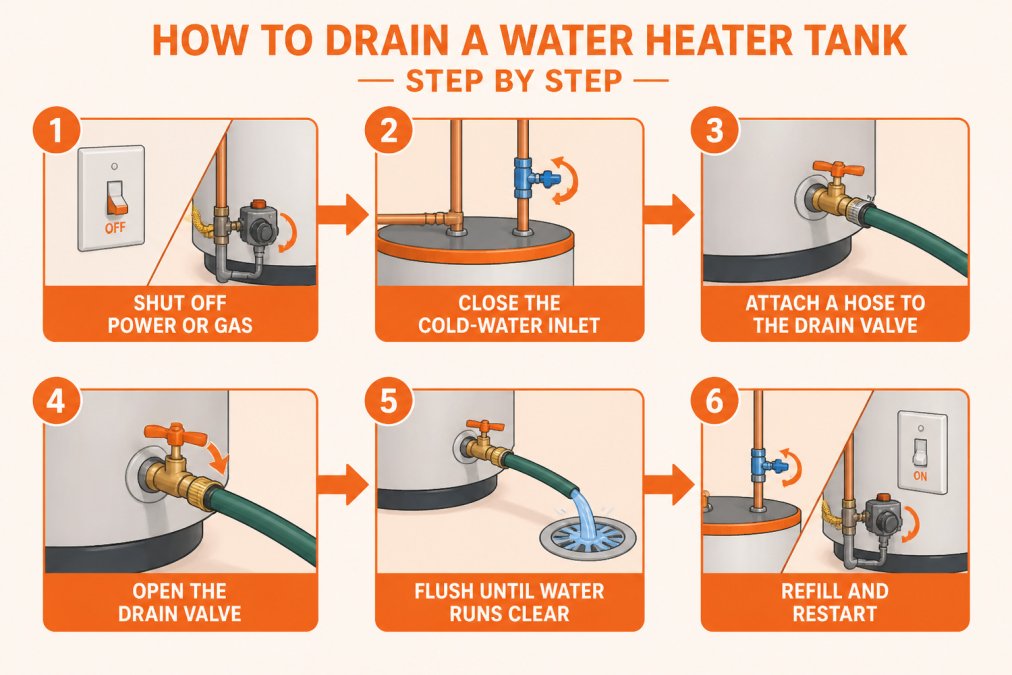
- Turn off power or gas. Switch off the breaker for electric units, or set the gas control to pilot or off.
- Close the cold-water inlet. This stops new water from refilling the tank during the flush.
- Attach a garden hose. Connect it to the drain valve at the bottom and run the other end to a floor drain or outdoors.
- Open the drain valve. Let the water run until it comes out clear, which can take a while.
- Refill and restart. Close the drain valve, open the cold-water inlet, let the tank fill fully, then turn the power or gas back on.
Watch out: never turn the heater back on while the tank is empty, because the heating element or burner can be damaged.
Here is a quick summary of the flushing steps and what each one involves.
| Step | What to do | Note |
|---|---|---|
| 1. Turn off power or gas | Switch off the breaker or set gas control to pilot or off | Electric or gas units |
| 2. Close cold-water inlet | Stop new water from refilling during the flush | Prevents refill mid-flush |
| 3. Attach garden hose | Connect to drain valve and run to a floor drain or outdoors | Bottom drain valve |
| 4. Open drain valve | Let water run until it comes out clear | Can take a while |
| 5. Refill and restart | Close valve, open inlet, let tank fill, restore power or gas | Fill fully before restarting |
Flushing a Water Heater After 10 Years: Is It Worth It?
Flushing an older unit can still help, but it is not always worth the effort. A heater past 10 years may have worn parts or heavy corrosion that flushing will not fix.
If the water runs rusty, the unit leaks, or heating has slowed down, replacement is usually the better choice. You can get an instant water heater replacement quote to see an estimate for a like-for-like swap. The local, licensed, and insured plumbers who bid on your job confirm the final price on-site.
Frequently Asked Questions
Does flushing a water heater extend its life?
Regular flushing removes sediment that settles at the bottom of the tank. Sediment layers insulate the water from the heating element or burner, so the unit works harder and runs hotter at the bottom of the tank. Removing it helps the tank heat more efficiently and reduces the wear that leads to early failure. Flushing will not reverse existing damage, but it is one of the simplest maintenance steps a homeowner can take to protect the unit.
Can you flush a water heater after 10 years?
Yes, a water heater around 10 years old can usually be flushed, but check the manufacturer's instructions first. Older tanks may have corroded drain valves that leak or fail to close fully once opened. If the valve is stuck, looks damaged, or drips, have a licensed plumber inspect it before forcing it. A flush on an older unit is still worthwhile, but expect the process to be more delicate.
How long does it take to flush a water heater?
A flush typically takes a short while once the tank is drained and the water runs clear. Allow extra time for the tank to cool before you start, since draining hot water can scald. Refilling the tank and restoring power or gas also takes time.