 How-to
How to Legalize Unpermitted Plumbing Work
Last Updated: November 5, 2026
Quick Summary
To legalize unpermitted plumbing, apply for a retroactive or after-the-fact permit with your local building department, submit as-built plans and documentation, open any concealed work for inspection, and pass a final inspection. Call the permit desk before filing to confirm what your jurisdiction requires.
- Call the building department before filing to ask what an after-the-fact application needs.
- Most jurisdictions won't issue a plumbing permit to a homeowner beyond basic fixture swaps.
- Approved with corrections is the most common inspection outcome and works like a punch list.
- Open walls or access panels only at the inspector's direction, and get any alternative in writing.
- Unpermitted plumbing can lead insurers to deny or limit a claim tied to that work.
Table of Contents
- Why Unpermitted Plumbing Work Has to Be Legalized
- How to Correct Unpermitted Work: The Step-by-Step Process
- What to Expect from a Plumbing Permit Inspection After Work Is Done
- Frequently Asked Questions
Why Unpermitted Plumbing Work Has to Be Legalized
Unpermitted plumbing work is plumbing installed, moved, or replaced without a building permit and the inspections that go with it. It stays a problem until someone fixes the paperwork, and that someone is usually the owner. A retroactive plumbing permit, also called an after-the-fact permit, lets the local building department review work already done and either approve it or tell you what has to change. Water heater permit requirements by state vary, so check what applies where you live before you file.
Watch out: unpermitted gas line work is not a paperwork problem. If you smell gas, leave the area and call your gas utility first.
How to Correct Unpermitted Work: The Step-by-Step Process
Correcting unpermitted work means applying for an after-the-fact permit, showing the building department what exists, opening concealed work for inspection, and passing a final inspection.
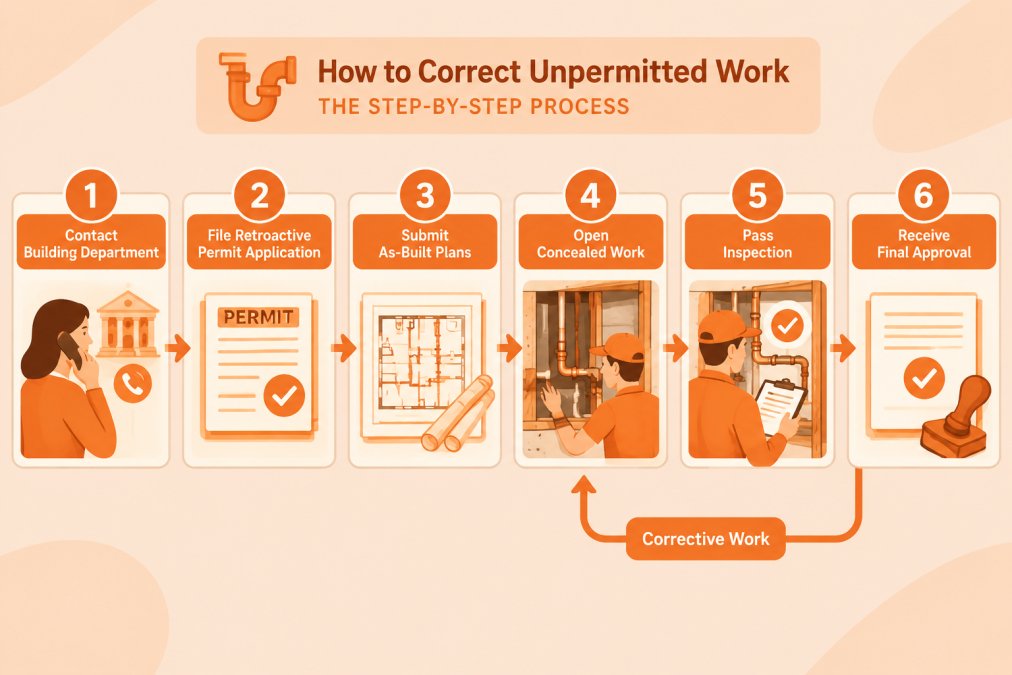
- Check what your local jurisdiction requires. Rules differ by city and county. Start with how to find local building permit requirements.
- Call the building department before you file. Ask: Is there a permit on record? What does an after-the-fact application need? Will they require walls opened?
- Pull the permit records to see what was approved and when.
- Gather documentation: the application, receipts or invoices, photos, and a description of what was installed.
- Submit as-built plans or existing-conditions drawings showing what is there now.
- Hire a licensed contractor if the scope requires it. Most jurisdictions won't issue a plumbing permit to a homeowner beyond basic fixture swaps. Use how to find a licensed plumber near me, then verify the plumber's license and insurance.
- Open concealed work. Expect access panels behind drywall or above ceilings.
- Fix what the inspector flags. Corrective work is normal.
- Pass the final inspection and get approval in writing. Keep the signed card and permit number with your home records.
Watch out: filing blind is the most common mistake. A five-minute call with the permit desk saves weeks of resubmittals.
If the inspection turns up plumbing that needs replacing rather than correcting, get an instant water heater replacement quote and we will bid the job to licensed local plumbers. We handle replacement only, so repairs go to your plumber.
What to Expect from a Plumbing Permit Inspection After Work Is Done
A plumbing permit inspection after work is done checks the work as it sits now, looking for code compliance, safe materials, proper connections, and whether anything hidden needs to be seen. Inspectors generally look at water supply lines, drain/waste/vent lines, water heater installation, shutoff valves, and any concealed work.
You should expect one of three outcomes:
| Outcome | What It Means | Your Next Step |
|---|---|---|
| Approved | Work meets code as-is | File the approval with your records |
| Approved with corrections | Minor fixes needed | Complete fixes, request re-inspection |
| Not approved | Work must be opened or redone | Get a licensed plumber, then re-inspect |
The middle outcome is the most common. It is a punch list, not a disaster.
If the inspector finds a water heater at the end of its life, or one installed without proper venting or strapping, replacement may be the more practical route than correcting it. QuickHotWater.com is a marketplace that matches you with local, licensed and insured plumbers who bid on the job. You get an instant estimate, with no sales visit and no spam calls. The final price is confirmed on-site by the plumber after bidding, so treat the estimate as a starting point, not a locked-in number.
Frequently Asked Questions
Can I get a permit after plumbing work is already done?
Yes, most local jurisdictions offer an after-the-fact or retroactive permit for plumbing work already completed. You file an application with the building department, submit any as-built plans or documentation they request, and schedule an inspection. The inspector reviews the work against current plumbing code. If it passes, you receive final approval. If it fails, you get a list of corrective work to complete before reinspection. Requirements vary by jurisdiction, so call your local building department first to confirm their process.
What happens if an inspector finds unpermitted plumbing work?
An inspector can issue a correction notice requiring you to bring the work up to code, and some jurisdictions charge higher permit fees for work started without approval. Code enforcement may also place a stop-work order on the property until the issue is resolved. The practical fix is to apply for a retroactive plumbing permit, open any concealed work for inspection, and complete the required repairs. Resolving it early usually costs less than waiting for a violation to appear during a home sale or refinance.
Does unpermitted plumbing affect selling or refinancing a home?
It can. During a home inspection or appraisal, unpermitted plumbing may show up as a red flag, and lenders sometimes require proof of permits before approving a loan. Buyers and their agents check permit records with the local building department, and missing records for an altered space can delay or kill a sale. Getting a plumbing permit inspection after work is done and keeping the final approval documentation protects your ability to sell or refinance later.