 Ultimate guide
Water Heater Permit Requirements by State
Table of Contents
- Do I Need a Permit for Water Heater Replacement
- Who Pulls the Permit for Water Heater Replacement
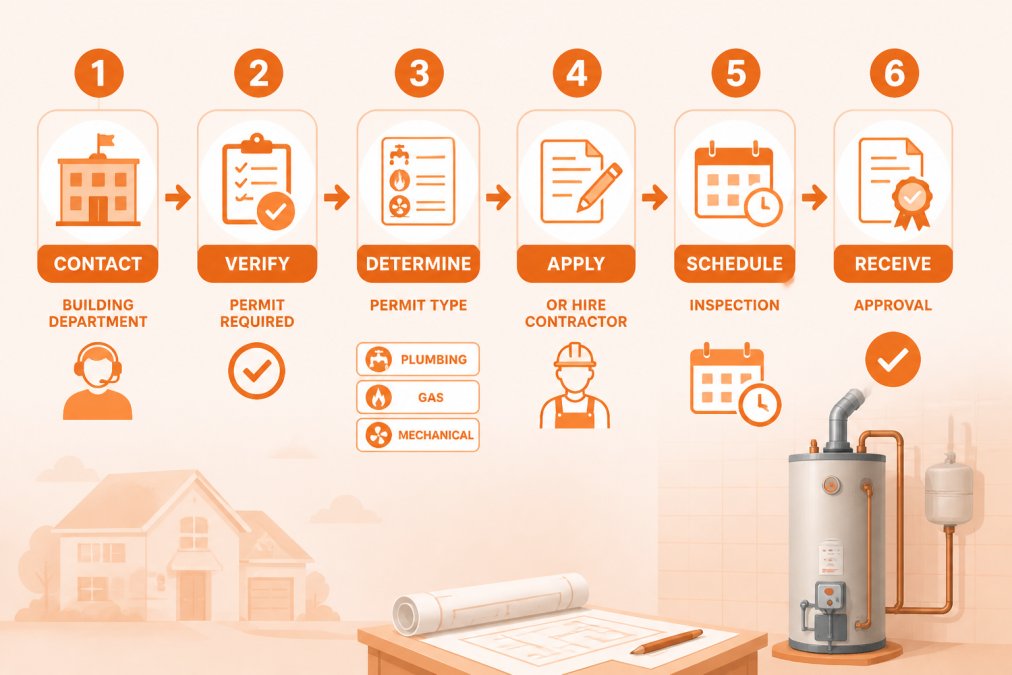
- Water Heater Replacement Permit and Inspection Process
- Frequently Asked Questions
Last Updated: October 21, 2026
Do I Need a Permit for Water Heater Replacement
In most U.S. jurisdictions, replacing a water heater requires a permit, but water heater permit requirements are set at multiple levels of government.
Statewide codes vs. local permitting rules
Two questions matter: whether the state adopts a plumbing, mechanical, or gas code (commonly the IPC, IRC, or UPC), and whether the local authority having jurisdiction (AHJ) requires a permit. That split is why two homeowners in the same state can get different answers.
Like-for-like replacement vs. changed installation
Many building departments treat these scenarios differently:
- Like-for-like replacement, same fuel type, capacity, location, and venting. Some jurisdictions still require a permit; very few allow none.
- Changing fuel type, capacity, or location, almost always triggers a permit due to new gas piping, electrical circuits, venting, or clearances.
- Tankless conversion, typically requires gas line resizing, new venting, and sometimes electrical work, so it is rarely like-for-like.
Types of permits that may be required
A single replacement can touch plumbing, gas, mechanical, and electrical trades. Some departments bundle these; others require separate applications, so ask the AHJ which permits apply before work begins.
A repeatable method for checking your local requirements
Because water heater permit requirements vary by jurisdiction, use this checklist:
- Identify your AHJ. Search your county or city building department website for 'water heater permit.' Outside city limits, the county is usually the AHJ.
- Confirm the permit scope and like-for-like exceptions. Ask whether one permit covers all trades, and whether a straight swap still needs one.
- Confirm who may apply. Ask whether the homeowner or only a licensed contractor can pull the permit.
- Document the approval. Keep the permit number, inspection record, and final sign-off, they matter at resale and for insurance.
Who Pulls the Permit for Water Heater Replacement
In most cases, a licensed plumber pulls the permit on your behalf, handling the application and scheduling inspections. Some jurisdictions allow homeowners to pull permits themselves, but most find it simpler to let the contractor manage it. When you get an instant water heater replacement quote, you're matched with local, licensed and insured plumbers who bid competitively. Permit handling is part of the conversation, so you're not guessing about the paperwork.
Water Heater Replacement Permit and Inspection Process
The permit process is a sequence of checkpoints where the AHJ confirms the installation is safe and code-compliant.
Step 1: Apply for the permit
The licensed plumber, or, where allowed, the homeowner, submits an application identifying the property, work type, fuel type, and scope. Some departments accept applications online; processing times vary.
Step 2: Complete the installation to code
The plumber performs the work according to adopted codes. Inspectors commonly check the temperature and pressure relief valve, venting, combustion air, gas line sizing and connections, electrical connections, seismic strapping, drain pan and discharge, and clearances.
Step 3: Schedule and pass the inspection
After installation, the plumber requests an inspection. The inspector approves the work or issues a correction notice; common failures include improper relief valve discharge piping, incorrect venting, missing seismic strapping, and inadequate combustion air. Once the work passes, the permit is closed and the approval becomes part of the property record.
Frequently Asked Questions
Do I need a permit to replace a water heater?
In most jurisdictions, yes. Water heater replacement typically requires a permit because the installation involves plumbing, gas lines, or electrical work that must meet building codes. However, requirements vary significantly by state, county, and municipality. Some areas may allow like-for-like replacements in the same location without a permit, while others require one for any installation. Contact your local building department to confirm whether a permit is required for your specific situation.
Who is responsible for getting a water heater permit: the homeowner or the plumber?
Licensed contractors typically handle permit applications as part of the installation service. When you work with a licensed plumber through QuickHotWater.com, they manage the permit process on your behalf. Homeowners can pull permits themselves, but this requires knowledge of local codes and building department procedures. Using a licensed contractor protects you because they're responsible for code compliance and ensuring the work passes inspection. Always confirm that your plumber will handle permits before work begins.
What happens if a water heater is installed without a permit?
Installing a water heater without a required permit can result in fines, code violations, and complications when selling your home. Unpermitted work may not be covered by your homeowner's insurance, leaving you liable for damages. Buyers and their inspectors often discover unpermitted installations during a home sale, which can delay closing or reduce property value. If you discover past unpermitted work, contact your local building department about remediation options. Licensed plumbers ensure your installation is compliant and documented.
Getting a fair price for water heater replacement means working with licensed, insured professionals who understand local requirements. QuickHotWater.com connects you with vetted plumbers in your area who provide competitive bids and handle permits as part of the job. Get an instant estimate in 30 seconds and compare quotes from multiple local professionals without sales pressure or hidden fees.