 how-to
How to Verify Plumber License Online
Table of Contents
- Why Verify Plumber License Status Before You Hire
- Step-by-Step: How to Verify a Plumber License Online
- Licensed vs. Unlicensed Plumber Risks and Red Flags
- Questions to Ask a Plumber Before Hiring and How to Verify Contractor Insurance
- Frequently Asked Questions
Last Updated: August 31, 2026
Why Verify Plumber License Status Before You Hire
Hiring an unlicensed plumber to replace your water heater can create serious problems. A licensed plumber has passed trade exams, maintains continuing education, carries insurance coverage, and appears in public records. An unlicensed operator has none of that. When something fails after installation, you're stuck paying out of pocket, and you may be liable if the work violates code or causes damage.
At QuickHotWater.com, we connect homeowners with vetted, licensed, and insured plumbers who bid competitively on water heater replacement. Whether you use our marketplace or find a plumber independently, verifying their license online is the first step.
Step-by-Step: How to Verify a Plumber License Online
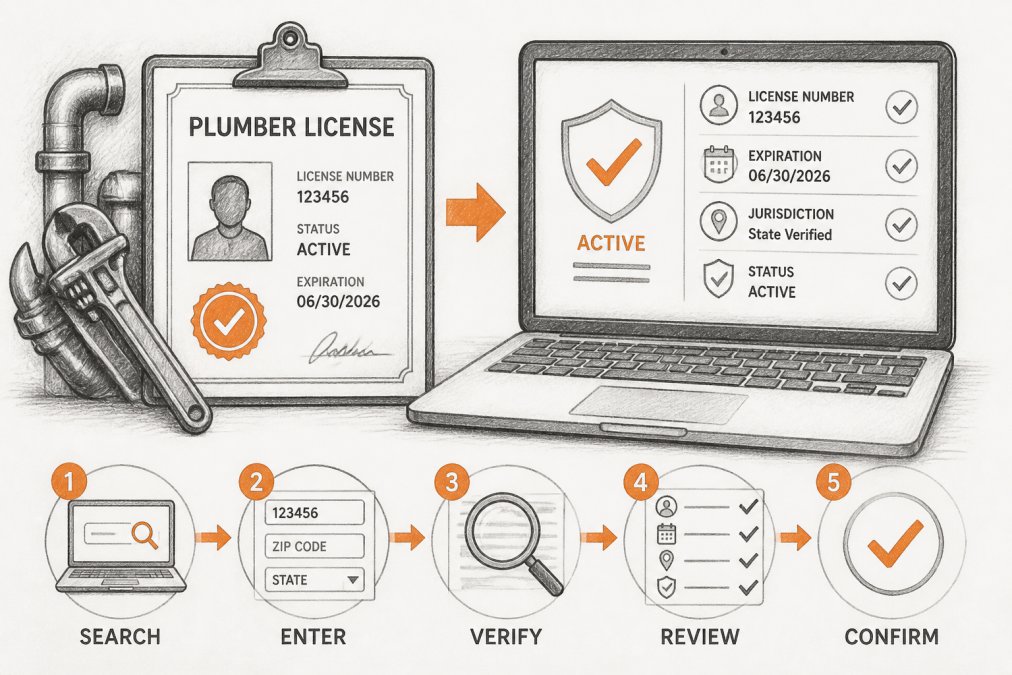
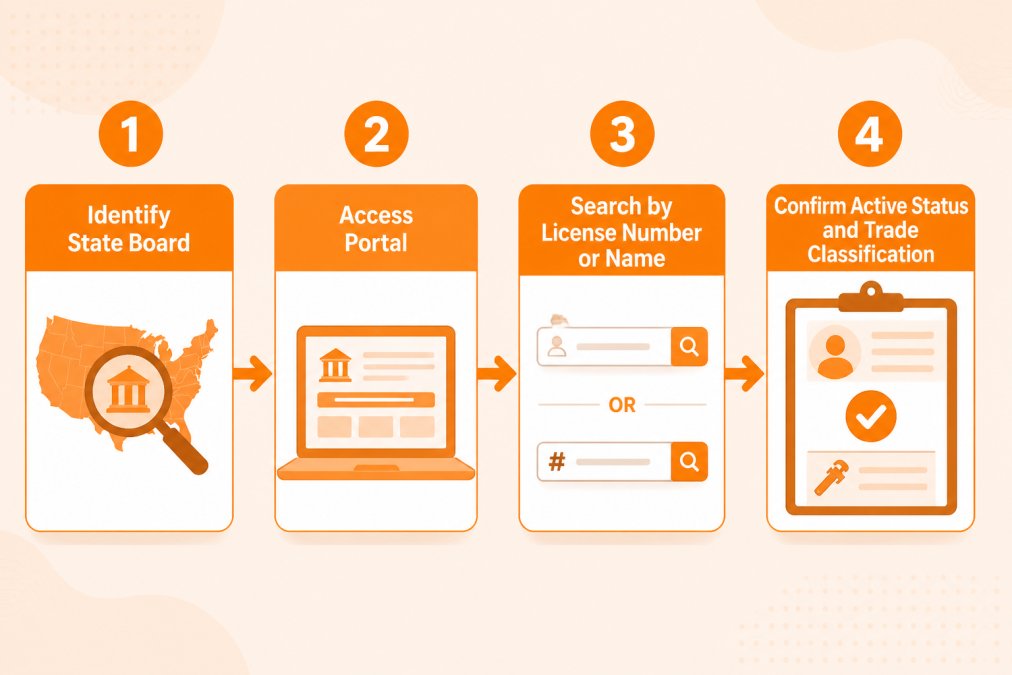
Verifying a plumber's license involves four straightforward steps: identify your state's regulatory board, access their online verification portal, search by license number or name, and confirm active status.
Step 1: Identify Your State Licensing Board
Each state maintains its own plumbing contractor registration lookup system. Search "[Your State] plumbing board" or "[Your State] contractor license verification" to find the official portal. The regulatory board is your only reliable source for public records.
Step 2: Access the Online Verification Portal
State boards publish searchable databases on their official websites at no cost. Look for a link labeled "License Search," "Contractor Lookup," "Verify License," or "Public Records."
Step 3: Search by License Number or Business Name
Enter either the plumber's license number or their full business name. If searching by name, use the exact legal name listed on their business entity registration.
Step 4: Review Active Status and Trade Classification
The results should display the license holder's name, license number, issue date, expiration date, and current status. Confirm the status reads "active" or "current," not expired, suspended, or inactive.
Licensed vs. Unlicensed Plumber Risks and Red Flags
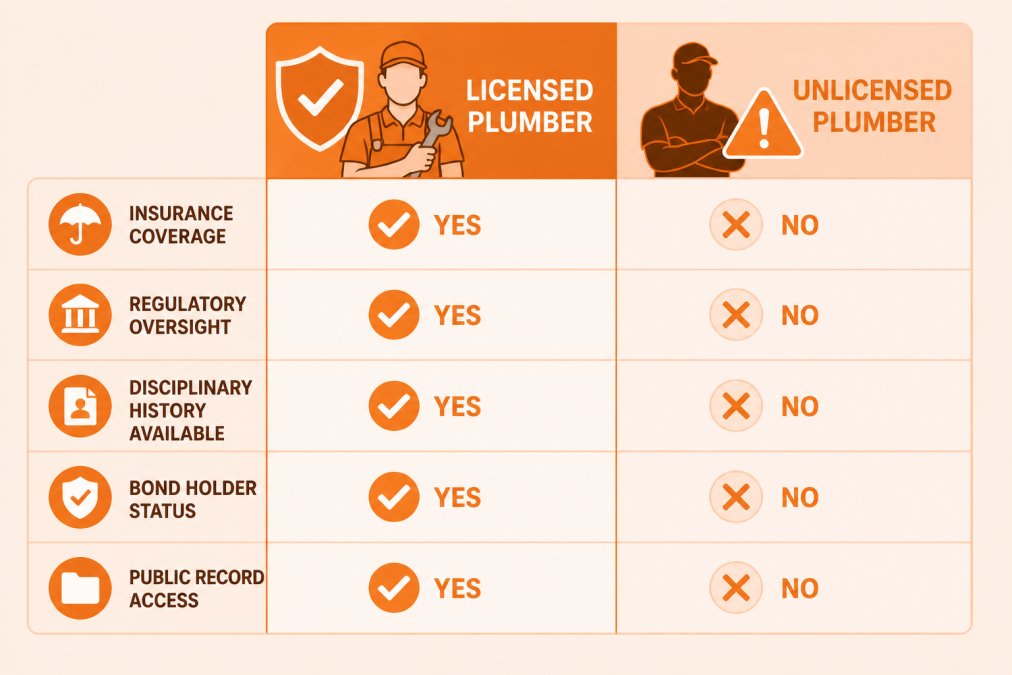
A licensed plumber operates under a contractor license issued by the state, carries workers compensation insurance, maintains a bond, and is subject to disciplinary action if they violate code. If something goes wrong, you have recourse through the state board.
An unlicensed plumber has none of these protections. They're not in any public database, carry no insurance, and offer no legal standing for recovery if they damage your home or the installation fails.
Red flags that signal unlicensed work include: refusing to provide a license number, quoting significantly lower than licensed competitors, working without a written estimate, insisting on cash payment only, and avoiding questions about insurance or permits.
Questions to Ask a Plumber Before Hiring and How to Verify Contractor Insurance
After verifying license status, ask three critical questions.
Question 1: "Can you provide your license number and confirm it's current?"
A licensed plumber will give you this without hesitation. Write it down and verify it matches the state database.
Question 2: "Do you carry workers compensation insurance and liability coverage?"
Ask them to provide a certificate of insurance or policy documents. Verify the policy is active and covers water heater installation.
Question 3: "Will you pull the required permit?"
Water heater replacement typically requires a permit in most jurisdictions. A licensed plumber handles this as part of the job. If they say permits aren't necessary, that's a red flag.
When you request an instant water heater replacement quote through QuickHotWater.com, our network of licensed plumbers provides competitive bids and confirms their credentials upfront. The final price is confirmed on-site after the plumber assesses your specific setup.
Verifying a plumber's license online takes five minutes and eliminates the biggest risk: ending up with unlicensed work and no recourse. Start by confirming active status through your state's licensing board, ask for proof of insurance, and ensure they'll pull the required permit. When you're ready to move forward, connect with licensed, insured plumbers who bid competitively and provide transparent estimates. Get an instant water heater replacement quote and compare bids from qualified professionals in your area.
Frequently Asked Questions
Why is it important to verify a plumber license before hiring?
Verifying a plumber license protects you from unlicensed workers and ensures the professional meets state regulatory requirements. A licensed plumber has passed trade exams, maintains continuing education, carries workers compensation insurance, and is subject to disciplinary action if they fail to meet standards. This verification gives you recourse if something goes wrong and confirms the contractor is a legitimate business entity in your state's public record system.
What is the difference between a licensed, bonded, and insured plumber?
A licensed plumber has passed state exams and meets regulatory board standards for their trade classification. Bonded means the plumber carries a bond that protects you financially if the work is faulty or incomplete. Insured means the plumber carries liability and workers compensation insurance. All three are important: license proves competence, bond provides financial protection, and insurance covers injuries or damage during the job. Always verify all three before hiring.
What should I do if I cannot find a plumber's license in the state database?
If a plumber's license does not appear in your state's verification portal or regulatory board database, that is a major red flag. Ask the plumber directly for their license number and verify it again. If it still does not show up, do not hire them. They may be unlicensed, operating under an expired license, or working under someone else's license illegally. Licensed professionals should have an active status in the public record system.
This article was written using GrandRanker