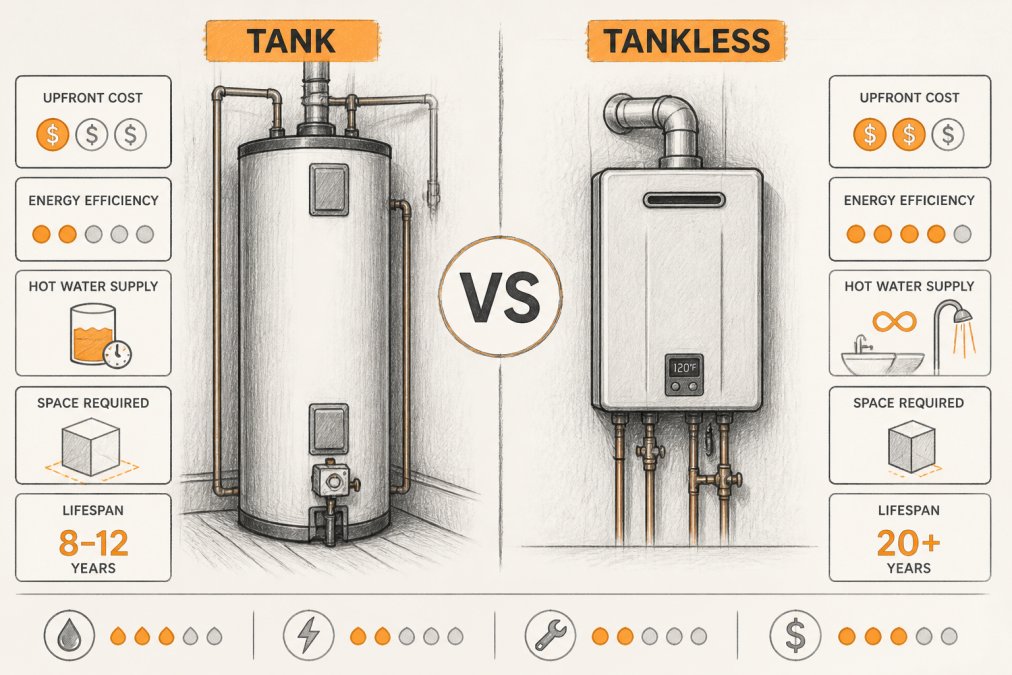
 comparison
Tank vs Tankless Water Heaters: Key Differences
Table of Contents
- Tank vs Tankless Water Heaters: What's the Difference?
- Tankless Water Heater Lifespan and Maintenance
- Tankless Water Heater Installation Requirements
- Frequently Asked Questions
Last Updated: September 8, 2026
Tank vs Tankless Water Heaters: What's the Difference?
The difference between tank and tankless water heaters comes down to how each heats water: a tank model stores 40 to 50 gallons and keeps it hot around the clock, while a tankless unit heats water on demand as it flows through.
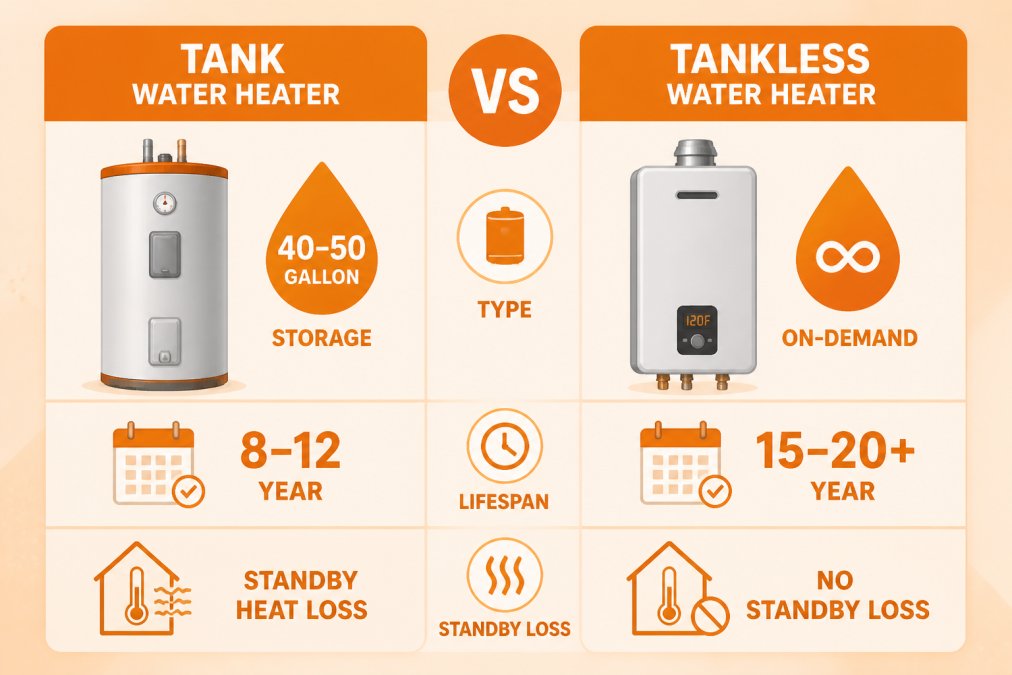
| Feature | Tank Water Heater | Tankless Water Heater |
|---|---|---|
| How it works | Stores 40-50 gallons, keeps hot | Heats water on demand |
| Lifespan | 8-12 years | 15-20+ years |
| Energy loss | Standby heat loss daily | None when idle |
| Hot water supply | Limited by tank size | Continuous, flow-limited |
| Space needed | Large floor footprint | Compact, wall-mounted |
| Installation | Simpler, like-for-like | Complex, may need upgrades |
| Maintenance | Annual flushing | Descaling yearly |
Tankless Water Heater Lifespan and Maintenance
A tankless water heater lifespan typically reaches 15 to 20 years or more, roughly double that of a storage tank model that lasts 8 to 12 years, because there's no standing reservoir to corrode.
Tankless Water Heater Installation Requirements
Tankless water heater installation requirements are more demanding than a tank replacement: a gas unit may require venting and gas line upgrades, while an electric unit may demand a high-amperage electrical panel.
Tank models generally cost less upfront, while tankless systems carry a premium reflecting the more involved installation. When you work with QuickHotWater.com, local licensed and insured plumbers submit competitive bids for your specific job, so you see transparent market-based pricing. The plumber confirms the final price on-site after reviewing your setup, and the estimate covers a same-fuel, like-for-like replacement with permit handling included.
Rebates and tax incentives can narrow the price gap between tank and tankless systems. Many utilities and state programs offer incentives for high-efficiency, Energy Star certified tankless models, so checking local offerings before purchase can reduce your net cost. The U.S. Department of Energy's water heating guidance explains the efficiency ratings that qualify for such programs, and Energy Star's certified water heater listings provide a searchable database of qualifying models.
Choosing between a tank and tankless water heater comes down to your hot water demand, your budget for installation, and how long you plan to stay in your home. A tank model offers lower upfront costs and simpler replacement, while a tankless unit delivers longer lifespan, reduced energy consumption, and continuous hot water at a higher initial price. Get an instant water heater replacement quote from QuickHotWater.com in 30 seconds and connect with local licensed and insured plumbers who bid competitively.
Frequently Asked Questions
Is it better to go tankless or tank water heater?
The better choice depends on your priorities. Tankless units offer a longer lifespan (15-20+ years), continuous hot water, and higher energy efficiency, which can lower utility bills over time. Tank heaters cost less upfront and are simpler to install, making them a practical choice for straightforward, like-for-like replacements. Consider your budget, space, and hot water usage. A local, licensed plumber can assess your home's needs and provide an estimate for either option.
Which lasts longer, a tankless or tank water heater?
Tankless water heaters typically last 15-20+ years, while traditional tank units have a service life of about 8-12 years. The longer lifespan of a tankless model comes from its design: it heats water on demand rather than storing it, which avoids the sediment buildup and corrosion that affect storage tanks. Annual maintenance, such as descaling the heat exchanger, can help maximize the lifespan of a tankless unit. This durability is a key reason many homeowners consider the higher upfront investment.
What are the installation requirements for tankless water heaters?
Tankless water heaters have specific installation requirements that differ from tank models. Gas units need proper venting and often a larger gas line to handle the higher BTU input. Electric units require sufficient voltage and may need an upgraded electrical panel. You'll also need to consider your home's water pressure and flow rate (measured in GPM) to ensure the unit can meet demand. A licensed plumber can evaluate these factors during an on-site visit to confirm the final price for your replacement.