 listicle
Tankless Water Heater Benefits: What Homeowners Need to Know
Table of Contents
- Why Homeowners Switch to Tankless Water Heaters
- Tankless Water Heater Lifespan and Long-Term Value
- Tankless Water Heater Installation Requirements and Costs
- Frequently Asked Questions
Last Updated: September 17, 2026
Why Homeowners Switch to Tankless Water Heaters
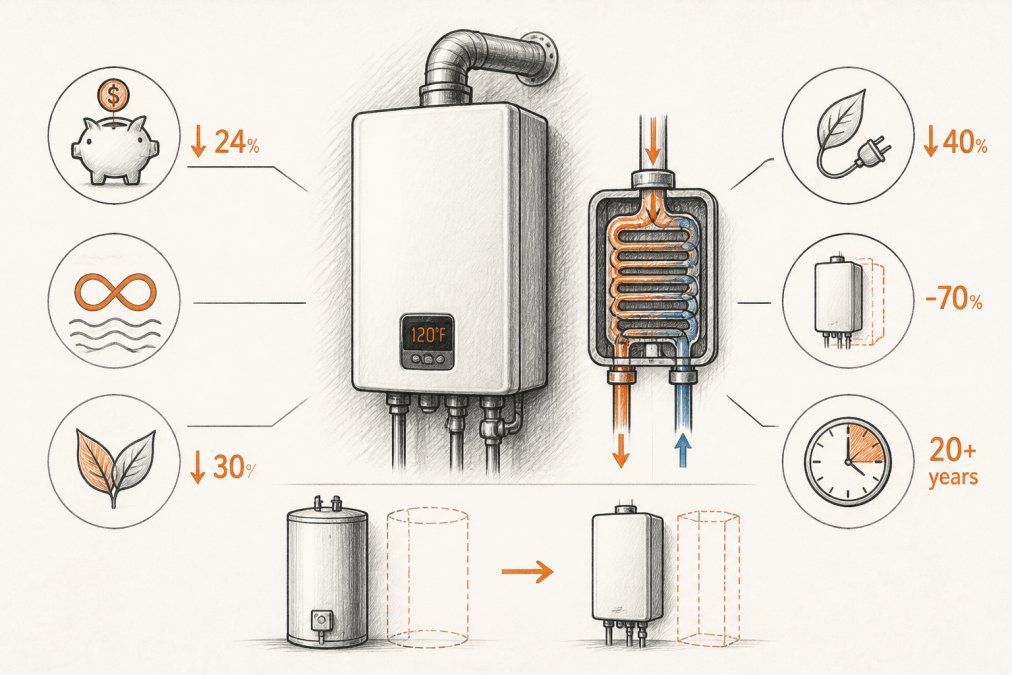
Tankless water heaters deliver hot water on demand without storing it in a tank, water flows through a heat exchanger and reaches your desired temperature instantly, which is among the primary tankless water heater benefits.
Traditional tank models keep 40-50 gallons heated at all times; tankless units heat water only when you use it, which drives most of the benefits homeowners care about.
Tankless Water Heater Lifespan and Long-Term Value
Tankless water heaters typically last 15-20 years with proper maintenance, compared to 8-12 years for traditional tank models.
Tankless units need annual descaling in hard water areas and regular flushing, while tank models require less frequent maintenance but deteriorate faster.
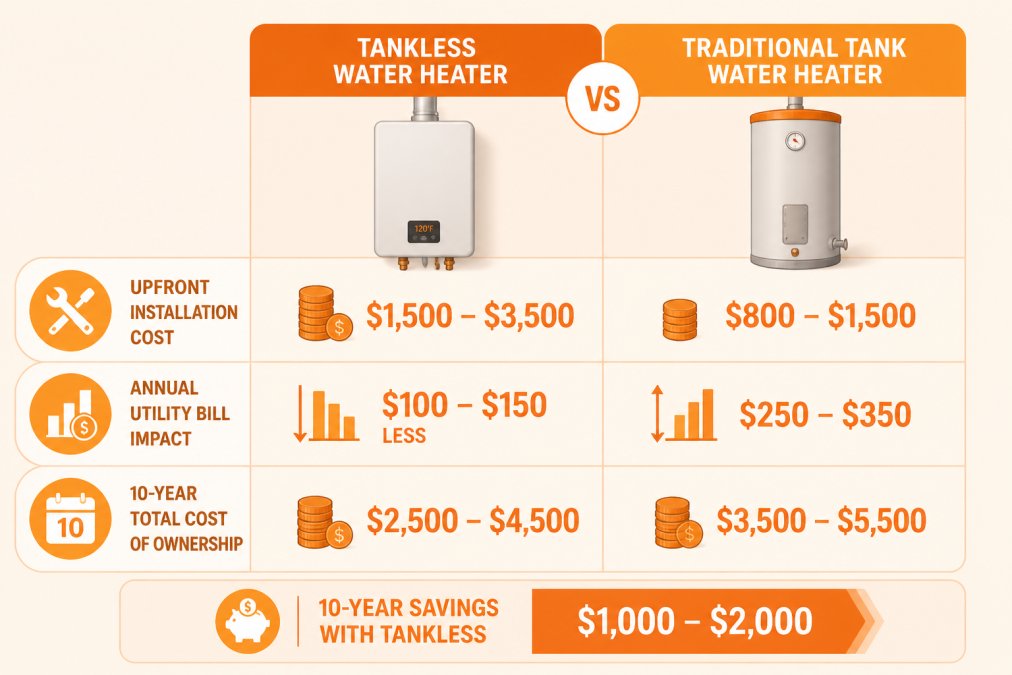
Tankless units cost more upfront but use less energy over time; total savings depend on your household's actual usage pattern.
Tankless Water Heater Installation Requirements and Costs
Installing a tankless water heater requires adequate venting, proper gas line sizing (for gas models), or electrical upgrades (for electric models), and many homes need plumbing modifications.
Retrofitting often requires rerouting gas lines, upgrading electrical capacity, or modifying venting systems, adding time and expense beyond equipment cost.
Installation complexity varies based on your home's current setup, local building codes, and the specific model, an instant water heater replacement quote shows you what to expect before a plumber arrives.
The Department of Energy's guidance on tankless water heater efficiency outlines performance standards that help homeowners compare models fairly.
| Consideration | Tank Model | Tankless Model |
|---|---|---|
| Installation complexity | Straightforward | Requires venting/gas line upgrades |
| Space required | 4-5 sq ft footprint | Wall-mounted, minimal space |
| Maintenance | Annual inspection | Annual descaling in hard water areas |
| Lifespan | 8-12 years | 15-20 years |
| Energy usage | Continuous standby loss | On-demand heating only |
The decision to switch depends on your specific situation, your home's layout, water usage, local utility rates, and tolerance for maintenance. The EPA WaterSense program provides resources on water-efficient fixtures that pair well with tankless systems.
Understanding tankless water heater benefits helps homeowners decide if switching makes sense for those who want continuous hot water and can absorb the higher upfront installation costs. The real challenge is getting accurate pricing for your specific situation. Consumer Reports on water heater reliability offers independent testing data to help you evaluate different models.
Get an instant estimate from QuickHotWater.com in 30 seconds. We'll connect you with local, licensed, and insured plumbers in your area who provide competitive bids. You'll see what installation actually costs for your home before any work begins, no sales pressure, no hidden fees, no guessing.
Frequently Asked Questions
Is it worth switching to a tankless water heater?
Switching makes sense if you want to reduce energy waste and have adequate space and gas/electrical capacity. Tankless units eliminate standby heat loss, energy wasted keeping a full tank hot 24/7. Over 10+ years, the energy savings and longer lifespan can offset the higher upfront installation cost. However, the payback depends on your usage patterns, local utility rates, and water hardness. An instant estimate from a licensed plumber helps you see the real cost for your home.
What are the main downsides to tankless water heaters?
The biggest challenges are higher installation costs (venting, gas line upgrades, or electrical work), water hardness issues requiring regular descaling, and flow rate limitations in cold climates or with multiple simultaneous uses. Gas models need proper venting; electric models need significant electrical service capacity. Maintenance is more hands-on than tank models. These aren't deal-breakers, but they're real factors that affect long-term cost and satisfaction.
How much will I save on my utility bills with a tankless water heater?
Savings vary based on your current usage, local gas or electricity rates, and water temperature. Tankless units typically reduce energy consumption by 24-34% for households using 41 gallons or less of hot water daily, according to the Department of Energy. Larger households may see smaller percentage savings because tankless units work harder during peak demand. Your actual savings depend on your specific situation, getting a quote from a local plumber lets you calculate realistic numbers for your home.