 ultimate-guide
Water Heater Installation Permit Process Explained
Table of Contents
- Do I Need a Permit for Water Heater Installation?
- Consequences of Unpermitted Plumbing Work
- The Plumbing Permit Inspection Process
- Hiring a Licensed Plumber for Water Heater Installation
Last Updated: August 19, 2026
Do I Need a Permit for Water Heater Installation?
Yes, you need a permit for water heater installation in nearly all jurisdictions. A water heater installation permit is a legal requirement that ensures your replacement meets current building codes and safety standards. Building codes exist because water heaters involve gas lines, electrical connections, venting systems, and pressure relief mechanisms, failures can cause gas leaks, carbon monoxide exposure, explosions, or scalding injuries.
Most homeowners don't realize that skipping the permit isn't just risky, it's often illegal. If you sell your home, a title search or home inspection can reveal unpermitted plumbing work, creating liability issues for you and the buyer. Hiring a licensed plumber means the permit process is handled for you.
Consequences of Unpermitted Plumbing Work
Skipping the permit creates real problems that follow you.
Safety and liability risks are the first concern. Without an inspection, code violations go undetected. A missing thermal expansion tank can cause pressure buildup that ruptures your water heater. Improper venting allows carbon monoxide to enter your home.
Home sale complications are the second major issue. When you sell, the buyer's lender typically requires proof that major systems were installed to code. An unpermitted water heater replacement can delay closing, kill the deal, or force you to negotiate a price reduction.
Insurance and liability create a third layer of risk. If someone is injured because of an unpermitted installation, your homeowner's insurance may deny the claim, leaving you personally liable for damages.
Fines and forced replacement are the legal consequences. Code enforcement officers can issue citations with fines and may order you to have a licensed plumber reinstall the unit properly, which costs more than doing it right the first time.
The permit process costs time upfront, but skipping it creates much larger costs later.
The Plumbing Permit Inspection Process
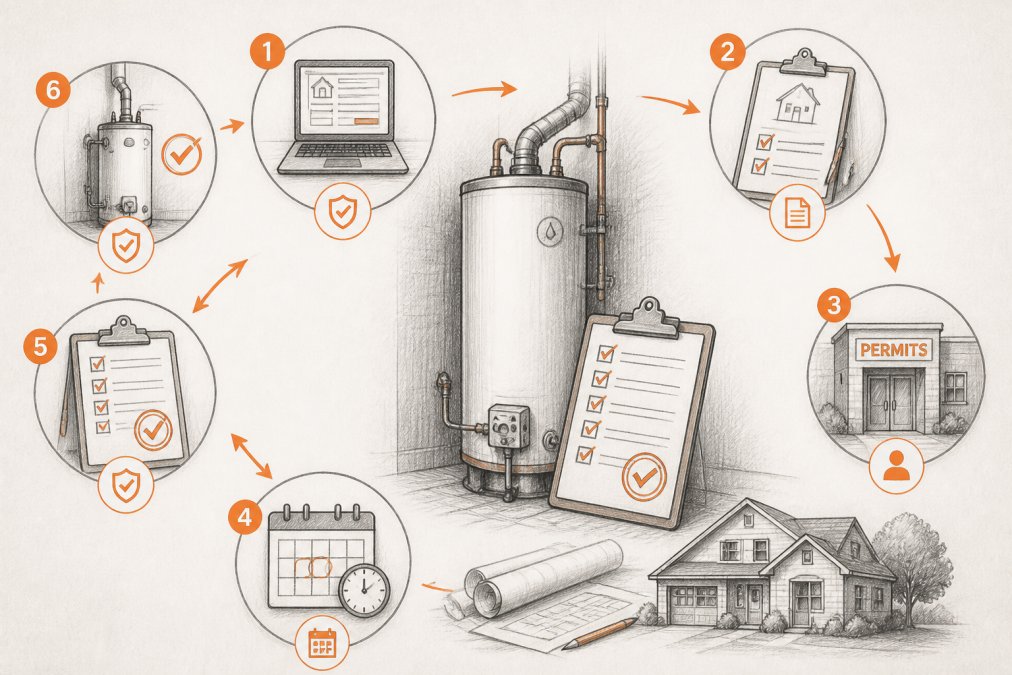
The permit and inspection process typically follows a six-step timeline from application to completion.
Step 1: Application and Approval. You or your plumber submits an application to your local building department with details about the old unit, the replacement model, the installation location, and any gas or electrical modifications. Most jurisdictions approve applications within 3-5 business days if the paperwork is complete.
Step 2: Permit Issued. Once approved, you receive a permit document that must be posted visibly at the job site.
Step 3: Installation and Rough Inspection. Your plumber installs the new unit and completes all rough-in work: gas line connections, venting setup, electrical work, thermal expansion tank installation, and T&P relief valve discharge line routing. The inspector verifies that venting systems are properly sized, gas lines are correctly installed and pressure-tested, bonding and grounding are in place, and seismic strapping is installed where required.
Step 4: Corrections if Needed. If the rough inspection reveals code violations, the plumber corrects them and requests a re-inspection. Common failures include improper vent termination, missing discharge lines, inadequate seismic strapping, or missing thermal expansion tanks.
Step 5: Final Inspection. The plumber completes finish work and the final inspection verifies that all corrections were made, connections are secure, and the unit operates safely.
Step 6: Certificate of Completion. When the final inspection passes, the building department issues a certificate of completion. This document proves the work was done to code and is essential if you ever sell.
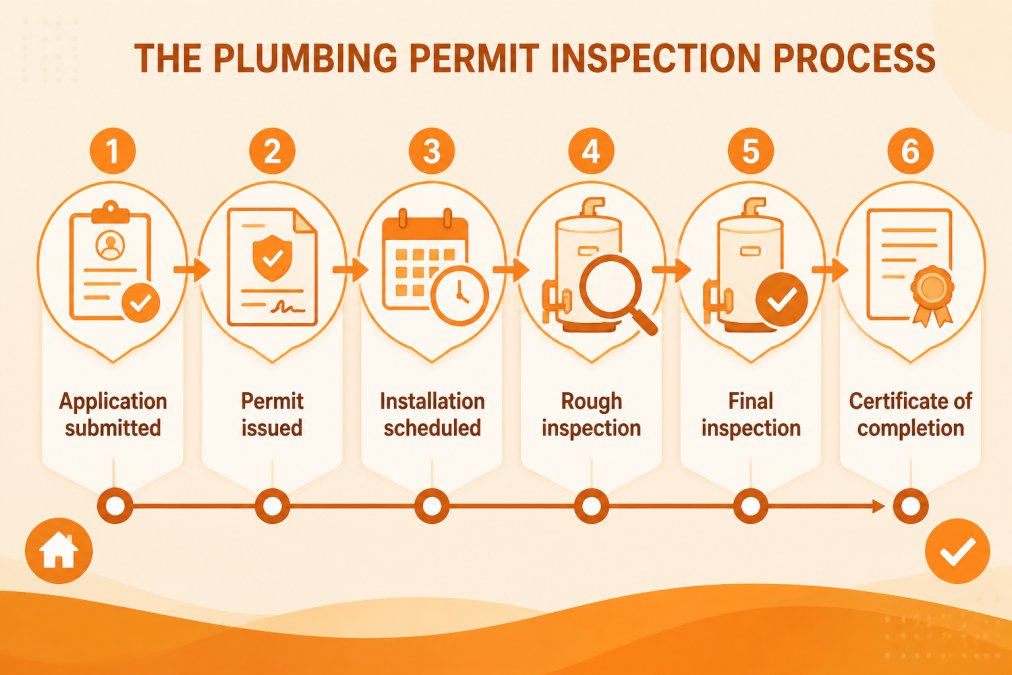
The entire process typically takes 2-4 weeks from application to final certificate, depending on your jurisdiction and inspector availability.
Hiring a Licensed Plumber for Water Heater Installation
The simplest way to navigate the permit process is to hire a licensed plumber who handles it for you.
Licensed and insured plumbers are non-negotiable. A license means the plumber has passed exams on plumbing code, safety standards, and installation practices. Insurance protects you if something goes wrong during the job. When you work with a plumber from our network, every professional is verified as licensed and insured.
What to expect during the job: The plumber will assess your current setup, confirm the replacement unit matches your fuel type (gas or electric), handle the permit application, schedule inspections, complete the installation, and coordinate with the building department for final sign-off. Most same-fuel replacements take a single day, though the full permit cycle takes longer.
Getting an instant estimate: An instant water heater replacement quote is based on your location and water heater type. When a plumber visits, they confirm the final price on-site after assessing your actual setup. This on-site confirmation accounts for any complications, unusual venting routes, gas line modifications, or additional code requirements specific to your home.
Questions to ask your plumber:
- Is the permit fee included in your estimate?
- What happens if the inspection finds code violations?
- Who schedules the inspections, you or the plumber?
- What's your timeline from installation to final inspection?
- Are you bonded and insured, and can you provide proof?
Common Installation Mistakes That Fail Inspection
Knowing what fails inspection helps you understand why the permit process matters.
Missing or improperly routed T&P relief valve discharge line is the most common failure. The T&P (temperature and pressure) relief valve prevents dangerous pressure buildup, but the discharge line must route to a safe location, typically to a floor drain or exterior.
Improper venting configuration fails regularly. Gas-fired water heaters require venting that safely exhausts combustion gases outside. Common violations include undersized vent pipes, improper slope, too many elbows, or vents terminating in attics instead of outside.
Missing or inadequate seismic strapping fails in jurisdictions with seismic code requirements. The straps anchor the water heater to prevent it from falling during an earthquake.
Missing thermal expansion tank causes failures in some jurisdictions. When water heats, it expands. A thermal expansion tank absorbs this expansion and prevents pressure buildup.
Incorrect bonding and grounding on gas-fired units creates electrical hazards. Gas lines and metal components must be bonded to ground to prevent electrical shock.
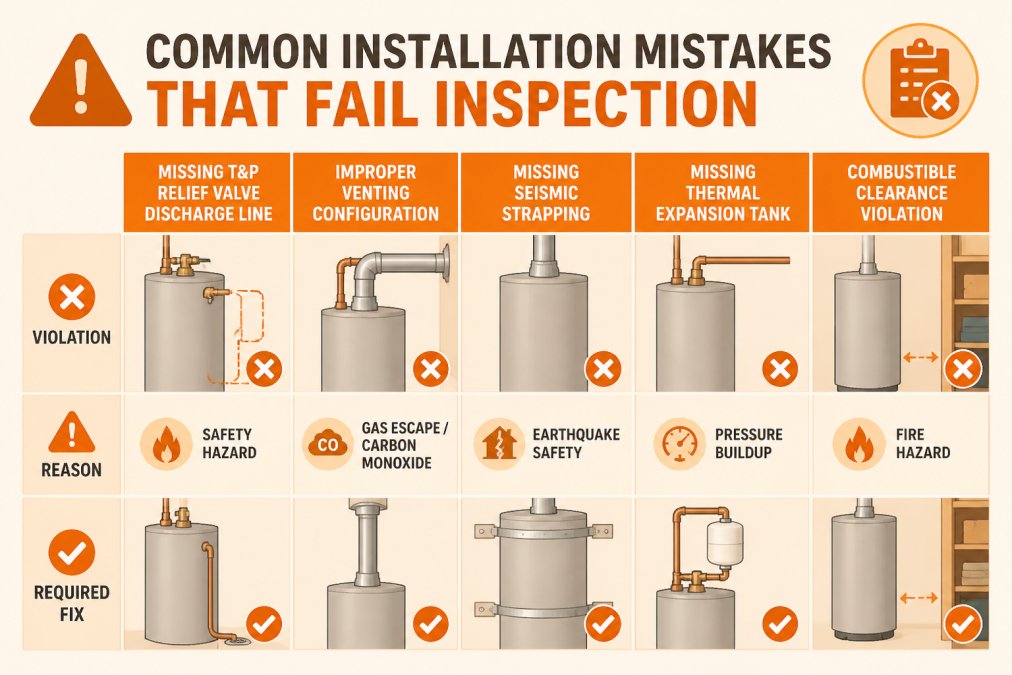
Understanding these common failures shows why inspections exist, they catch safety issues before they become emergencies.
How to Apply for a Plumbing Permit
If you're working with a licensed plumber, they handle the application. But understanding the process helps you know what to expect.
Gather required information before contacting your building department: address of the property, current water heater model and age, new water heater model and fuel type, description of any gas line or electrical modifications, and proof of ownership or authorization to perform the work.
Contact your local building department, typically the city or county office that issues permits. Ask for the plumbing permit application and any specific forms for water heater replacement.
Complete the application with accurate information. Incomplete applications delay approval. Include a sketch showing the installation location and any modifications to gas or electrical lines.
Submit the application along with any required fees. Most jurisdictions accept applications in person, by mail, or online. Processing takes 3-5 business days for straightforward replacements.
Receive the permit and post it visibly at the job site. The permit document includes the job number, required inspections, and contact information for scheduling.
When you work with a licensed plumber, they manage these steps as part of the service. You get an instant estimate upfront, and the plumber handles the permit application and inspections.
Getting a permit for water heater installation protects your home, ensures the work meets safety standards, and prevents costly complications when you sell. Licensed plumbers know the process and handle it efficiently. We connect homeowners with vetted, licensed, and insured plumbers in your area who bid competitively and manage the entire process, from permit application to final inspection. Get an instant quote and see how straightforward the replacement process can be.
Frequently Asked Questions
Do you have to get a permit to change a water heater?
Yes. Almost every jurisdiction requires a permit for water heater replacement because the work involves plumbing connections, gas or electrical lines, and venting systems. Permits ensure the installation meets building codes and safety standards. The specific requirements vary by local jurisdiction, but skipping the permit process creates liability risks and can complicate insurance claims if something goes wrong.
What happens if you replace a water heater without a permit?
Unpermitted work can result in fines from your local building department, difficulty selling your home (title issues), denied insurance claims if damage occurs, and liability if someone is injured. You may also be required to remove the unpermitted unit and pay for a licensed plumber to reinstall it properly with permits. Some jurisdictions can impose penalties ranging from hundreds to thousands of dollars.
Are permits required for both gas and electric water heater replacements?
Yes, both gas-fired units and electric water heaters typically require permits. Gas units require additional scrutiny because they involve gas line modifications, venting requirements, and safety valve installation. Electric units must meet bonding and grounding standards and thermal expansion tank requirements. Your local building department determines the exact scope based on your jurisdiction's plumbing code.
How does the plumbing permit inspection process work?
After you apply for a permit, the building department issues a permit number. A licensed plumber performs the installation, then requests a rough inspection to verify rough-in work (venting, gas lines, connections). After final connections are made, a final inspection checks code compliance, T&P relief valve discharge lines, seismic strapping, and thermal expansion tank installation. Once passed, you receive a certificate of completion.
Do I need a permit if I'm replacing an old water heater with the same type?
Yes. Even like-for-like replacements require permits because code requirements change over time. An older unit may not meet current standards for venting systems, thermal expansion tanks, or seismic strapping. A licensed plumber will ensure the new installation meets current building codes, which is why the permit process exists regardless of whether you're upgrading or replacing with the same fuel type.
Can I apply for a water heater permit myself, or does the plumber have to do it?
Either party can apply, but most homeowners hire a licensed plumber to handle the permit application because they understand local code requirements and inspection procedures. Applying yourself requires knowledge of your jurisdiction's specific forms, fees, and code standards. A licensed plumber's experience ensures the application is correct the first time and the installation will pass inspection.
What if the plumber finds additional work needed during installation?
If a licensed plumber discovers that venting, gas lines, or other components don't meet current code during installation, they'll inform you before proceeding. Additional work (like upgrading venting systems or adding thermal expansion tanks) may be necessary to pass inspection. This is why getting an instant estimate from a qualified professional is important, they can identify potential issues upfront and provide accurate pricing before work begins.
Am I liable if something goes wrong with an unpermitted water heater installation?
Yes. Without a permit and inspection, you assume full liability. If the unpermitted unit causes damage, your homeowner's insurance may deny the claim. If someone is injured, you could face legal responsibility. This is why hiring a licensed, insured plumber who pulls permits protects you, the plumber's insurance and professional standing back the work, and the permit creates an official record that the installation meets safety standards.
This article was written using GrandRanker