 how-to
Is a Water Heater Permit Required for Replacement?
Table of Contents
- Is a Water Heater Permit Required for Replacement?
- Consequences of Unpermitted Plumbing Work
- Water Heater Installation Code Requirements
- Hiring a Licensed Plumber for Water Heater Replacement
Last Updated: August 25, 2026
Is a Water Heater Permit Required for Replacement?
Yes. A water heater permit is required for replacement in most jurisdictions across the United States. Understanding permit requirements protects your home, your insurance coverage, and your property's resale value. At QuickHotWater.com, we help homeowners navigate this process by connecting them with licensed plumbers who handle permits as part of the installation.
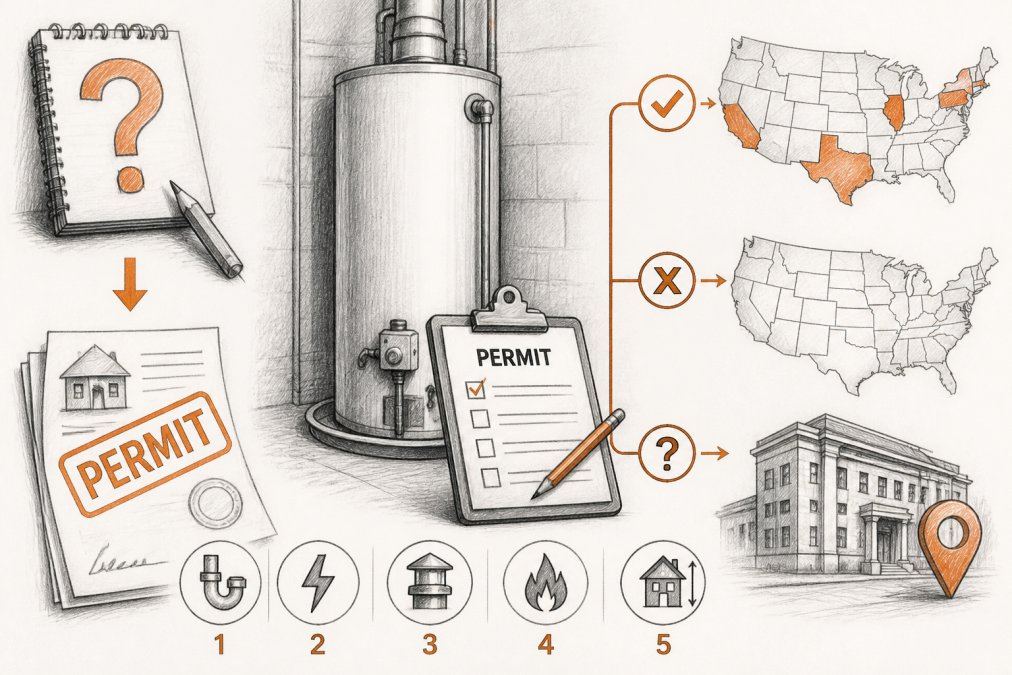
The specific requirements vary by location. Some municipalities require permits for all replacements, while others exempt like-for-like replacements of the same fuel type and capacity (iapmo.org). Local building codes govern venting, seismic strapping, thermal expansion tanks, and pressure relief valves, all critical safety components (iccsafe.org). Skipping the permit process puts you at financial and legal risk.
Consequences of Unpermitted Plumbing Work
Installing a water heater without a permit creates three serious problems: insurance liability, resale complications, and legal exposure.
Insurance and liability. If an unpermitted installation causes property damage, flooding, gas leak, or electrical fire, your homeowner's insurance may deny the claim. Insurers investigate whether major home improvements were permitted and inspected. An unpermitted installation gives them grounds to refuse coverage, leaving you personally liable for all repair costs.
Home inspection and resale. A professional home inspector will identify unpermitted work during a sale. Buyers and their lenders will demand either a retroactive permit and inspection or a price reduction. Some lenders won't finance a property with unpermitted plumbing work at all.
Code enforcement. Local building departments can issue citations for unpermitted installations. A code violation creates a paper trail that may trigger fines or orders to bring the installation into compliance, meaning you'll pay to have it done again, correctly.
Water Heater Installation Code Requirements
Water heater installation code requirements exist to prevent gas leaks, improper venting, and thermal hazards. These standards are set by the International Plumbing Code (IPC) and adopted locally with variations by jurisdiction.
Key code compliance areas include:
- Venting requirements. Gas and propane water heaters must vent combustion gases safely outdoors (iccsafe.org). Code specifies vent diameter, rise per foot of horizontal run, and clearance from openings.
- Seismic strapping. In earthquake-prone regions, water heaters must be strapped to prevent tipping and gas line rupture during seismic activity.
- Thermal expansion tank. Code often requires a thermal expansion tank on closed-loop systems to prevent pressure buildup and tank rupture.
- Pressure relief valve. A functioning pressure relief valve is mandatory to release excess pressure and prevent tank failure.
- Electrical connection. For electric units, proper grounding and circuit protection must meet National Electrical Code (NEC) standards.
- Fuel gas code. Gas connections must comply with fuel gas code, including proper line sizing, sediment traps, and shutoff valve placement.
A licensed plumber knows the specific codes for your jurisdiction and ensures installation passes inspection.
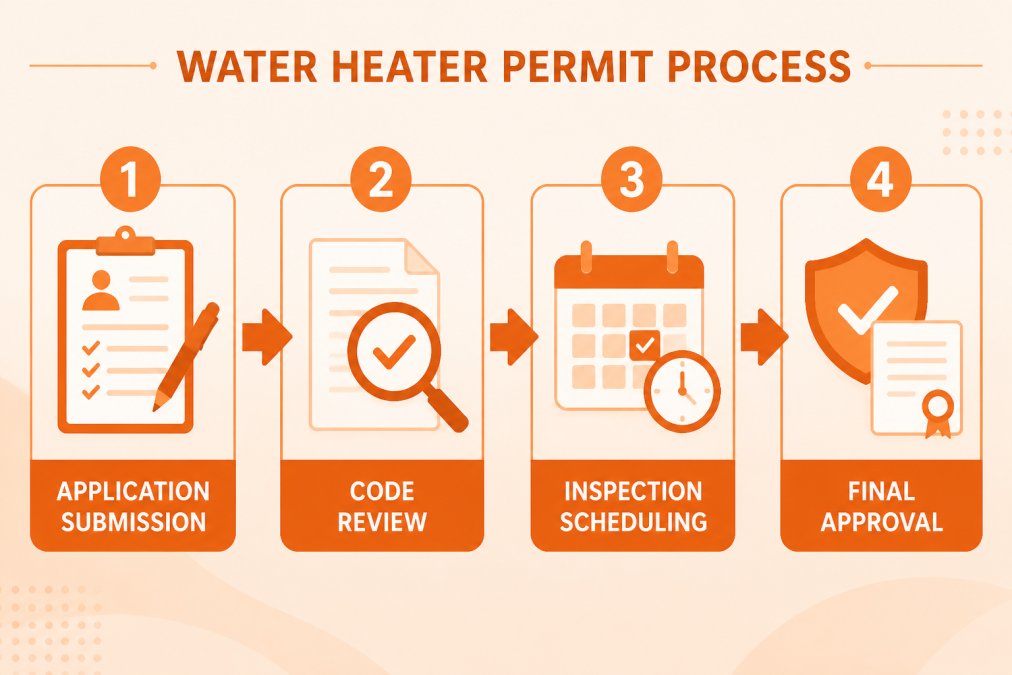
Hiring a Licensed Plumber for Water Heater Replacement
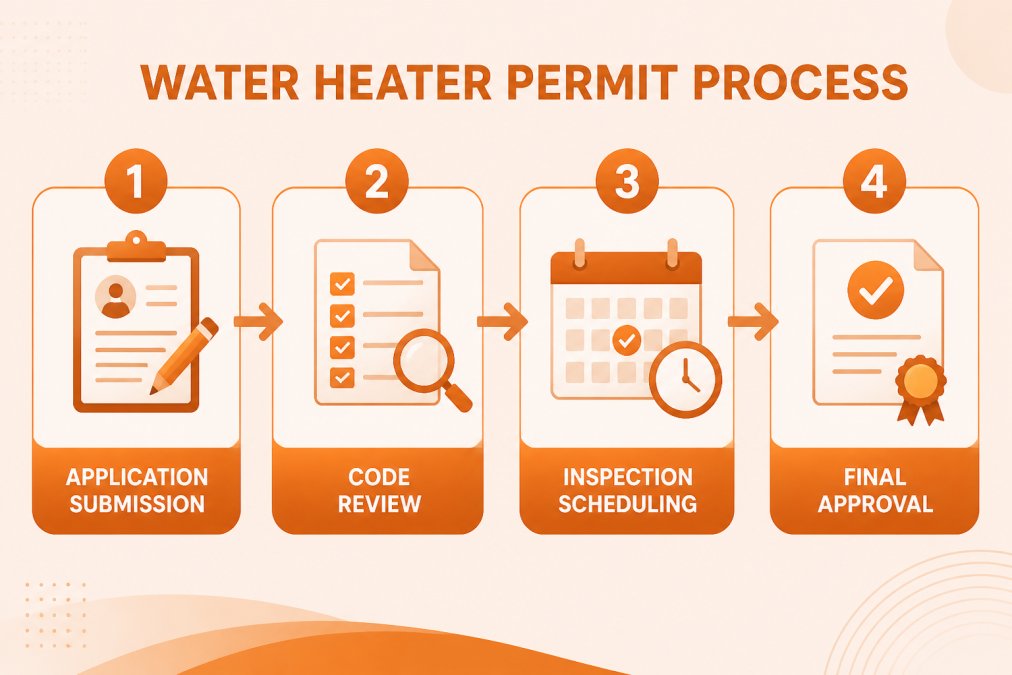
A licensed plumber handles the entire replacement process, including permit filing, installation, inspection coordination, and code compliance.
When selecting a plumber, verify three things:
- Active license. Check your state or local plumbing board's website to confirm the plumber holds a current, active license.
- Insurance and bonding. Confirm the plumber carries liability insurance and any required bonding.
- Permit experience. Ask whether the plumber routinely pulls permits and schedules inspections.
QuickHotWater.com connects you with licensed, insured plumbers in your area who submit competitive bids. You receive an instant water heater replacement quote, then plumbers confirm their final price on-site after assessing your setup. This marketplace approach ensures you get fair pricing without overpaying or guessing.
A water heater permit is non-negotiable for protecting your home and finances. The permit process ensures your new unit meets local code standards for safety and performance. When you're ready to move forward, connect with a licensed plumber who handles permits as standard practice. QuickHotWater.com matches you with vetted local plumbers who bid competitively and manage the entire replacement process, get an instant estimate in 30 seconds and skip the sales calls.
Frequently Asked Questions
Do I need a permit to replace my water heater?
In most jurisdictions, yes. A water heater permit is required because replacement involves plumbing connections, fuel gas code compliance, and venting requirements. Requirements vary by location, so check with your local municipal building department or code enforcement office. Many homeowners skip this step, but permits protect your home's safety, resale value, and insurance coverage. A licensed plumber can confirm your local rules and handle the permit process.
What are the consequences of unpermitted plumbing work?
Unpermitted water heater installation creates serious risks: homeowner's insurance may deny claims related to the unit, your home may fail inspection during resale, and you could face fines from code enforcement. Banks and home inspectors flag unpermitted work, which can delay or block a sale. Hiring a licensed plumber ensures the work meets all regulatory compliance standards.
How do I find out if my local jurisdiction requires a permit?
Contact your local municipal building department directly, they maintain the official permit requirements for your area. You can also ask a licensed plumber, who works with local codes daily and knows whether your jurisdiction requires a permit for water heater replacement. Some areas mandate permits for all replacements; others require them only for fuel source conversions or specific installation types. Verify before work begins to avoid costly corrections.
This article was written using GrandRanker