 How-to
3 Benefits of Same Fuel Water Heater Replacement
Last Updated: October 25, 2026
Quick Summary
A same fuel water heater replacement means installing a new unit that runs on the same energy source as your old one, keeping your existing infrastructure in place without needing new gas lines, wiring, or venting. The plumber removes the old unit and installs the new one in the same spot using the same connections, typically completing the job in one day.
- Most same-fuel replacements take 2 to 4 hours from start to finish
- Tight spaces or corroded connections can extend the job beyond 4 hours
- Straightforward replacements in accessible basements or utility rooms move faster
- The plumber shuts off supplies, drains the old tank, and reconnects the new unit in the same location
Table of Contents
- What Same Fuel Water Heater Replacement Means
- Understanding the Water Heater Replacement Process
- How Long Water Heater Replacement Takes
- Frequently Asked Questions
What Same Fuel Water Heater Replacement Means
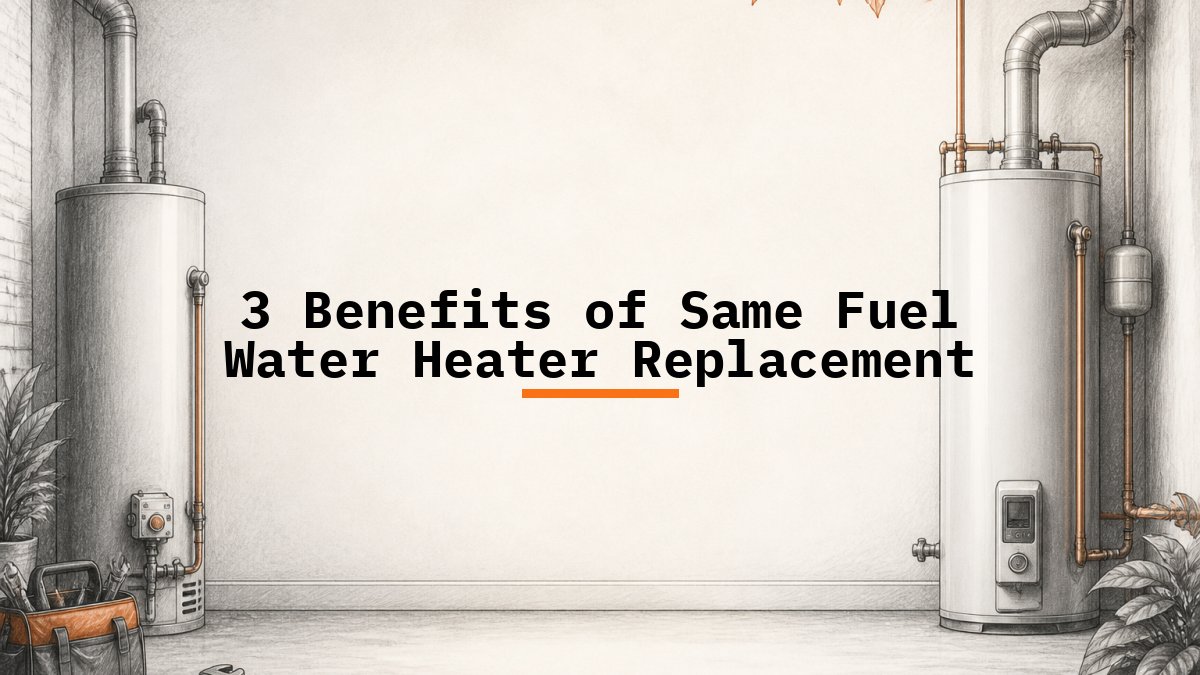
Same fuel water heater replacement means installing a new unit that runs on the same energy source as your old one, natural gas stays natural gas, electricity stays electricity.
This keeps your existing infrastructure in place, no new gas lines, wiring, or venting. The plumber removes the old unit and installs the new one in the same spot using the same connections.
At QuickHotWater.com, we specialize in same-fuel replacements, the most straightforward path for most homeowners, without the complexity or cost of switching fuel types.
Understanding the Water Heater Replacement Process
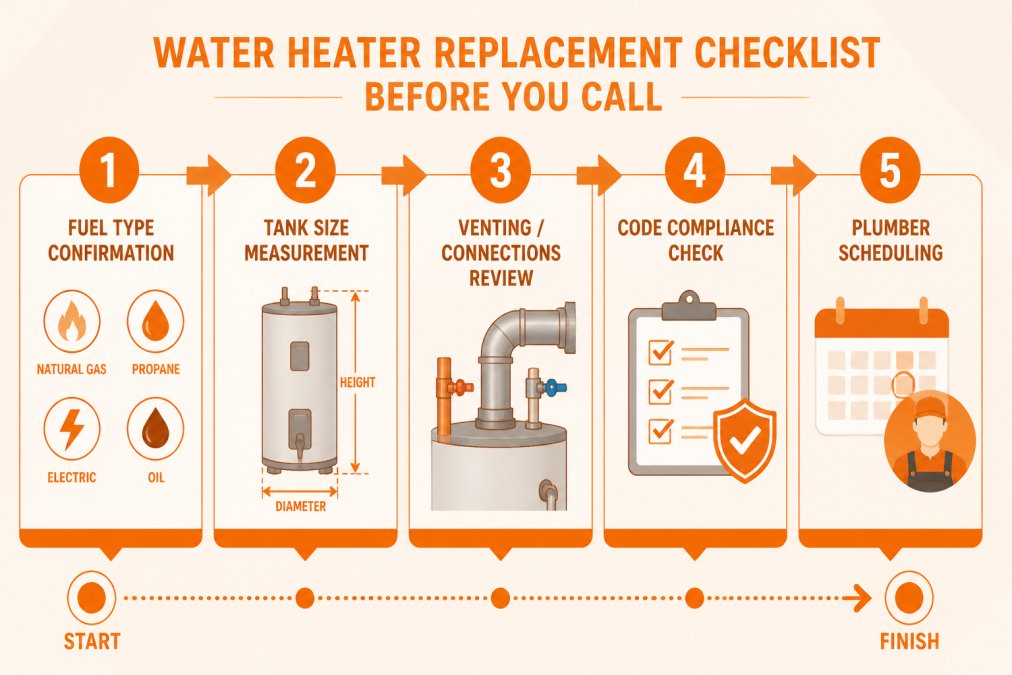
A same-fuel water heater replacement follows a clear sequence: the plumber shuts off the water and fuel supply, drains and disconnects the old tank, hauls it away, then positions the new unit, reconnects the lines, tests everything, and fills the tank. For a comprehensive guide to the full replacement process, see our detailed walkthrough.
The entire job typically takes one day.
Get an instant water heater replacement quote in 30 seconds, then we bid your job to local licensed, insured plumbers. No sales visit, no spam calls. You'll see what local plumbers are willing to charge before anyone shows up at your door.
How Long Water Heater Replacement Takes
Most same-fuel water heater replacements take 2 to 4 hours from start to finish. The exact time depends on how accessible your old unit is and whether any complications arise during disconnection.
If your tank is in a tight space or the connections are corroded, the job takes longer. A straightforward replacement in an accessible basement or utility room moves faster.
Understanding both the timeline and the financial side helps you plan ahead or respond quickly if your unit fails. Learn what replacement costs typically look like in your area.
Same-fuel water heater replacement timelines vary based on your setup and conditions.
| Scenario | Duration | Factor |
|---|---|---|
| Straightforward replacement | 2 to 4 hours | Accessible location, no complications |
| Tight or corroded connections | Longer than 4 hours | Limited space or connection issues |
| Accessible basement or utility room | Faster within 2-4 hours | Easy unit access and standard setup |
Frequently Asked Questions
What are the benefits of replacing a water heater with the same fuel type?
Same fuel replacement keeps your existing infrastructure intact. You avoid costly modifications to gas lines, electrical systems, or venting. Installation is faster because the plumber works with familiar connections and safety systems already in place. Your operating costs stay predictable since you're not switching to a different fuel source. Most importantly, you sidestep compatibility issues and complex code compliance work that fuel-type conversions require.
How long does water heater replacement take?
A straightforward same-fuel replacement typically takes 2-4 hours, depending on your setup and any complications the plumber finds on-site. Disconnecting the old unit, installing the new one, testing connections, and handling permits usually fit within that window. If your home needs venting adjustments or new connections, the timeline extends.
Can I switch from a gas water heater to an electric one?
Yes, but it's more complex than same-fuel replacement. You'll need new electrical wiring, a dedicated circuit, and possibly panel upgrades. Gas lines must be capped off safely. Venting requirements change entirely. These modifications add time, cost, and code compliance work. Many homeowners stick with the same fuel type to avoid these complications. If you're considering a switch, a licensed plumber can assess whether your home's electrical system supports it.
Getting a fair price for same-fuel replacement starts with knowing what local plumbers actually bid. Get an instant estimate and connect with licensed plumbers in your area who can confirm pricing on-site and handle permits as part of the work.