 How-to
How to Choose a New Water Heater: A Practical Buying Guide
Last Updated: November 13, 2026
Quick Summary
To choose a new water heater, start with your busiest-hour hot water demand, since that decides tank size, flow rate, and fuel type. Count overlapping showers, laundry, and dishwasher runs honestly, then match fuel line and space before efficiency.
- A 50-gallon tank is a common starting point for four people, but first-hour rating and recovery rate matter more than the label.
- Tanks cost less upfront, while tankless units save space and last longer but may need gas capacity or electrical upgrades and venting.
- Cost depends on unit type, fuel source, venting, electrical or gas work, permits, and location.
- Confirm fuel source, measure installation space and clearance, and check the venting route before buying.
- Replace when your tank leaks, rusts at the base, or nears the end of its typical lifespan.
Table of Contents
- How to Choose a New Water Heater: Start With Your Household's Hot-Water Demand
- Water Heater Size for a Family of Four
- Tank vs. Tankless Water Heater: Which Fits Your Home?
- Water Heater Replacement Cost: What Drives the Price
- Home-Readiness Checklist Before You Buy
- Rebates, Tax Incentives, and Utility Rates
- When to Replace Instead of Wait
- Frequently Asked Questions
How to Choose a New Water Heater: Start With Your Household's Hot-Water Demand
Learning how to choose a new water heater starts with your busiest-hour hot water use, that decides tank size, flow rate, and fuel type. Count overlapping showers, laundry, and dishwasher runs honestly. For budgeting context, see how to budget for a new water heater. When you're ready, get an instant water heater replacement estimate and get matched with a licensed local plumber.
Water Heater Size for a Family of Four
A 50-gallon tank is a common starting point for four people, but simultaneous morning use can push you higher, first-hour rating and recovery rate matter more than the label. Read is a 50 gallon water heater enough for a family before you commit, and don't size by bedroom count.
Tank vs. Tankless Water Heater: Which Fits Your Home?
Tanks store hot water and cost less upfront; tankless heats on demand, saves space, and lasts longer but needs gas capacity or electrical upgrades and venting. Heat-pump units cut operating costs but need mild conditions. Compare tank vs tankless water heater pros and cons and electric vs gas water heaters; match fuel line and space first, efficiency second.
| System | Upfront Cost | Operating Cost | Best For |
|---|---|---|---|
| Tank (gas/electric) | Lowest | Moderate | Most homes, fast swap |
| Tankless | Higher | Lower | Limited space, endless hot water |
| Heat pump | Highest | Lowest | Mild climates, garages |
Water Heater Replacement Cost: What Drives the Price
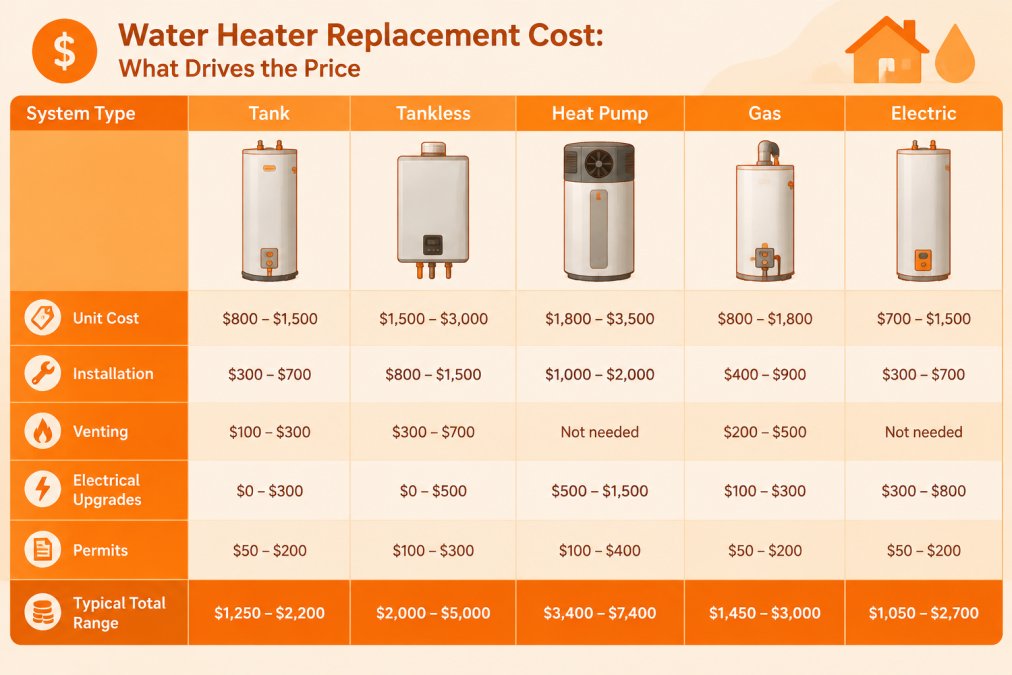
Cost depends on unit type, fuel source, venting, electrical or gas work, permits, and location; a like-for-like swap is typically less involved than changing system type. At QuickHotWater.com, plumbers bid competitively and confirm the final price on-site after seeing your setup, so treat your instant estimate as a starting point, not a guaranteed price. Get your 30-second estimate and skip the sales visit.
Home-Readiness Checklist Before You Buy
Confirm your fuel source, measure installation space and clearance, check the venting route for gas units, verify electrical panel capacity for electric or heat-pump units, note noise tolerance for heat-pump placement, and ask whether a permit is required and who pulls it.
Rebates, Tax Incentives, and Utility Rates
Heat-pump water heaters may qualify for federal tax credits and utility rebates. Check official program details for current amounts and eligibility, since these change over time.
When to Replace Instead of Wait
Replace when your tank leaks, rusts at the base, or nears the end of its typical lifespan. We handle replacement only, not repair, and match you with a vetted, licensed, and insured plumber. If you're a licensed plumber yourself, you can apply to join our plumber network and bid on local jobs.
Losing hot water is stressful, but choosing a replacement doesn't have to be. QuickHotWater.com gives you an instant estimate, matches you with local licensed and insured plumbers who bid competitively, and includes the permit in your estimate, with no sales visits or spam calls. Get started with QuickHotWater.com and replace your water heater with confidence.
Frequently Asked Questions
Which water heaters do plumbers recommend?
Plumbers typically recommend matching the heater to your household's peak hot-water demand, fuel source, and installation space. For many homes, a correctly sized tank water heater is the simplest like-for-like replacement. Tankless and heat-pump models can be good fits when electrical, venting, and space conditions allow. Ask your licensed plumber to confirm the first-hour rating and recovery rate for your usage before choosing.
Is a 55-gallon water heater enough for four people?
A 55-gallon tank can work for a family of four, but it depends on simultaneous use. Two showers running at once, plus laundry or dishwashing, can drain a tank faster than its capacity suggests. Check the first-hour rating rather than tank size alone, and consider your morning routine. If multiple people shower back-to-back, a larger tank or a tankless system with adequate flow rate may fit better.
Should I choose a tank or tankless water heater?
Tank water heaters cost less upfront and suit most like-for-like replacements. Tankless units save space and heat water on demand but often require electrical or gas upgrades and proper venting. Compare upfront cost, installation space, and flow rate needs. For a straightforward replacement, a tank model is usually the simpler choice; tankless makes sense when space or endless hot water is the priority.