 how-to
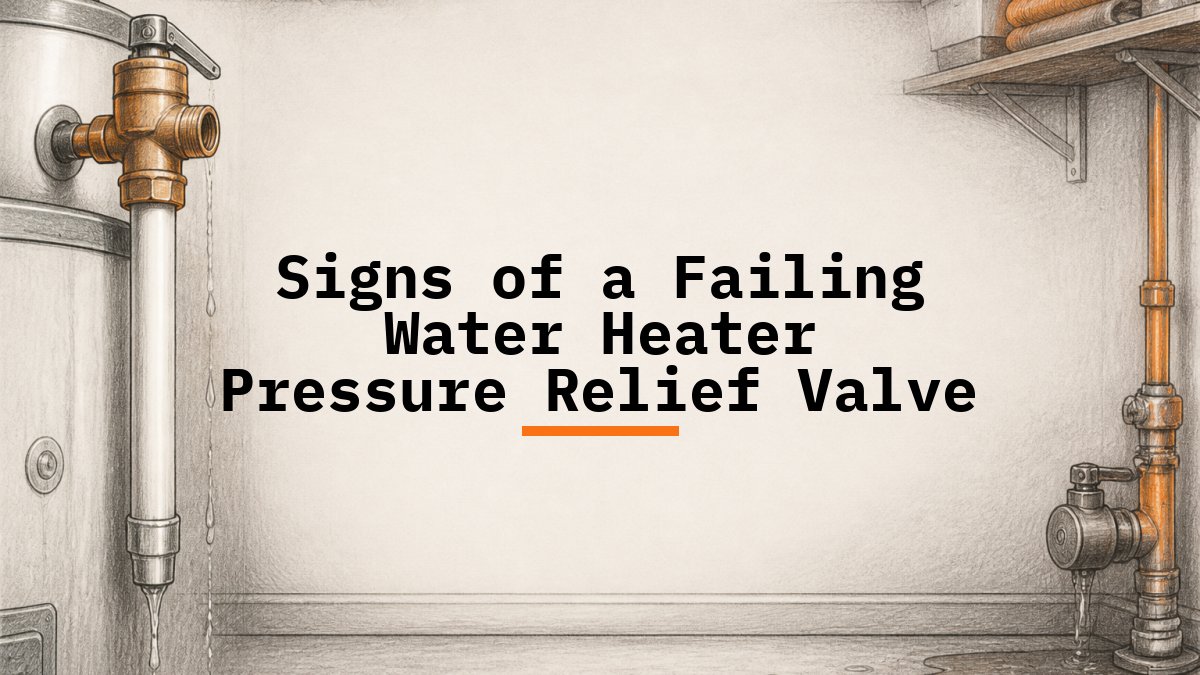
Signs of a Failing Water Heater Pressure Relief Valve
Table of Contents
- Water Heater Pressure Relief Valve Leaking: What It Means
- Water Heater T&P Valve Symptoms You Shouldn't Ignore
- Water Heater Pressure Relief Valve Lifespan and Replacement Warning Signs
- Frequently Asked Questions
Last Updated: October 8, 2026
Water Heater Pressure Relief Valve Leaking: What It Means
A leaking water heater pressure relief valve isn't always broken, sometimes it's doing its job, opening when tank pressure or temperature gets too high.
A common call plumbers get is: "My valve is dripping, is my tank about to fail?" The answer depends on the pattern.
Dripping only after heavy hot water use points to thermal expansion or excess pressure; all-day dripping points to a faulty valve or stuck seat. A defective valve needs replacement, while a valve reacting to unsafe pressure means the tank itself has a problem.
If your tank is old and the valve keeps discharging, replacement usually beats chasing one part at a time. You can request an instant water heater replacement quote and get matched with local, licensed plumbers who bid competitively.
Water Heater T&P Valve Symptoms You Shouldn't Ignore
The temperature and pressure relief valve, or T&P valve, gives clear warnings before it fails, but most homeowners miss them.
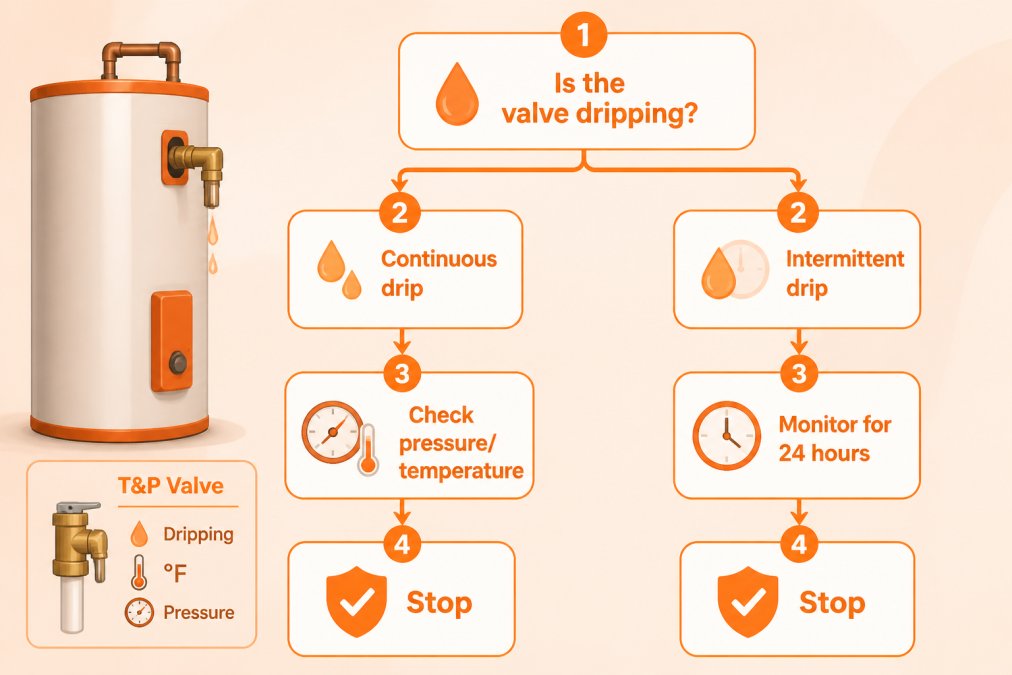
T&P valve symptoms: dripping at the valve outlet, rust streaks down the tank, a wet discharge pipe, popping or rumbling sounds, and a valve that releases and won't reseat. A valve that discharges is often working correctly, telling you tank pressure or temperature crossed a safe limit.
Common causes: excess supply pressure, thermal expansion, a thermostat or heating element stuck on, and corrosion or sediment jamming the valve seat. Before replacing the valve, ask why it opened, if the cause is excess pressure or overheating, a new valve will fail the same way.
Safe checks: turn off power or gas, let the tank cool, check the discharge pipe for wetness, lift the manual lever briefly then let it snap back. If it keeps running or won't reseat, call a licensed plumber.
Water Heater Pressure Relief Valve Lifespan and Replacement Warning Signs
Most relief valves last about three to five years before sediment and corrosion take a toll, and the water heater pressure relief valve lifespan shortens fast after that.
Replace the valve for continuous dripping that won't stop, rust or mineral buildup, a valve stuck shut, or any valve older than five years on a tank showing other wear. A failing valve is often one of several water heater replacement warning signs. Look for these too:
| Warning Sign | What It Points To | What To Do |
|---|---|---|
| Valve drips constantly | Faulty valve or excess pressure | Test pressure, then replace valve |
| Water pooling around the tank | Tank or fitting leak | Stop use, call a plumber |
| Rust streaks on the tank | Internal corrosion | Plan replacement |
If your tank is past its prime and the valve keeps acting up, patching it rarely pays off. A like-for-like replacement solves the valve, the tank, and the leak risk at once. If you're a licensed plumber, you can apply to join our plumber network and bid on replacement jobs in your area.
Frequently Asked Questions
What is the typical lifespan of a water heater pressure relief valve?
Most pressure relief valves last about 3 to 5 years before sediment, mineral buildup, or corrosion affects the seal. If yours is older than that and you notice continuous dripping or a stuck manual lever, it's due for replacement. A licensed plumber can confirm whether the valve alone needs swapping or if the whole tank is near the end of its life.
Why is my water heater pressure relief valve leaking?
A leaking valve usually points to excess pressure or thermal expansion inside the tank, not a defective valve. Other causes include a faulty thermostat causing overheating, sediment buildup, or a worn seal. If the discharge is constant, shut off power or gas and call a licensed plumber. QuickHotWater.com can connect you with local pros for a replacement estimate if the tank itself is failing.
When should I replace a water heater instead of addressing a relief valve problem?
If the tank is over 10 years old, shows rust or corrosion, or leaks from the body, replacement makes more sense than swapping the valve. A plumber can check the pressure and temperature readings on-site. QuickHotWater.com offers an instant estimate for a like-for-like replacement, with licensed and insured plumbers confirming the final price after they inspect your setup.
When a failing valve is really a sign your tank is near the end, replacement beats repair. QuickHotWater.com gives you an instant estimate in about 30 seconds and matches you with local, licensed and insured plumbers who bid competitively. No sales visits, no spam calls, and permits included in the estimate. Get a quote and get a fair price for quality work without overpaying or guessing.