 comparison
Is a Tankless Water Heater Worth It for a 3-Bedroom House?
Table of Contents
- Tankless vs. Tank Water Heater: Which Fits a 3-Bedroom Home
- Tankless Water Heater Pros and Cons for Your Household
- Sizing and Cost to Replace a Water Heater with a Tankless Model
- Frequently Asked Questions
Last Updated: October 12, 2026
Tankless vs. Tank Water Heater: Which Fits a 3-Bedroom Home
Is a tankless water heater worth it for a 3 bedroom house? It depends on how your household uses hot water, what fuel you have, and how long you'll stay.
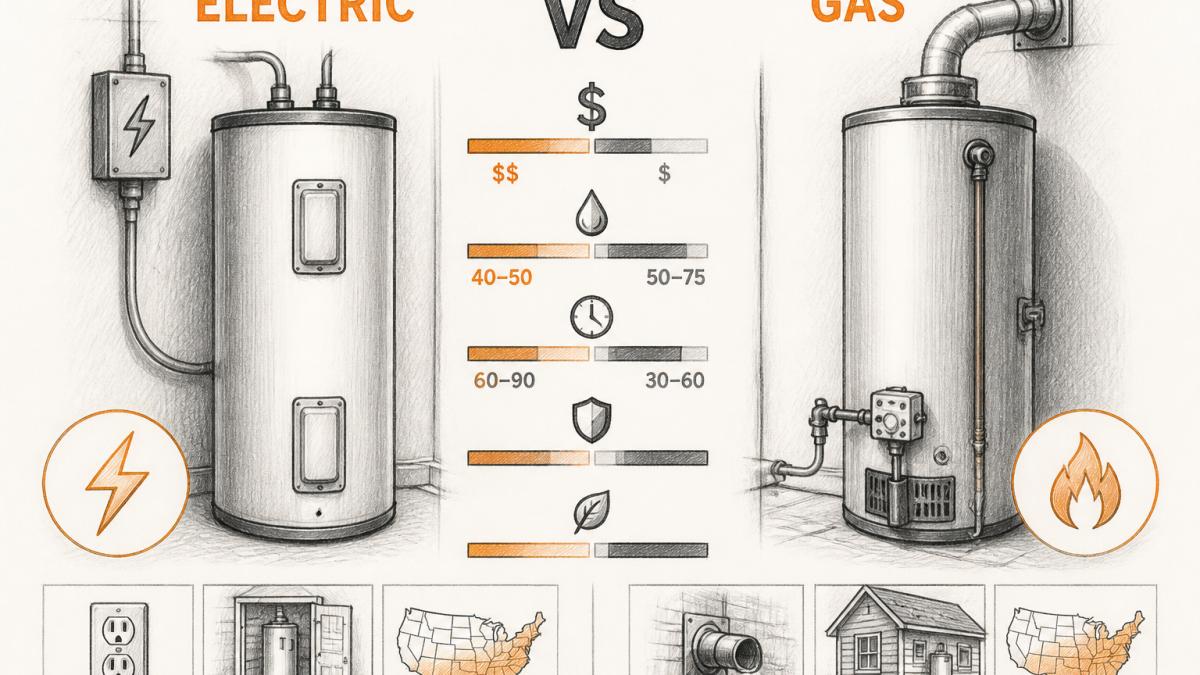
A tankless water heater heats water on demand; a conventional storage-tank water heater keeps 40-50 gallons ready at all times. Each type has real trade-offs.
At QuickHotWater.com, we connect homeowners with local, licensed and insured plumbers who bid competitively and provide instant estimates.
Tankless systems deliver continuous hot water. You won't run out even with two showers running, while storage tanks deplete quickly in busy households.
Tankless systems take up less space. They mount on walls, a real benefit for tight utility closets or basements.
Storage tanks are simpler to install. If your home already has gas or electric service sized for a tank, swapping in the same type is straightforward; tankless may require gas line or electrical upgrades.
Tankless Water Heater Pros and Cons for Your Household
Pros of tankless systems: endless hot water for simultaneous use, smaller footprint, lower standby energy loss, and longer lifespan (often 15-20 years vs. 10-12 for tanks).
Cons of tankless systems: higher upfront equipment cost, possible gas line or electrical upgrades, descaling maintenance in hard-water areas, flow-rate limits with multiple fixtures (especially electric), and longer waits at distant fixtures.
Pros of storage-tank systems: lower equipment cost, simpler installation, handles simultaneous high demand, minimal maintenance, and works with existing infrastructure.
Cons of storage-tank systems: runs out during heavy use, takes up significant space, higher standby energy loss, and shorter lifespan (typically 10-12 years).
Sizing and Cost to Replace a Water Heater with a Tankless Model
For a 3-bedroom home, household size and routines determine whether tankless performs well.
Flow rate matters most. A single shower needs 2-2.5 gallons per minute; add a dishwasher or second shower and demand jumps to 4-5 GPM. Most gas tankless models handle this, but many electric models struggle.
Temperature rise is the limiting factor. Colder regions require tankless systems to raise water temperature more dramatically, so sizing for your region's incoming water temperature is essential.
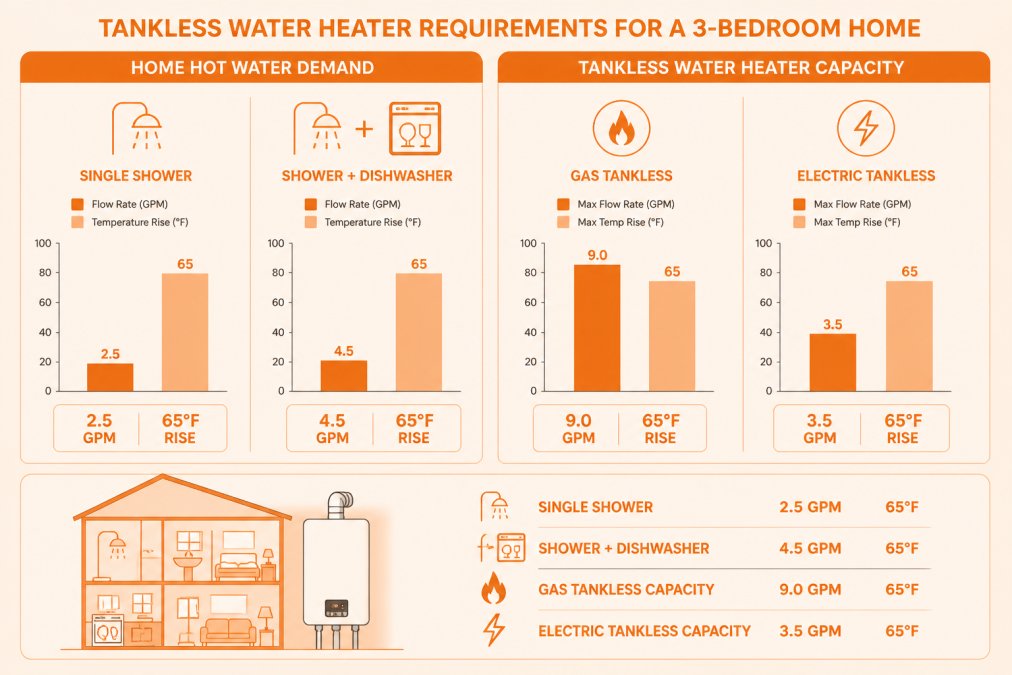
Gas tankless models handle 3-5+ GPM and suit multiple simultaneous uses; electric models max out around 2-3 GPM, fitting only single-fixture use or very small households.
Installation and permitting vary by local code; most jurisdictions require venting upgrades for gas tankless and panel upgrades for electric models. Plumbers confirm their final price on-site after assessing your setup.
Getting an instant water heater replacement quote from QuickHotWater.com takes 30 seconds and connects you with local, licensed and insured plumbers who bid competitively, so you get a fair price without overpaying or guessing. Plumbers confirm their final price after inspecting your gas lines, electrical capacity, and venting.
Frequently Asked Questions
Is a tankless water heater big enough for a 3-bedroom house?
It depends on simultaneous hot-water demand. A 3-bedroom home with one bathroom and typical usage usually works with a standard tankless unit. If your household runs two showers at once or showers while the dishwasher runs, you need a larger capacity or dual-unit setup. Gas tankless heaters generally handle higher flow rates than electric models. Request a sizing assessment when you get an instant estimate, plumbers will confirm whether your existing gas line or electrical service supports the model you choose.
What are the disadvantages of a tankless water heater?
Upfront costs run higher than tank models, and installation may require upgrades to your gas line or electrical panel. Some units struggle with very high simultaneous demand or in cold climates. Hard water causes mineral buildup that requires regular descaling maintenance. Electric tankless heaters need substantial electrical capacity, many homes cannot support them without service upgrades. Tankless units also take a few seconds to deliver hot water at distant fixtures, unlike the instant supply from a tank.
How much does it cost to replace a water heater with a tankless model?
Total replacement cost depends on your home's fuel type, existing infrastructure, and local labor rates. Gas tankless units typically cost more than comparable tank models, and electric versions may require electrical upgrades that add significant expense. Installation complexity varies: some homes need venting changes, gas line extensions, or new electrical circuits. Get an instant estimate through QuickHotWater.com to see what licensed plumbers in your area bid. Plumbers confirm their final price on-site after inspecting your setup, so you know the exact cost before work begins.
The reality: A tankless water heater makes sense for 3-bedroom homes that value endless hot water and space savings, and have the budget for higher upfront costs. For households on a tighter budget or with simpler hot-water routines, a storage-tank replacement often delivers better value. Get an instant estimate from QuickHotWater.com to see what both options cost in your area, then decide based on your household's actual usage patterns and long-term plans.