 how-to
What to Do If a Water Heater Floods Your Basement
Table of Contents
- Water Heater Flooded Basement Safety: What to Do First
- Water Heater Submerged in Water: Gas, Electric, and Tankless Rules
- Water Heater Replacement After a Flood: Drying Out and Next Steps
- Frequently Asked Questions
Last Updated: October 4, 2026
Water Heater Flooded Basement Safety: What to Do First
A flooded basement is a safety emergency. If your water heater floods the basement, stay out of standing water and cut the power first. QuickHotWater.com matches homeowners with local, licensed and insured plumbers for replacement.
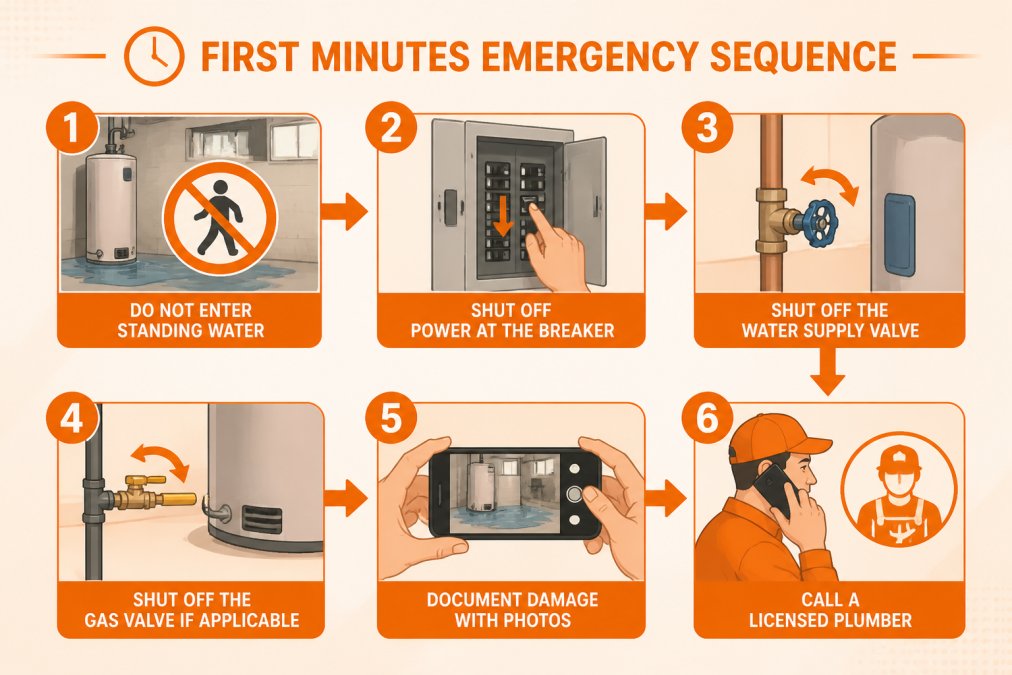
- Do not enter standing water. Even an inch can carry current.
- Shut off power at the breaker feeding the water heater and basement outlets.
- Shut off the water supply at the cold line valve.
- Shut off the gas at the appliance valve if applicable.
- Document everything with photos and video.
- Call a licensed plumber to inspect the unit.
The Consumer Product Safety Commission guidance on electrical safety in wet areas is blunt: water and live current do not mix.
How to shut off water to a water heater
The shutoff valve sits on the cold water line above the tank. Turn it clockwise until it stops; if it is stuck or missing, shut off the main supply.
What about the gas supply?
For a gas unit, the shutoff valve is on the gas line near the tank. Turn the handle a quarter turn so it sits across the pipe. If you smell gas, leave and call your gas utility from outside.
Water Heater Submerged in Water: Gas, Electric, and Tankless Rules
A submerged water heater should not be restarted until a plumber inspects it. Floodwater damages the parts that keep it safe.
Electric water heaters are the biggest concern: water reaching the thermostat, elements, or wiring turns the tank into a shock hazard and it must be tested before power returns.
Gas water heaters: a flooded burner assembly and pilot will not relight safely, and water in the gas valve or control board can cause delayed ignition. Keep the gas off until a professional checks it.
Tankless units are not immune. Even wall-mounted models have electrical components and a control board floodwater can ruin, so a submerged tankless heater usually needs replacement.
| Heater Type | Main Risk After Flooding | Restart or Replace |
|---|---|---|
| Electric | Shock hazard from wet wiring and elements | Inspect first, often replace |
| Gas | Pilot light and burner assembly damage | Keep gas off, professional relight only |
| Tankless | Control board and electrical damage | Usually replace |
The CDC guidance on floodwater contamination and cleanup makes a point homeowners miss: floodwater is not clean water. It carries sewage, chemicals, and bacteria, so anything it touched needs proper cleaning.
Water Heater Replacement After a Flood: Drying Out and Next Steps
Most flooded water heaters get replaced, not repaired. Once floodwater reaches the electrical components or burner assembly, the safe path is a new unit.
Drying out the basement comes first: pump out standing water, run dehumidifiers and fans for several days, clean hard surfaces with a floodwater-rated disinfectant, and check for mold.
Then handle the replacement. QuickHotWater.com matches you with local, licensed and insured plumbers who bid on the job, so you get a fair price instead of a guess. You can request an instant water heater replacement quote in about 30 seconds, and the plumber confirms the final price on site. If you are a licensed plumber, you can also apply to join our plumber network and bid on jobs in your area.
Document damage for your insurance claim as you go: photos and video of the water line and the unit, a list of damaged items with dates, receipts for emergency work, and a written inspection note from your plumber.
While the basement is dry, look at why it flooded. A failed tank, burst supply line, and backed-up drain point to different fixes, and waterproofing plus a working sump pump cut your odds of a repeat.
Frequently Asked Questions
Should I turn off my water heater if the basement is flooded?
Yes. Cut power at the circuit breaker before anything else, and shut off the gas valve on a gas unit. Standing water plus live electrical components creates a serious electric shock risk, and a submerged burner assembly or pilot light can fail or leak gas. Do not wade in to reach the unit if you can avoid it. Once power and fuel are off, close the cold-water supply valve on top of the tank and call a licensed plumber to inspect the unit.
Can a water heater be used after being submerged in water?
No. Manufacturers do not approve restarting a unit that has been submerged. Floodwater ruins the thermostat, electrical components, and burner assembly, and contaminates the tank and insulation. Even if the tank looks fine, hidden corrosion and sediment shorten its life. A licensed plumber should inspect it and, in most cases, replace it. Replacing the unit also removes the risk of a burst tank or a pilot ignition failure later.
Who should I call if a water heater floods my basement?
Call a licensed plumber for the water heater and a qualified electrician if the breaker panel or wiring was wet. QuickHotWater.com connects homeowners with local, licensed, and insured plumbers who bid competitively, so you get a fair price for quality work. You can get an instant replacement estimate online in about 30 seconds. A plumber confirms the final price on-site after seeing your setup, so the estimate is a starting point, not a locked-in number.
A flooded basement is stressful, and the last thing you need is a guessing game on price. QuickHotWater.com connects you with local, licensed and insured plumbers who bid competitively, gives you an instant estimate in 30 seconds, and includes the permit in the estimate so nothing gets missed. We handle replacement only, which means every plumber in our network does this work every day. Get a quote and get your hot water back without the runaround.