 ultimate-guide
What Happens If Water Heater Installation Fails?
Table of Contents
- Water Heater Installation Failures: Immediate Safety Risks
- Signs of Bad Water Heater Installation
- Do I Need a Permit for Water Heater Replacement?
- Homeowners Insurance Water Heater Damage Coverage
- Frequently Asked Questions
Last Updated: September 4, 2026
A failed water heater installation is rarely a minor inconvenience. In the worst cases, it creates immediate safety hazards like gas leaks, flooding, or carbon monoxide exposure that put your household at risk. This guide from QuickHotWater.com explains exactly what happens if water heater installation fails, how to spot problems early, and what your responsibilities are regarding permits and insurance. We'll walk through the consequences of a bad water heater installation step by step, so you know what to look for and how to protect your home.
Water Heater Installation Failures: Immediate Safety Risks
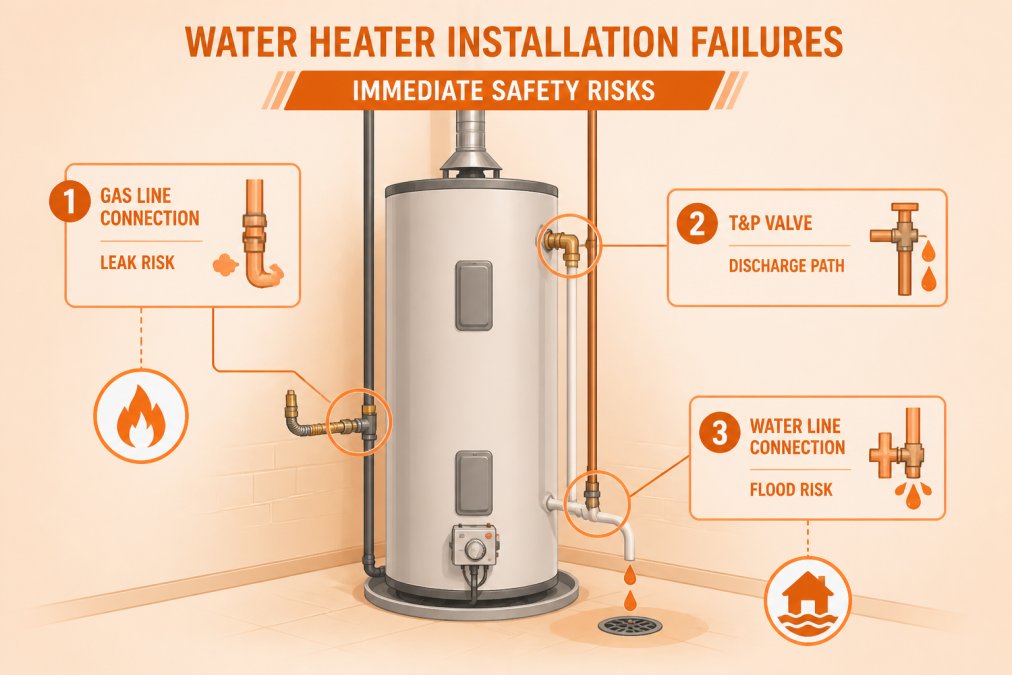
The most severe water heater installation failures create dangers within minutes of the unit turning on. A loose gas line connection can leak combustible gas into your home, while an improperly vented unit can push carbon monoxide into living spaces. Both scenarios are life-threatening and require immediate action.
Improper installation of the temperature and pressure relief valve is another critical failure point. This valve is your tank's emergency release; if it's installed incorrectly or with the wrong rating, pressure can build until the tank ruptures. Water heater installation failures also include electrical mistakes, such as incorrect wiring that can cause short circuits or fires.
Signs of Bad Water Heater Installation
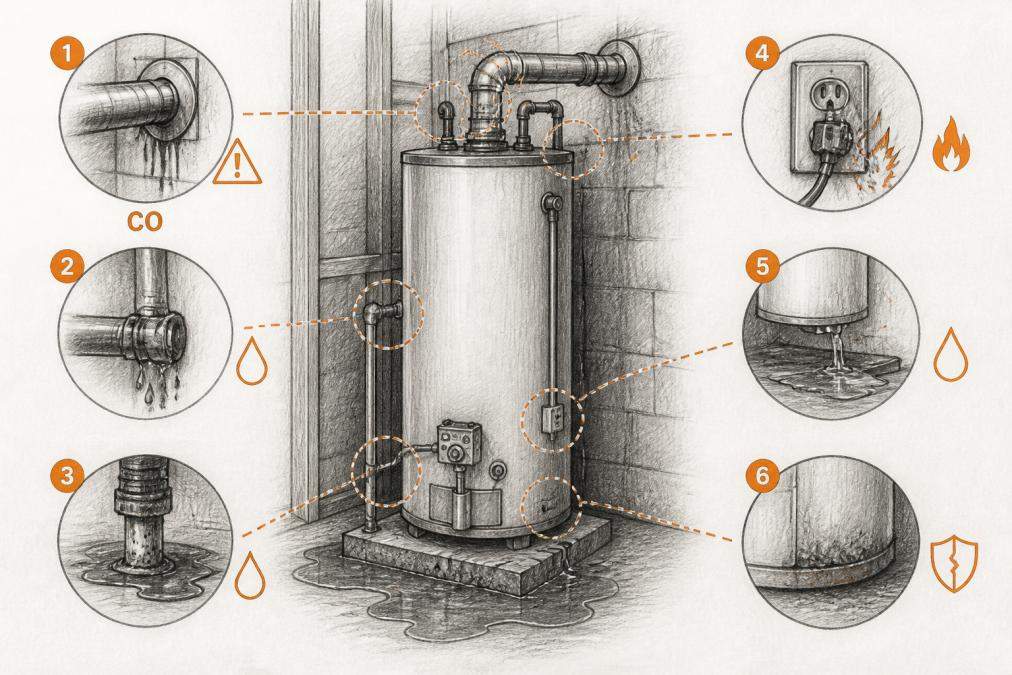
Signs of bad water heater installation often appear within the first few weeks of operation. The most common red flags include water pooling around the base, inconsistent water temperature, strange noises like popping or rumbling, and a persistent metallic smell from the hot water tap.
You should also check for less obvious indicators. A water heater that cycles on and off too frequently, or one that produces lukewarm water despite a high thermostat setting, points to a wiring or gas supply problem. Another sign of bad water heater installation is a lack of a dielectric union where copper pipes meet the tank's fittings, which accelerates corrosion and leads to premature leaks.
Do I Need a Permit for Water Heater Replacement?
In most areas, yes, you need a permit for water heater replacement. A permit ensures the work is inspected for code compliance, covering the gas line connection, venting system, and safety valves. Skipping this step is a common and costly mistake.
The consequences of skipping a permit go beyond a fine. If an unpermitted installation causes a fire or flood, your homeowners insurance may deny the claim. Furthermore, when you sell your home, an unpermitted water heater can delay the sale or reduce your offer. Most municipalities require the permit to be pulled before work begins, and the inspection happens after the unit is installed.
International Code Council guidelines on mechanical permits
Homeowners Insurance Water Heater Damage Coverage
Homeowners insurance water heater damage coverage typically applies to sudden and accidental damage, like a burst tank flooding your basement. However, damage caused by poor workmanship or a lack of proper permits is often excluded from standard policies. If your water heater fails because of an installation error, your claim could be denied.
This is the long-term financial consequence of a failed installation. You are liable for the cost of the failed unit, the water damage to your home, and the cost of a second, correct installation. To protect yourself, always use a licensed and insured plumber who can pull the necessary permits and stand behind their work. This ensures that if something goes wrong, you have recourse through their insurance rather than your own.
When water heater installation fails, the fallout can range from expensive repairs to dangerous living conditions. The best defense is prevention: hire a qualified professional who handles permits and follows local building codes from the start. QuickHotWater.com connects you with local, licensed, and insured plumbers who bid competitively for your replacement job. You get transparent, market-based pricing without sales visits, and the permit is included in your instant water heater replacement quote. Get a quote today to ensure your new water heater is installed safely and correctly the first time.
Frequently Asked Questions
Can an incorrect installation lead to carbon monoxide leaks?
Yes. A gas water heater with an improperly connected venting system can push carbon monoxide into your living space. Symptoms include headaches, dizziness, and nausea. This is why professional installation and a permit inspection matter: they confirm the venting system meets code and combustion air is adequate. If you suspect a leak, turn off the unit and leave the house before calling for help.
Does homeowners insurance cover a failed water heater?
It depends on the cause. Sudden, accidental water damage from a burst tank is typically covered. Damage from long-term neglect, sediment buildup, or a DIY installation error is often denied as a preventable maintenance issue. An installation failure that violates local building codes can also void coverage. Having a permit and a licensed plumber on record strengthens your claim.
What is the most common cause of water heater failure?
Sediment buildup is the top cause of premature tank failure. Over time, minerals settle at the bottom, creating hot spots that corrode the steel tank from the inside. A bad installation can accelerate this by failing to include a thermal expansion tank or setting the temperature too high. Regular flushing and a licensed installation help extend the unit's life.
This article was written using GrandRanker
Frequently Asked Questions
Q: Can an incorrect installation lead to carbon monoxide leaks?
A: Yes. A gas water heater with an improperly connected venting system can push carbon monoxide into your living space. Symptoms include headaches, dizziness, and nausea. This is why professional installation and a permit inspection matter: they confirm the venting system meets code and combustion air is adequate. If you suspect a leak, turn off the unit and leave the house before calling for help.
Q: Does homeowners insurance cover a failed water heater?
A: It depends on the cause. Sudden, accidental water damage from a burst tank is typically covered. Damage from long-term neglect, sediment buildup, or a DIY installation error is often denied as a preventable maintenance issue. An installation failure that violates local building codes can also void coverage. Having a permit and a licensed plumber on record strengthens your claim.
Q: What is the most common cause of water heater failure?
A: Sediment buildup is the top cause of premature tank failure. Over time, minerals settle at the bottom, creating hot spots that corrode the steel tank from the inside. A bad installation can accelerate this by failing to include a thermal expansion tank or setting the temperature too high. Regular flushing and a licensed installation help extend the unit's life.